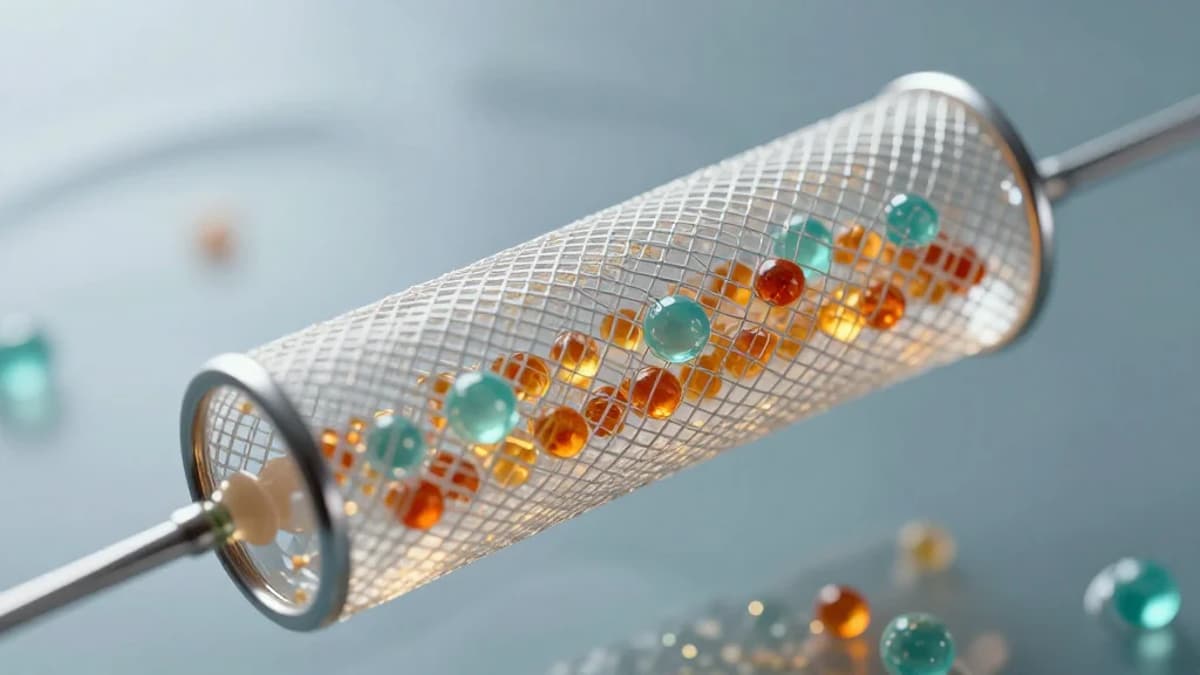
Selective Lipoprotein Removal Enables High‐Purity EV Isolation From Plasma via Aptamer‐Based Mesh Filtration
•March 3, 2026
0
Why It Matters
By eliminating lipoprotein contaminants, ApoFilter enhances the analytical fidelity of plasma EV studies, accelerating translational research and diagnostic development.
Key Takeaways
- •ApoFilter removes >99% HDL and LDL
- •Aptamer‑functionalized mesh captures lipoproteins selectively
- •EVs pass through unchanged, preserving integrity
- •Compatible with UC, SEC, and ExoTFF workflows
- •Process completes in ~1 minute via gravity flow
Pulse Analysis
The isolation of extracellular vesicles from plasma has long been hampered by the overwhelming presence of lipoproteins, which share size and density characteristics with EVs. Traditional methods often co‑purify these particles, obscuring molecular signals and inflating assay variability. ApoFilter addresses this bottleneck by embedding high‑affinity aptamers for ApoA1 and ApoB100 onto nylon mesh layers, creating a rapid, spin‑column format that selectively captures HDL and (V)LDL while letting EVs flow freely. This affinity‑based approach sidesteps the need for harsh chemical treatments or prolonged ultracentrifugation, preserving vesicle integrity and native cargo.
Beyond its technical merits, ApoFilter’s compatibility with existing EV isolation pipelines makes it a versatile upgrade for laboratories. Whether paired with ultracentrifugation, size‑exclusion chromatography, or tangential flow filtration (ExoTFF), the mesh filtration step consistently strips lipoprotein contaminants, delivering ultrapure vesicle preparations ready for high‑resolution proteomics, RNA sequencing, or functional assays. The one‑minute, gravity‑driven operation also scales well for clinical settings, where throughput and reproducibility are paramount. By standardizing purity across workflows, researchers can generate more comparable datasets, accelerating biomarker validation and therapeutic vesicle development.
The broader market implications are significant. As the biotech industry pivots toward EV‑based diagnostics and drug delivery platforms, reliable purification becomes a commercial differentiator. ApoFilter’s rapid, low‑cost, and scalable design positions it as a potential cornerstone technology for both academic and industrial pipelines. Investors and stakeholders should watch for partnerships that integrate this mesh filtration system into automated platforms, potentially reshaping the economics of EV manufacturing and expanding the pipeline of plasma‑derived biomarkers for diseases ranging from cancer to neurodegeneration.
Selective Lipoprotein Removal Enables High‐Purity EV Isolation from Plasma via Aptamer‐Based Mesh Filtration
0
Comments
Want to join the conversation?
Loading comments...