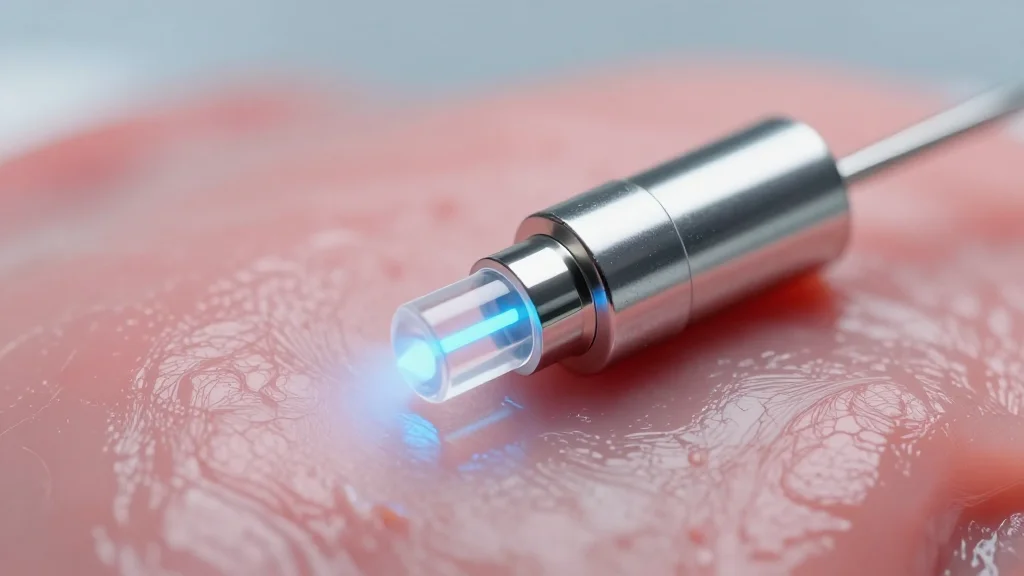
Shanghai Jiao Tong University Unveils 1.7 Mm Optical Sensor that Lets Surgical Robots Feel Touch

Why It Matters
Tactile feedback has long been the missing piece in robot‑assisted surgery, where surgeons depend on visual cues but lack the sense of touch that guides manual procedures. By delivering multi‑axis force data in a form factor compatible with minimally invasive tools, the new sensor could dramatically improve safety margins, reduce operative times, and expand the range of procedures that can be robotically performed. The breakthrough also illustrates how photonic sensing can sidestep the wiring and miniaturization challenges that have hampered electronic force sensors, potentially reshaping design standards across the broader robotics industry. For the nanotech sector, the sensor showcases a practical application of nanoscale photonic engineering—leveraging light‑matter interactions at sub‑millimeter scales to extract mechanical information. Success in medical contexts could accelerate investment in related nanophotonic devices, from wearable health monitors to precision manufacturing tools, driving a wave of commercialization for technologies that were previously confined to research labs.
Key Takeaways
- •Researchers at Shanghai Jiao Tong University built a 1.7 mm optical force sensor.
- •The sensor measures force, pressure, shear and torque in all directions using light.
- •Laboratory tests detected hidden tumor‑like objects in gelatin tissue models.
- •Low hysteresis and single‑step optical readout simplify integration into tiny tools.
- •Potential market impact spans surgical robotics, delicate manufacturing, and nanophotonic sensing.
Pulse Analysis
The rice‑sized sensor marks a pivot from electronic to photonic force sensing, a shift that could resolve the long‑standing trade‑off between sensor size and functionality. Traditional miniature force sensors, such as fiber‑Bragg‑grating arrays, require multiple gratings and complex signal processing, inflating both cost and footprint. By encoding the full contact state into a single optical image, the Shanghai Jiao Tong team sidesteps these constraints, leveraging advances in high‑speed cameras and machine‑learning inference that have become affordable only in the past few years. This convergence of optics, AI, and soft‑material engineering is emblematic of a broader nanotech trend: using light as both a probe and a communication channel to bypass electronic bottlenecks.
From a market perspective, the sensor could catalyze a new class of haptic‑enabled surgical instruments. Current robotic platforms—Da Vinci, Versius, and emerging Chinese systems—offer unparalleled visual fidelity but no native tactile loop, limiting their adoption for procedures where tissue compliance is critical, such as ophthalmic or neurosurgery. Introducing a compact, plug‑and‑play tactile module could lower the barrier for hospitals to upgrade existing fleets, creating a sizable retrofit market. Moreover, the technology’s low‑wire count and immunity to electromagnetic interference make it attractive for use in MRI‑compatible robots, a niche that has been difficult to serve with conventional electronics.
Looking ahead, the sensor’s success will hinge on two factors: integration speed and regulatory clearance. Embedding the optical fiber and camera into sterile, disposable instrument shafts will require new manufacturing workflows, while the AI model that translates light patterns into force vectors must be validated across a wide range of tissues and operating conditions. If the research team can demonstrate consistent performance in animal studies and secure CE or FDA approval within the next two years, they could capture a first‑mover advantage in a market projected to grow at double‑digit rates as autonomous surgery gains traction. Competitors are likely to respond with hybrid electro‑optical designs, but the simplicity and scalability of a purely photonic approach may set a new benchmark for tactile sensing in nanotech‑enabled robotics.
Shanghai Jiao Tong University unveils 1.7 mm optical sensor that lets surgical robots feel touch
Comments
Want to join the conversation?
Loading comments...