Silver Just Solved a Major Solid-State Battery Problem
•January 19, 2026
0
Why It Matters
By mitigating crack formation, the silver treatment extends solid‑state battery lifespan and supports rapid charging, addressing two critical barriers to commercial adoption. The approach also suggests a scalable surface‑engineering pathway for next‑generation energy storage.
Key Takeaways
- •3 nm silver layer boosts LLZO strength fivefold.
- •Ag⁺ ions replace lithium, reducing brittleness.
- •Treated electrolyte resists lithium intrusion during fast charging.
- •Scaling to full cells remains unproven.
- •Approach may extend to other ceramics and sodium batteries.
Pulse Analysis
Solid‑state batteries promise higher energy density and safety compared with conventional lithium‑ion cells, but their ceramic electrolytes are notoriously brittle. Microscopic cracks develop under repeated charge cycles, eventually allowing lithium metal to infiltrate and cause catastrophic failure. Overcoming this mechanical weakness has been a primary research focus, as manufacturers struggle to produce defect‑free ceramic layers at scale. The new silver‑ion coating directly addresses the root cause by reinforcing the electrolyte surface, offering a realistic alternative to costly perfection in production.
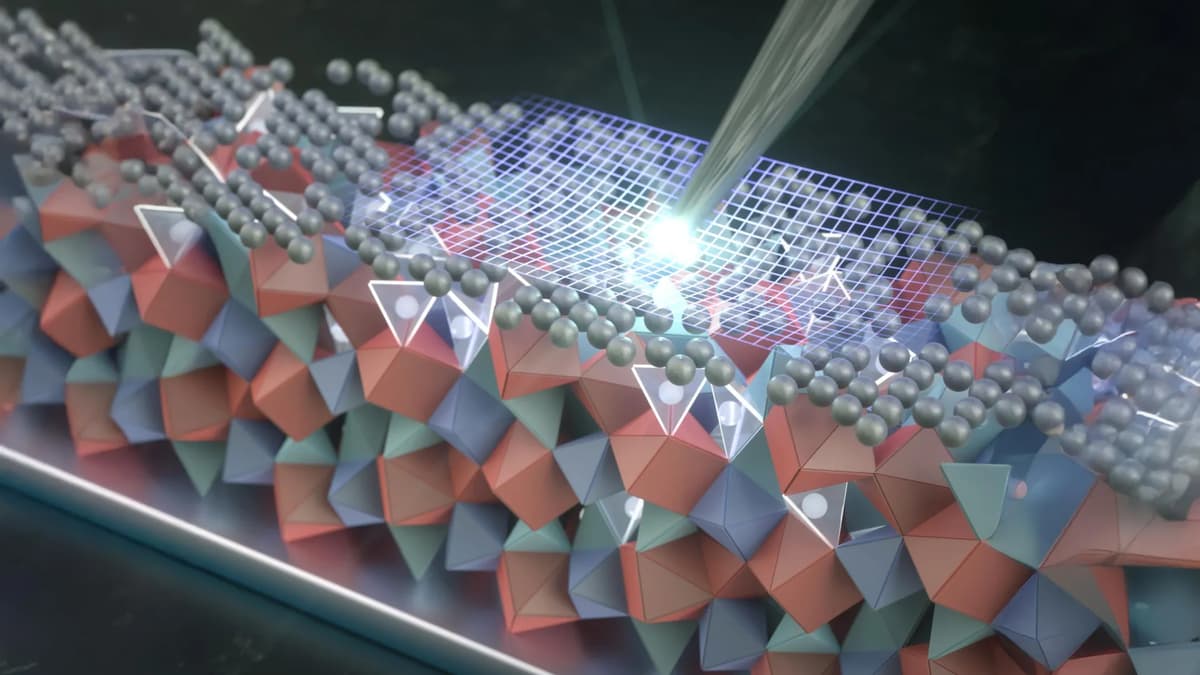
The Stanford team applied a nanometer‑thin silver layer, then annealed it at 300 °C, allowing positively charged Ag⁺ ions to diffuse 20–50 nm into the LLZO lattice. This substitution of larger silver ions for lithium reduces lattice strain and creates a tougher, more ductile surface. Mechanical testing inside a scanning electron microscope showed a five‑fold increase in fracture resistance, while electrochemical measurements indicated that lithium penetration into surface flaws was markedly suppressed. Unlike prior metallic silver coatings, the ionic form remains active, providing both mechanical and chemical protection during high‑rate charging.
If the technique can be transferred from laboratory samples to full‑cell architectures, it could unlock faster charging times and longer cycle life for solid‑state batteries, accelerating their entry into electric vehicles and grid storage. Ongoing work aims to integrate the coating into multi‑layer cell stacks and evaluate durability over thousands of cycles. The concept may also be adaptable to other ceramic electrolytes, such as sulfur‑based or sodium‑ion systems, broadening its impact across the emerging energy‑storage landscape.
Silver just solved a major solid-state battery problem
0
Comments
Want to join the conversation?
Loading comments...