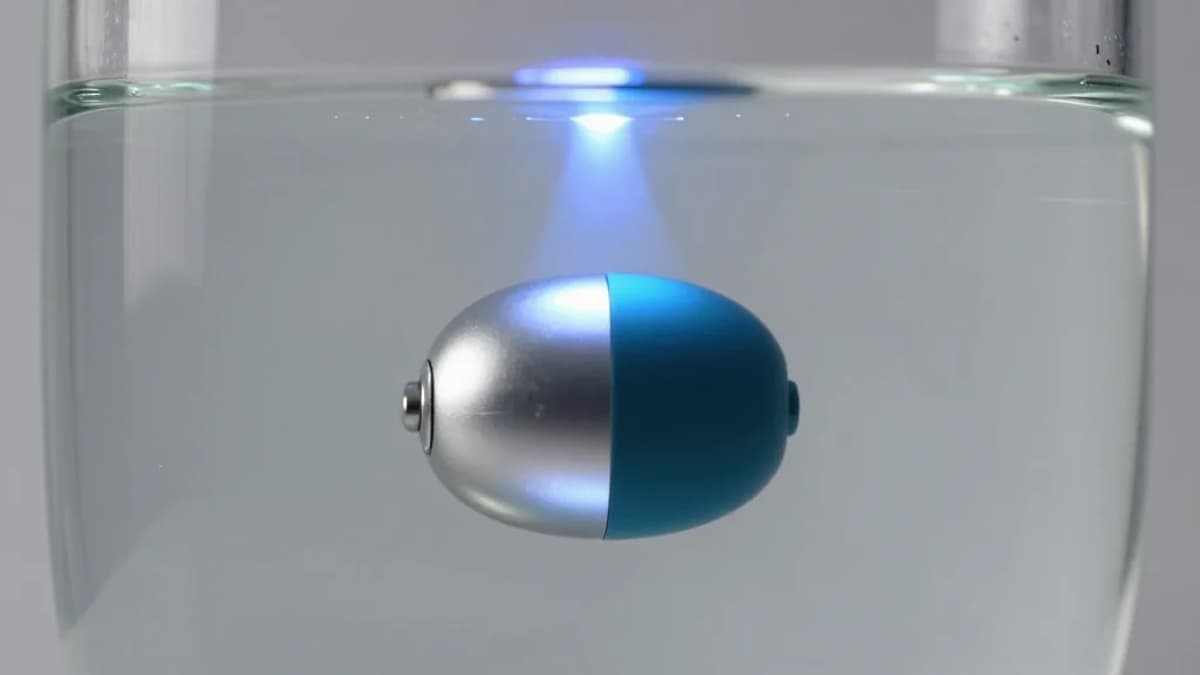
Silver‐enhanced Photoresponsive G‐C3N4/Ag Janus Microrobots With Negative Photogravitaxis Efficient Antibiotic Degradation
•March 11, 2026
0
Why It Matters
The technology couples self‑propulsion with high‑efficiency photocatalysis, offering a scalable route to remove persistent antibiotics from wastewater. It demonstrates how motion‑enhanced reactors can outperform static catalysts in environmental remediation.
Key Takeaways
- •g-C3N4/Ag Janus microrobots exhibit negative photogravitaxis
- •Silver enhances charge separation, reducing recombination
- •Upward motion improves mass transfer, boosting degradation
- •Achieved 88% tetracycline removal under light
- •Offers scalable, low-cost solution for water remediation
Pulse Analysis
Water contamination by pharmaceutical residues poses a growing threat to ecosystems and public health, prompting a search for innovative treatment methods. Photocatalytic microrobots have emerged as a promising class, leveraging light energy to generate reactive oxygen species while navigating fluid environments. Graphitic carbon nitride (g‑C3N4) is prized for its tunable bandgap, high surface area, and affordability, yet its integration into autonomous platforms has been limited. By pairing g‑C3N4 with a thin silver layer, researchers have unlocked superior charge dynamics, allowing the microrobots to harness sunlight more effectively and sustain motion.
The silver‑modified Janus design introduces a directional asymmetry that drives negative photogravitaxis—movement upward against gravity when exposed to light. This vertical locomotion creates a three‑dimensional mixing effect, dramatically increasing the contact frequency between the catalyst surface and dissolved contaminants. In laboratory tests, the microrobots achieved an 88% degradation rate of tetracycline, a common and stubborn antibiotic, through a combination of light‑driven propulsion and ROS generation. The enhanced charge separation reduces electron‑hole recombination, ensuring that more photogenerated carriers participate in pollutant oxidation rather than being lost.
Beyond laboratory performance, the system offers practical advantages for large‑scale water treatment. The components—g‑C3N4 and silver—are inexpensive and compatible with existing manufacturing processes, facilitating mass production of microrobotic swarms. Their autonomous operation reduces the need for external pumps or mixers, cutting energy costs and simplifying plant design. As regulatory pressure mounts to eliminate antibiotic residues, such motion‑enhanced photocatalytic platforms could become integral to next‑generation wastewater treatment facilities, bridging the gap between nanomaterial science and real‑world environmental solutions.
Silver‐enhanced Photoresponsive g‐C3N4/Ag Janus Microrobots With Negative Photogravitaxis Efficient Antibiotic Degradation
0
Comments
Want to join the conversation?
Loading comments...