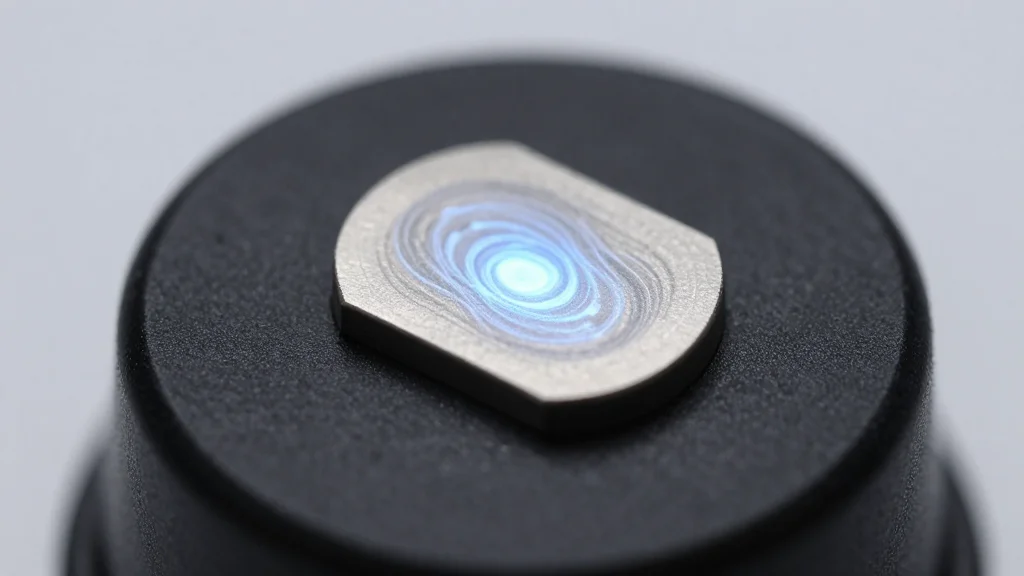
SLAC Event Unveils Skyrmion and Crackling Magnet Breakthroughs in Quantum Materials

Why It Matters
The insights shared at the SLSL event signal a turning point for nanotech research, where direct observation of nanoscale magnetic textures moves from theoretical speculation to experimental reality. Skyrmions and crackling magnets are central to emerging spintronic architectures that could replace charge‑based logic, delivering orders‑of‑magnitude improvements in energy efficiency. By coupling ultrafast X‑ray imaging with AI‑enhanced data pipelines, SLAC is establishing a reproducible workflow that other national labs and industry labs can adopt. This accelerates the translation of quantum material discoveries into commercial prototypes, shortening the innovation cycle for next‑generation memory, sensors, and quantum information processors.
Key Takeaways
- •April 14 SLAC on Tap event featured Joshua Turner’s presentation on skyrmions and crackling magnets
- •Ultrafast X‑ray techniques captured femtosecond dynamics of nanoscale magnetic textures
- •AI tools reduced data analysis time from weeks to hours
- •Skyrmion control promises ultra‑dense, low‑power spintronic memory
- •Future upgrades will add sub‑femtosecond resolution with next‑gen free‑electron lasers
Pulse Analysis
SLAC’s demonstration of real‑time skyrmion and crackling magnet imaging marks a strategic advance for the nanotech sector. Historically, the field has struggled with indirect measurements that left critical parameters—such as spin texture lifetimes and interaction strengths—poorly constrained. By delivering direct visual evidence, the lab not only validates theoretical models but also provides a benchmark for device engineers seeking to harness these phenomena.
The integration of AI into the analysis pipeline is equally transformative. In a landscape where experimental facilities generate petabytes of data annually, the bottleneck has shifted from acquisition to interpretation. Turner’s approach—training neural networks on simulated X‑ray patterns—creates a feedback loop that can flag anomalous events in near real time, enabling rapid iteration of experimental parameters. This capability could democratize access to high‑impact nanoscience, allowing smaller research groups to extract meaningful results without massive computational overhead.
Looking forward, the planned upgrade to sub‑femtosecond resolution will push the envelope further, potentially uncovering transient states that could serve as the basis for quantum bits or ultra‑fast switches. As industry players race to commercialize spintronic memory and quantum sensors, the ability to observe and manipulate these states at the atomic level will become a decisive competitive advantage. SLAC’s public outreach format also signals a broader trend: high‑impact nanotech research is increasingly being communicated in accessible, community‑focused settings, fostering a pipeline of talent and partnerships that could accelerate the transition from lab‑scale discovery to market‑ready technology.
SLAC Event Unveils Skyrmion and Crackling Magnet Breakthroughs in Quantum Materials
Comments
Want to join the conversation?
Loading comments...