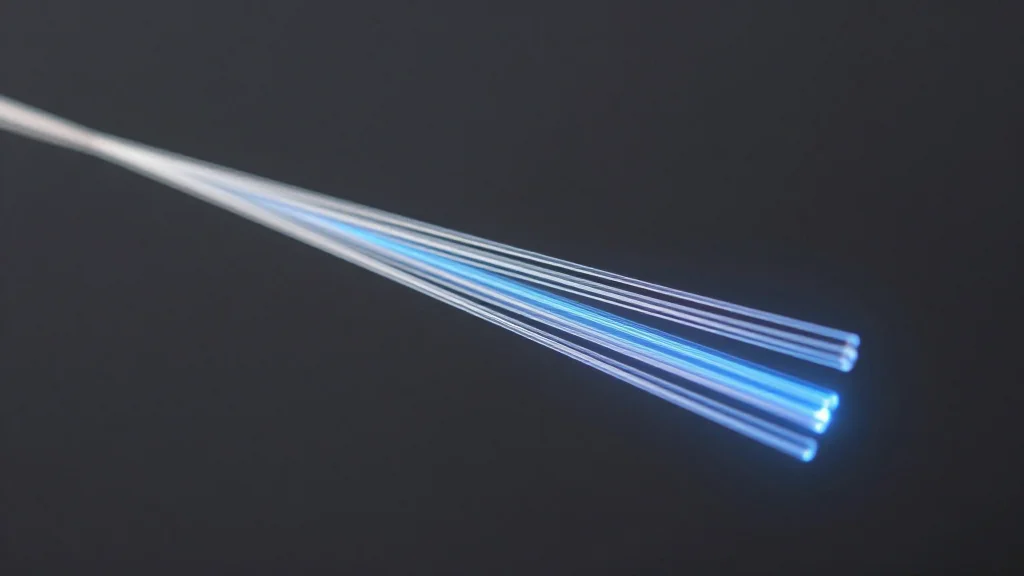
South Korean Researchers Unveil Hair‑Thin Nanotube Composite That Blocks 99.999% of Space Radiation

Why It Matters
Radiation remains one of the most formidable hazards for long‑duration human spaceflight. Current shielding strategies add significant mass, limiting mission scope and inflating costs. A lightweight, printable material that simultaneously attenuates electromagnetic interference and neutron radiation could enable deeper exploration, larger crew habitats, and more flexible spacecraft architectures. Moreover, the technology showcases how nanomaterials can be engineered for multifunctional performance, opening pathways for broader nanotech applications in aerospace, defense, and even terrestrial high‑radiation environments such as nuclear power plants. The development also underscores South Korea’s growing influence in advanced materials research. By delivering a commercially viable, space‑grade nanocomposite, KIST positions the nation as a potential supplier for international space programs, diversifying the global supply chain for critical space‑flight components.
Key Takeaways
- •Hair‑thin composite blocks 99.999% of electromagnetic waves and reduces neutron radiation by ~72%
- •Combines carbon nanotubes (CNTs) and boron nitride nanotubes (BNNTs) for dual‑mode shielding
- •Material stretches >2× its length, survives –196 °C to 250 °C, and is 3D‑printable
- •Honeycomb 3D‑printed geometries improve protection by up to 15% versus flat sheets
- •Prototype slated for suborbital flight test later in 2026, with commercial aerospace partners in talks
Pulse Analysis
The nanotube composite arrives at a moment when the economics of spaceflight are shifting toward reusable launch systems and modular spacecraft. Historically, radiation shielding has been a trade‑off between mass and protection; aluminum hulls, water walls, and polyethylene blankets each carry penalties in volume or weight. By leveraging the intrinsic conductivity of CNTs and the neutron‑absorbing properties of BNNTs, the KIST team sidesteps this compromise, delivering a material that is both ultra‑light and multifunctional.
From a market perspective, the technology could catalyze a new segment of space‑grade additive‑manufacturing. Companies that already provide 3D‑printing services for metal and polymer parts may need to invest in nanotube feedstock handling and quality control, creating a niche supply chain. Early adopters—likely national space agencies and large commercial operators—will test the material’s durability in orbit, setting performance standards that could become de‑facto requirements for future missions.
Looking ahead, the key risk lies in scaling production while maintaining the precise alignment of CNT and BNNT networks that give the composite its shielding properties. If KIST can demonstrate reproducible, high‑volume manufacturing, the material could become a cornerstone of next‑generation spacecraft, potentially reshaping launch economics and accelerating humanity’s push toward Mars and beyond.
South Korean Researchers Unveil Hair‑Thin Nanotube Composite That Blocks 99.999% of Space Radiation
Comments
Want to join the conversation?
Loading comments...