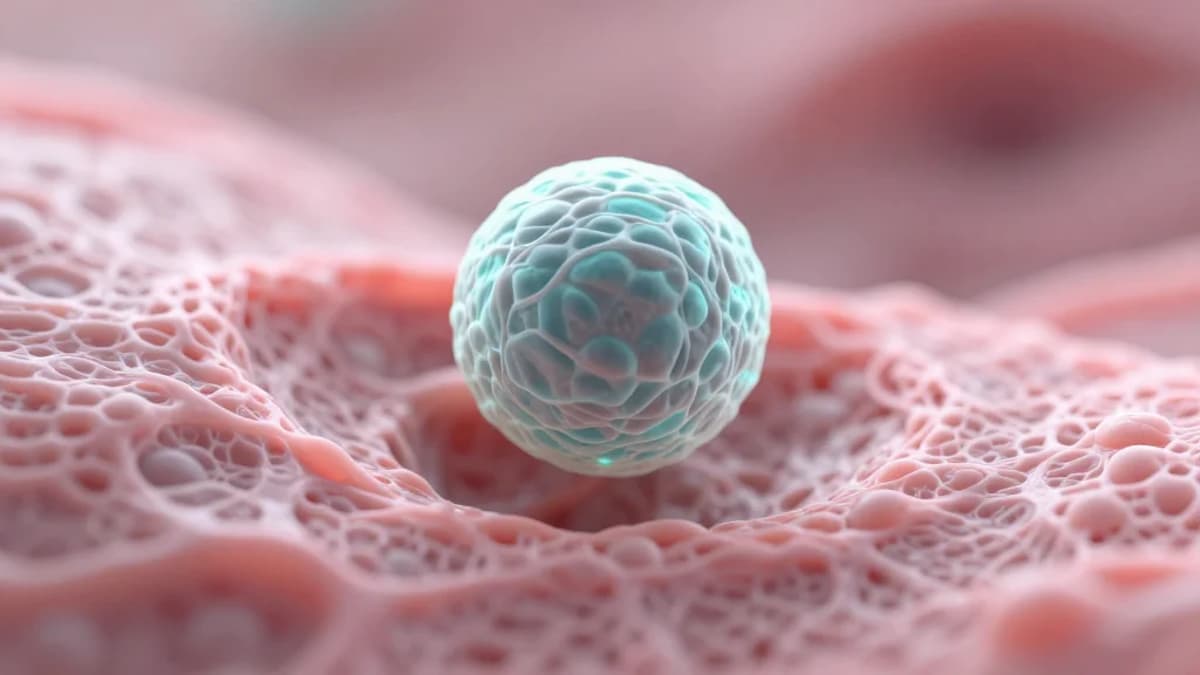
Spatiotemporal Targeting of Messenger RNA Lipid Nanoparticles to the Endometrium for the Treatment of Reproductive Disorders
•January 19, 2026
0
Why It Matters
The technology offers a minimally invasive, organ‑specific mRNA therapy that could dramatically improve outcomes for women with thin endometrium or recurrent implantation failure while minimizing systemic side effects.
Key Takeaways
- •RGD‑LNPs achieve >3000‑fold uterine/liver expression ratio.
- •60‑fold lower systemic GM‑CSF exposure vs recombinant protein.
- •Single intra‑uterine dose restores implantation in injured mice.
- •Direct C18‑RGD attachment outperforms PEG‑spacer conjugation.
- •Optimal RGD density is 5 mol % for uterine targeting.
Pulse Analysis
Targeted mRNA delivery has reshaped therapeutic strategies across medicine, yet the uterus has remained a challenging site due to its rich vasculature and rapid systemic absorption. By attaching an RGD peptide directly to the lipid component of LNPs, the researchers leveraged the natural overexpression of integrins during the window of implantation, creating a multivalent binding interface that anchors the particles to the endometrial surface. This design circumvents the steric hindrance introduced by conventional PEG‑spacer ligands, resulting in markedly higher uterine uptake and dramatically reduced off‑target expression in the liver and spleen. The approach aligns with broader trends in precision nanomedicine, where ligand density and presentation are fine‑tuned to match tissue‑specific receptor landscapes.
The therapeutic implications are immediate for assisted reproductive technologies. Thin endometrium and recurrent implantation failure affect a substantial proportion of patients undergoing in‑vitro fertilization, yet effective pharmacologic options are scarce. The study’s GM‑CSF mRNA‑LNP formulation achieved sustained, localized cytokine production that outperformed recombinant protein in both magnitude and duration, while exposing the patient to 60‑fold less systemic cytokine. This localized boost in macrophage and stromal activity translated into full restoration of implantation rates in a murine injury model, suggesting a viable path toward clinical translation for women with endometrial insufficiency or Asherman’s syndrome.
Beyond reproductive health, the bifunctional ligand‑conjugated (BLOC) strategy could be adapted for other gynecologic conditions, such as endometriosis or early‑stage endometrial cancer, where targeted protein expression may modulate the microenvironment without systemic toxicity. The optimal RGD density of 5 mol % balances receptor engagement with particle stability, offering a blueprint for future LNP designs aimed at mucosal or epithelial barriers. As mRNA therapeutics continue to mature, integrating tissue‑specific targeting motifs like RGD will be essential for expanding their utility beyond hepatic applications, positioning this technology at the forefront of next‑generation, organ‑focused gene therapy.
Spatiotemporal targeting of messenger RNA lipid nanoparticles to the endometrium for the treatment of reproductive disorders
0
Comments
Want to join the conversation?
Loading comments...