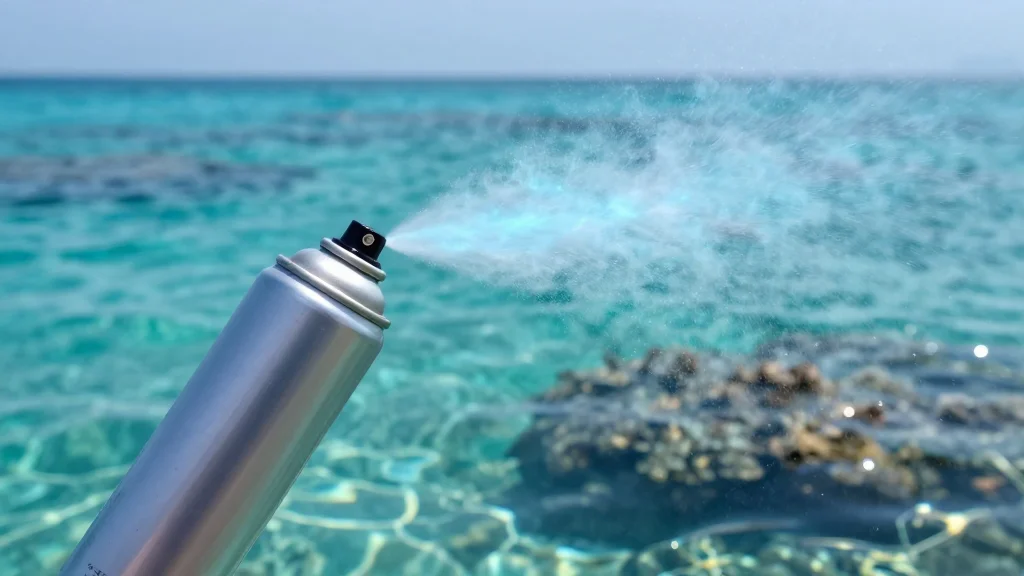
Stardust Solutions Raises $75M to Test Nanoparticle Cloud Brightening for Reef Protection

Companies Mentioned
Why It Matters
If Stardust’s particles can be safely deployed, they could provide a rapid-response tool to shield coral reefs from acute heat stress, buying time for broader emissions reductions. The technology also illustrates how nanomaterials are entering climate‑engineering debates, raising questions about governance, liability, and the balance between private innovation and public oversight. Conversely, missteps could exacerbate regional climate variability, undermining food security for billions and eroding trust in geoengineering research. The funding surge signals that venture capital sees commercial potential in climate‑tech beyond carbon capture, potentially accelerating a wave of private R&D in atmospheric interventions. This could pressure regulators to craft clearer frameworks, either enabling controlled experiments or imposing stricter bans, shaping the future trajectory of nanotech‑enabled climate solutions.
Key Takeaways
- •Stardust Solutions raised $75 million to develop silica‑calcium carbonate cloud‑brightening particles.
- •Company plans to test particle dispersal from high‑altitude aircraft, pending government approval.
- •Materials are biodegradable and derived from food‑grade silica and calcium carbonate.
- •Over 600 scientists have called for an international ban on solar geoengineering.
- •Stardust spent $370,000 on U.S. lobbying last year and is seeking policy guidance.
Pulse Analysis
Stardust’s entry into solar geoengineering marks a pivotal moment where nanotechnology intersects with climate policy. Historically, geoengineering has been the domain of state‑run research programs; the shift to a venture‑backed model could accelerate proof‑of‑concept work but also amplify regulatory friction. The $75 million raise reflects a growing appetite among investors for high‑impact climate tools that promise near‑term returns, especially as traditional mitigation pathways struggle to meet Paris Agreement targets.
From a competitive standpoint, Stardust faces both scientific and political headwinds. The company’s reliance on biodegradable, food‑grade materials may mitigate some environmental concerns, yet the broader climate‑engineering community remains skeptical about unintended side effects, such as altered precipitation patterns. If Stardust can secure a pilot test with a major government—perhaps the U.S. or EU—it could set a precedent that unlocks further private capital, creating a feedback loop that pushes the technology toward commercialization.
Looking ahead, the key variable will be governance. Transparent, peer‑reviewed data and clear international guidelines could transform the current controversy into a structured research agenda. Absent that, the sector risks a backlash that could stall not only Stardust but also other nanotech climate ventures. Stakeholders should watch for legislative moves, especially in states that have already banned geoengineering, and for any formal request from a national agency to conduct a field trial. The outcome will shape whether nanotech‑enabled cloud brightening becomes a viable climate‑adaptation tool or remains a speculative, contested concept.
Stardust Solutions Raises $75M to Test Nanoparticle Cloud Brightening for Reef Protection
Comments
Want to join the conversation?
Loading comments...