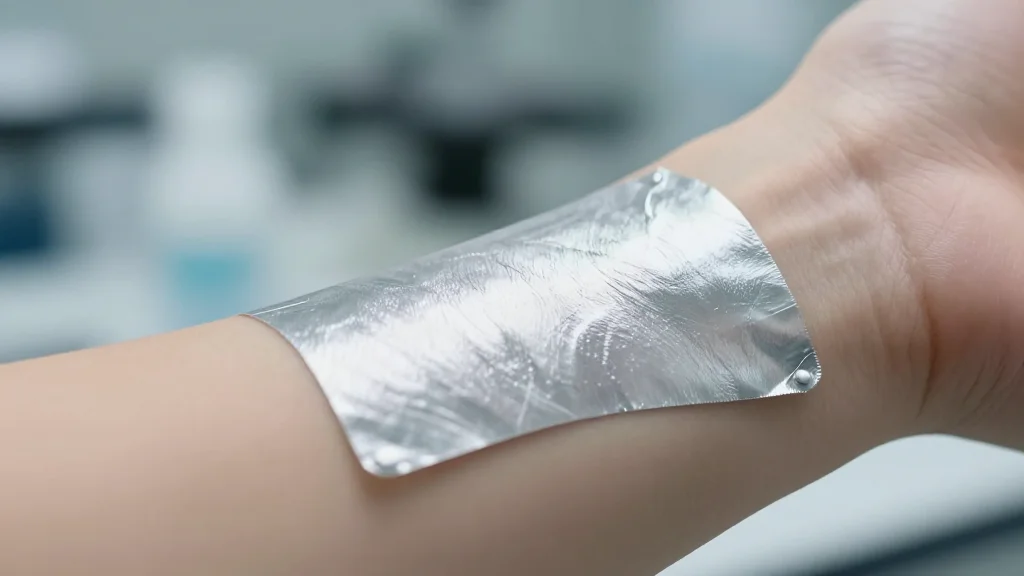
Stretchable Nanomembrane Achieves Metal-Like Conductivity for Skin-Mounted Sensors

Why It Matters
The nanomembrane bridges a longstanding gap between electrical performance and mechanical compliance in wearable technology. Current skin‑mounted devices often sacrifice conductivity for stretchability or rely on bulky encapsulation, limiting comfort and signal fidelity. By offering metal‑like conductivity in a film thin enough to conform to the skin’s micro‑topography, the new material could enable continuous, high‑resolution physiological monitoring without the need for rigid connectors or frequent recalibration. Beyond health care, the technology could transform soft robotics, where tactile sensors must endure large deformations while delivering precise electrical readouts. The ability to pattern the membrane with photolithography also means that complex sensor arrays can be fabricated using existing semiconductor manufacturing infrastructure, lowering barriers to entry for startups and established device makers alike.
Key Takeaways
- •Float‑assembly technique creates nanomembranes with conductivity comparable to bulk metals
- •Process is scalable and compatible with standard photolithography patterning
- •Membranes combine high stretchability with ultrathin (<1 µm) thickness
- •Demonstrated fabrication of multifunctional epidermal sensor arrays
- •Potential to accelerate commercial wearable health monitors and soft‑robotic sensors
Pulse Analysis
The introduction of a conductive, stretchable nanomembrane marks a pragmatic shift from incremental material tweaks to a manufacturing‑ready platform. Historically, the nanotech community has produced high‑performance conductors—graphene, silver nanowires, conductive polymers—but each has suffered from trade‑offs in processability or mechanical robustness. The float‑assembly method sidesteps many of these constraints by leveraging interfacial self‑assembly, a low‑energy step that can be scaled in roll‑to‑roll formats. This aligns with the broader industry trend toward printable electronics, where cost and throughput are as critical as performance.
From a market perspective, the timing is favorable. Wearable health monitoring is projected to exceed $70 billion by 2030, driven by consumer demand for continuous biometric data and by clinical interest in remote patient monitoring. A material that can be integrated directly onto the skin without bulky packaging could reduce device size, improve signal quality, and lower manufacturing costs—factors that could compress the price gap between premium medical wearables and consumer fitness trackers.
Looking ahead, the key challenge will be translating laboratory yields into reliable, high‑volume production. Issues such as long‑term adhesion to skin, biocompatibility of the elastomer matrix, and resistance to sweat and environmental contaminants will need rigorous testing. If the research team can demonstrate durability over thousands of stretch cycles and secure regulatory clearance, the nanomembrane could become a standard building block for the next generation of epidermal electronics, reshaping both the consumer and medical device landscapes.
Stretchable Nanomembrane Achieves Metal-Like Conductivity for Skin-Mounted Sensors
Comments
Want to join the conversation?
Loading comments...