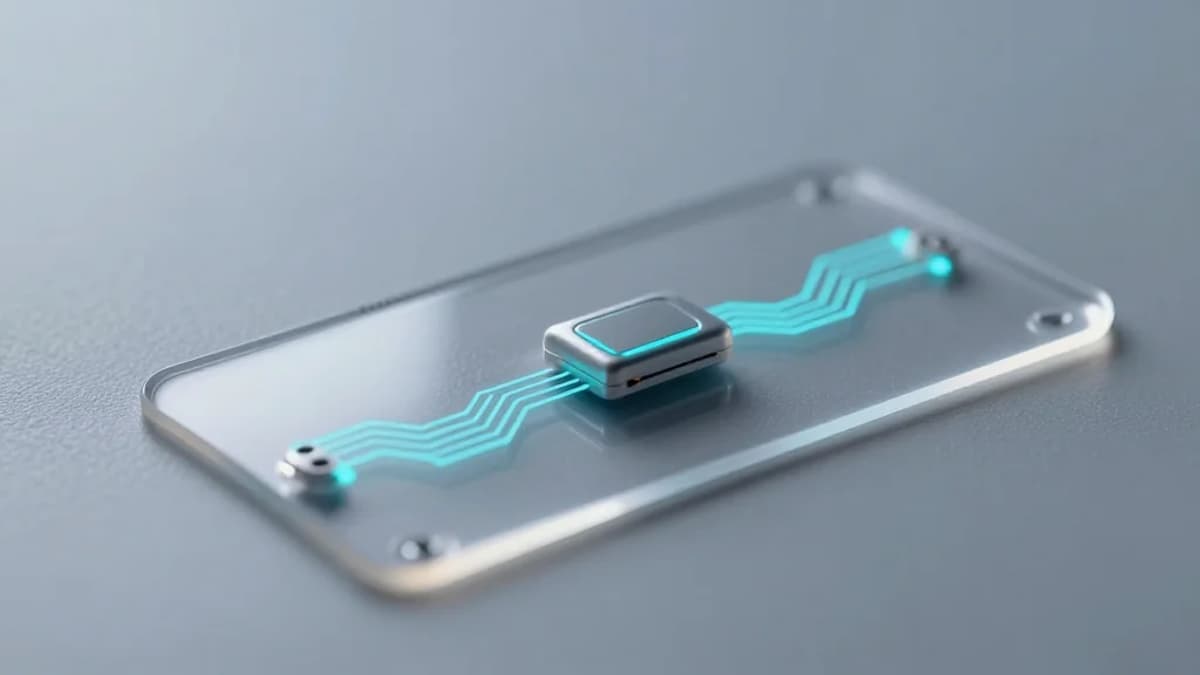
Stretchy Plastics Conduct Electricity via Tiny, Whisker-Like Fibers
•February 23, 2026
0
Why It Matters
The ability to combine high elasticity with reliable conductivity removes a key barrier for implantable and wearable bioelectronics, accelerating market adoption of soft, long‑lasting medical devices.
Key Takeaways
- •Salt additives generate whisker fibers, boosting conductivity
- •Lithium salts increase water uptake, enhancing stretchability
- •Cryo‑EM reveals nanofiber network governing ion/electron transport
- •Conductivity remains stable despite polymer swelling with water
- •Material promises longer‑lasting implantable devices and flexible sensors
Pulse Analysis
Conductive, stretchable polymers have become a cornerstone of soft‑robotics and emerging bioelectronics, bridging the mechanical compliance of tissues with the electrical performance of traditional semiconductors. Among them, PEDOT:PSS stands out for its ability to transport electrons while remaining compatible with aqueous environments, making it a prime candidate for skin‑mounted sensors, flexible displays, and implantable monitors. Recent advances in organic electronics have demonstrated that tuning polymer morphology can dramatically affect charge mobility, yet scalable strategies for simultaneously achieving high stretch ratios and low resistance remain scarce.
The Penn State team employed cryogenic electron microscopy to freeze‑frame PEDOT:PSS droplets at –180 °C, revealing a network of hair‑like nanofibers that form only when specific salts and water are introduced. Lithium‑based salts increase water uptake, softening the polymer and prompting the self‑assembly of whisker fibers that act as dual pathways for ionic and electronic charge. The researchers also observed that the fiber density scales with salt concentration, providing a tunable parameter for designers to balance conductivity against mechanical softness, a critical design lever for implantable interfaces. This nanostructure preserves conductivity even as the matrix swells, solving the long‑standing trade‑off between elasticity and electrical performance.
These findings open a clear pathway for next‑generation bioelectronic implants that require long‑term mechanical conformity without sacrificing signal fidelity. Stretchable PEDOT:PSS could extend pacemaker lifespans, enable continuous glucose monitoring, and power epidermal electromyography patches that adhere like a second skin. Regulatory bodies are closely watching these materials, as biocompatibility and long‑term stability are essential for FDA approval, suggesting that early adopters who certify the technology could capture premium market share. As manufacturers integrate cryo‑EM‑guided formulations, the market for soft‑robotic actuators and wearable health monitors is poised to grow, driving investment in polymer engineering and advanced microscopy platforms.
Stretchy plastics conduct electricity via tiny, whisker-like fibers
0
Comments
Want to join the conversation?
Loading comments...