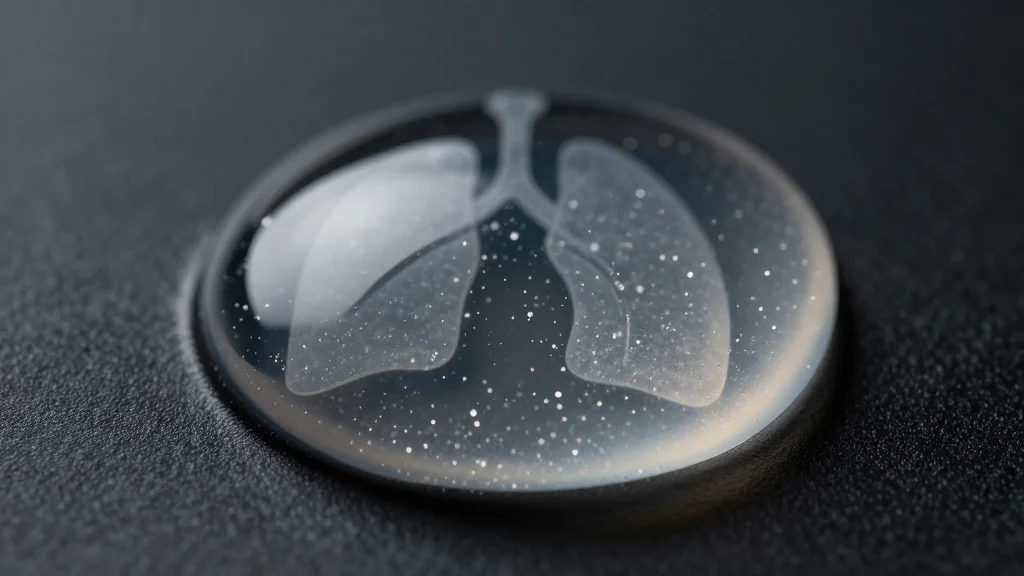
Study Finds Nanoplastics Breach Lung Surfactant Barrier, Threatening Respiratory Health

Why It Matters
The ability of nanoplastics to cross the lung surfactant barrier creates a direct pathway for these particles to enter the circulatory system, potentially linking airborne plastic pollution to systemic health effects. This discovery could drive new regulatory frameworks for indoor air quality, push manufacturers toward safer material designs, and stimulate investment in filtration technologies capable of capturing nanoscale particles. Beyond immediate health concerns, the research highlights a broader challenge for nanotechnology: the unintended consequences of engineered particles interacting with biological systems. As nanomaterials become more prevalent in consumer goods, understanding their behavior at the smallest scales will be essential for safeguarding public health.
Key Takeaways
- •Czech researchers demonstrated nanoplastic particles crossing lung surfactant in a lab model.
- •Polystyrene nanoparticles were engineered to mimic household‑generated wear particles.
- •Surfactant disruption was detected via changes in surface tension and light refraction.
- •Study suggests indoor air may be a major source of inhalable nanoplastics.
- •Researchers plan animal studies and explore surfactant‑protective interventions.
Pulse Analysis
The study arrives at a moment when the scientific community is increasingly aware of microplastic exposure, but the nanometer scale has remained largely uncharted. By proving that nanoplastics can breach the alveolar surfactant, the research fills a critical gap in our understanding of how the smallest plastic fragments interact with human physiology. Historically, concerns have focused on ingestion pathways; this work shifts the narrative toward inhalation, a route that may be more immediate and harder to control.
From a market perspective, the findings could accelerate demand for advanced air‑filtration solutions that target nanoscale contaminants. Companies developing electrostatic precipitators, nanofiber filters, or surfactant‑mimicking additives may see new opportunities, while manufacturers of consumer plastics could face pressure to redesign products to reduce nanoparticle shedding. The regulatory landscape is likely to evolve, with agencies such as the EPA and EU's ECHA potentially drafting guidelines for indoor nanoplastic emissions.
Looking ahead, the key question is whether the observed laboratory penetration translates into measurable health outcomes in real‑world exposure scenarios. Longitudinal epidemiological studies will be essential to quantify risk, and interdisciplinary collaborations between material scientists, pulmonologists, and toxicologists will shape the next wave of policy and innovation. The study underscores that nanotech advances must be paired with rigorous safety assessments to prevent unintended public‑health consequences.
Study Finds Nanoplastics Breach Lung Surfactant Barrier, Threatening Respiratory Health
Comments
Want to join the conversation?
Loading comments...