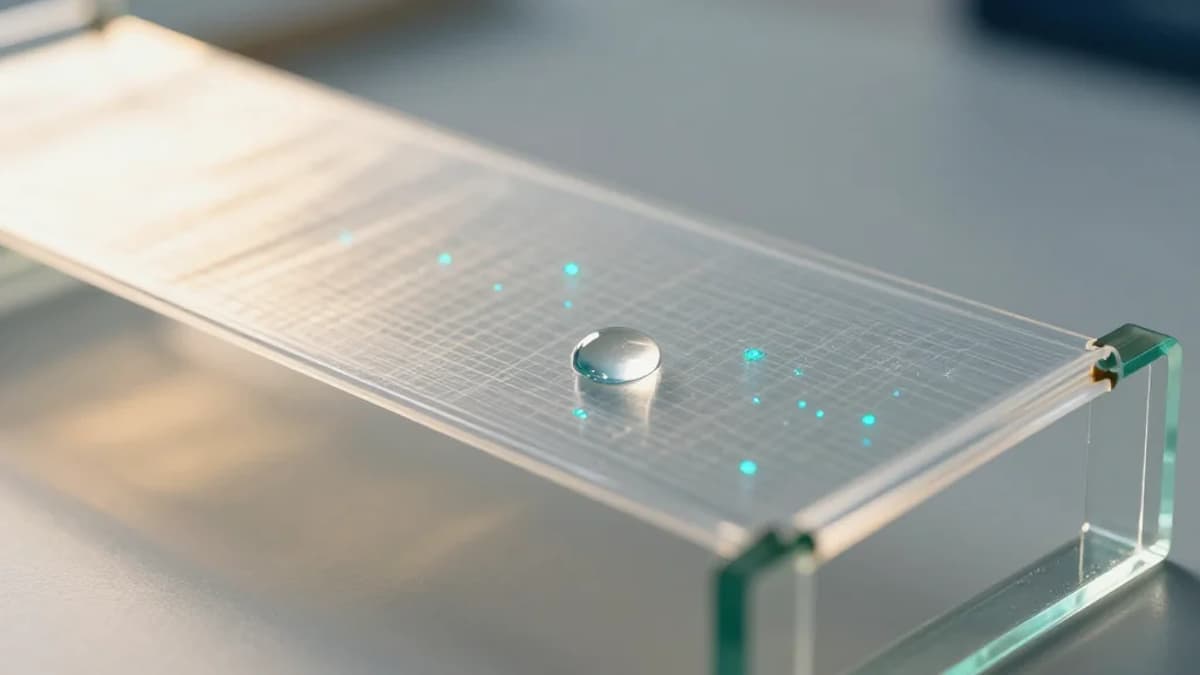
Sunlight-Activated Graphene Membrane Recovers Battery-Grade Lithium From Brines
•March 11, 2026
0
Why It Matters
Solar‑driven lithium extraction could dramatically cut water use and energy costs, offering a faster, greener alternative to evaporation ponds that dominate today’s brine processing.
Key Takeaways
- •Graphene nanoribbon membrane achieves 0.253 mol m⁻² h⁻¹ lithium flux.
- •Li⁺/Mg²⁺ selectivity reaches 21, 28‑fold enrichment.
- •Solar heating raises surface to ~48 °C under two‑sun light.
- •Produced lithium carbonate 97 % purity, near battery grade.
- •No external pumps; operation driven solely by sunlight.
Pulse Analysis
The surge in electric‑vehicle demand has placed lithium at the heart of the global energy transition, yet traditional brine extraction relies on expansive evaporation ponds that consume vast water volumes and months of processing time. These ponds struggle with high magnesium concentrations that dilute lithium yields and increase operational costs. Emerging membrane technologies promise to sidestep these constraints by delivering selective ion transport in compact modules, thereby shortening production cycles and reducing the ecological footprint of lithium mining.
The newly reported membrane leverages the unique chemistry of edge‑functionalized graphene nanoribbons, which present oxygen and nitrogen sites that transiently bind lithium while allowing its partial dehydration. Coupled with a photothermally reduced graphene oxide scaffold, the structure remains stable in hyper‑saline environments and converts sunlight into localized heat. This photothermal effect lowers solution viscosity and further favors lithium migration, resulting in a permeation rate of 0.253 mol m⁻² h⁻¹ and a Li⁺/Mg²⁺ selectivity of 21. When exposed to simulated two‑sun conditions, the system concentrates lithium 28‑fold, delivering carbonate of 97 % purity—levels suitable for battery manufacturing.
If scaled, this solar‑driven approach could reshape the lithium supply chain by eliminating the need for energy‑intensive pumps and reducing water consumption by orders of magnitude. Its modular nature facilitates deployment near brine sources, potentially shortening logistics and lowering capital expenditures. However, challenges remain in membrane longevity, large‑scale fabrication, and integration with downstream processing. Continued research into material durability and cost‑effective manufacturing will be critical to transition this promising laboratory breakthrough into a commercial reality.
Sunlight-activated graphene membrane recovers battery-grade lithium from brines
0
Comments
Want to join the conversation?
Loading comments...