Nanotech News and Headlines
  • All Technology
  • AI
  • Autonomy
  • B2B Growth
  • Big Data
  • BioTech
  • ClimateTech
  • Consumer Tech
  • Crypto
  • Cybersecurity
  • DevOps
  • Digital Marketing
  • Ecommerce
  • EdTech
  • Enterprise
  • FinTech
  • GovTech
  • Hardware
  • HealthTech
  • HRTech
  • LegalTech
  • Nanotech
  • PropTech
  • Quantum
  • Robotics
  • SaaS
  • SpaceTech
AllNewsDealsSocialBlogsVideosPodcastsDigests

Nanotech Pulse

EMAIL DIGESTS

Daily

Every morning

Weekly

Sunday recap

NewsDealsSocialBlogsVideosPodcasts
NanotechNewsSupercapacitor Developer Skeleton Opens First US Engineering Facility in Houston, Texas
Supercapacitor Developer Skeleton Opens First US Engineering Facility in Houston, Texas
Big DataNanotech

Supercapacitor Developer Skeleton Opens First US Engineering Facility in Houston, Texas

•February 9, 2026
0
Data Center Dynamics
Data Center Dynamics•Feb 9, 2026

Why It Matters

Local engineering and upcoming manufacturing give Skeleton a strategic foothold in the fast‑growing U.S. AI‑data‑center market, enhancing energy security and competitive advantage. The capability to cut data‑center power consumption addresses a critical bottleneck for AI expansion.

Key Takeaways

  • •Skeleton opens Houston engineering hub for AI supercapacitors.
  • •Graphene supercapacitors can cut data‑center energy use 45%.
  • •U.S. manufacturing slated for first half of 2026.
  • •Company already deployed over 100 MW in North America.
  • •European factories cost $270M Germany, $60M Finland.

Pulse Analysis

The surge in artificial‑intelligence workloads has exposed a fragile power infrastructure, prompting data‑center operators to seek rapid‑response energy storage. Graphene‑based supercapacitors, like those developed by Skeleton Technologies, deliver millisecond‑scale power bursts, bridging the gap between traditional batteries and the grid. By leveraging the material’s high conductivity and surface area, these devices can absorb and release energy efficiently, translating into measurable reductions in overall electricity consumption for GPU‑intensive tasks.

Skeleton’s Houston engineering center marks the company’s first dedicated U.S. footprint, positioning it close to the nation’s largest AI clusters in Texas, Arizona and the Carolinas. The facility will focus on system integration, custom design, and testing, accelerating time‑to‑market for customers demanding localized support. Coupled with a planned manufacturing line slated for 2026, the expansion signals a shift from pure export‑based sales to a hybrid model that blends engineering services with domestic production, potentially lowering logistics costs and improving supply‑chain resilience.

For the broader energy ecosystem, the deployment of high‑power supercapacitors could alleviate grid stress caused by sudden demand spikes, a growing concern as AI accelerators proliferate. By smoothing load profiles, these devices help utilities defer costly infrastructure upgrades and support renewable integration. Investors and industry watchers see Skeleton’s move as a bellwether for next‑generation storage solutions, suggesting that graphene‑based technologies may soon transition from niche applications to mainstream components in data‑center and utility portfolios.

Supercapacitor developer Skeleton opens first US engineering facility in Houston, Texas

Plans to establish US manufacturing capacity for AI data center solutions in the first half of 2026 · February 09 2026 · Zachary Skidmore

Estonian energy‑equipment company Skeleton Technologies has officially expanded into the U.S. market with the opening of a new engineering facility in Houston, Texas.

![Skeleton Technologies]

The company develops graphene‑based supercapacitors for the utility and AI data‑center market. The system is a high‑power energy‑storage device designed to handle sharp load fluctuations in grids and AI data centers in under a millisecond.

Skeleton claims its systems enable AI data centers to smooth power demand and reduce energy consumption by up to 45 %, easing grid impact and improving computing efficiency.

“Access to reliable power is increasingly becoming the primary bottleneck for AI infrastructure expansion in the United States,” said Taavi Madiberk, CEO and co‑founder of Skeleton Technologies.

“The unprecedented level of electricity demand and grid strain – especially from AI data centers – makes the US our fastest‑growing market by far and is driving massive opportunity for Skeleton Technologies. We’re moving quickly to build local manufacturing, strengthen customer relationships, and position ourselves as a strategic partner in America’s energy security and AI competitiveness.”

The U.S. is already a core market for the company, with more than 100 MW of systems deployed nationwide and roughly half of its revenue generated from North‑American customers. Skeleton plans to establish U.S. manufacturing capacity for AI data‑center solutions in the first half of 2026.

The expansion follows the opening of two European factories in November 2025, including a $270 million facility in Germany and a $60 million plant in Finland.

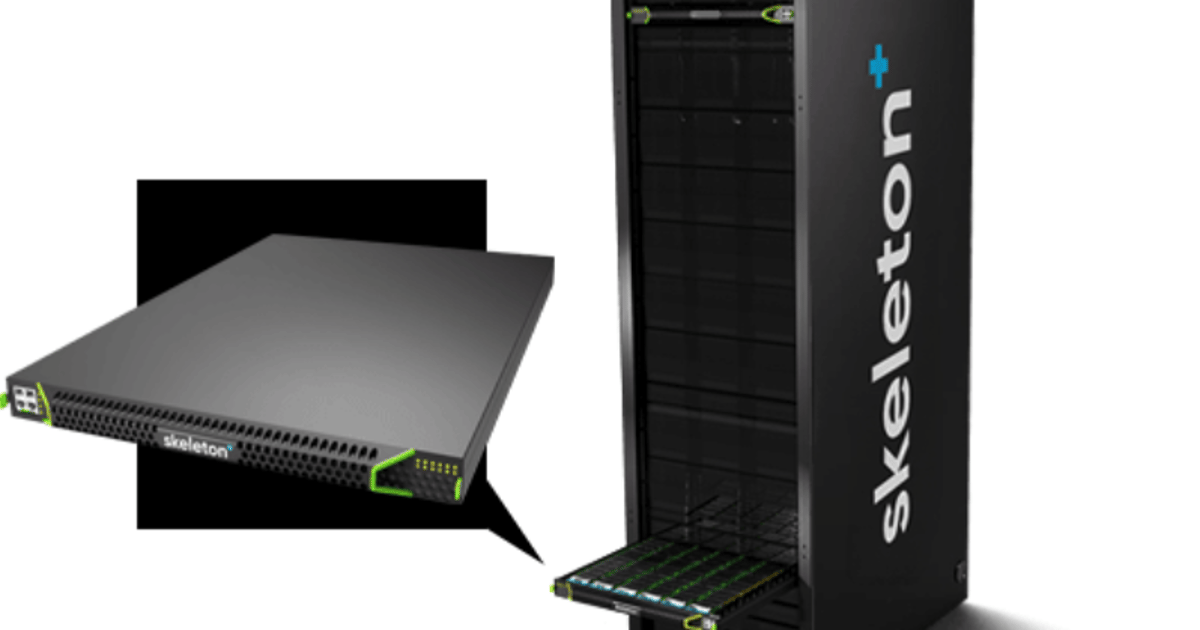
In June 2025, the company launched a new power shelf for data centers that uses its graphene‑based supercapacitors. Dubbed GrapheneGPU, the shelf can handle power fluctuations associated with GPU use.

Skeleton was founded in 2009 in Tartu, Estonia. Its first customer was the European Space Agency, and it has since seen uptake across the German automotive sector, with use in BMW’s i7 and M‑series models.

Investors in the firm include Siemens Financial Services (SFS), Marubeni Corporation, FirstFloor Capital, and EIT InnoEnergy.

Read Original Article
0

Comments

Want to join the conversation?

Loading comments...