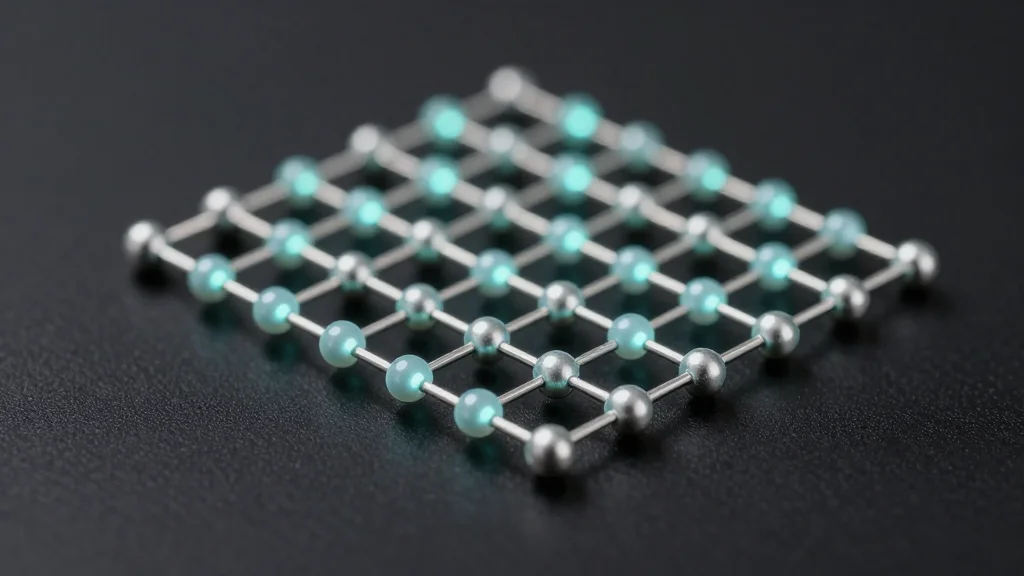
Surface Modulation, Optics, and Electrochemical Hydrogen Evolution Studies on CdS‐Ag2S Superlattice Heterostructures
Why It Matters
The study demonstrates a tunable pathway to improve catalytic efficiency and optoelectronic performance, accelerating the commercialization of semiconductor‑based renewable energy technologies.
Key Takeaways
- •Ordered CdS‑Ag2S nanorods reduce charge recombination
- •DDT ligands boost hydrogen evolution overpotential under illumination
- •ODA‑capped random superlattices show slower HER activity
- •Findings advance semiconductor catalysts for renewable energy
Pulse Analysis
Semiconductor superlattices have long been prized for their ability to engineer periodic electronic states, a feature that can dramatically enhance charge transport and light‑matter interactions. In the case of CdS‑based quantum structures, the combination of a wide‑bandgap sulfide with the narrower‑gap Ag₂S creates a type‑II band alignment that facilitates spatial separation of electrons and holes. This intrinsic property makes CdS‑Ag₂S heterostructures attractive for applications ranging from photodetectors to catalytic platforms, where efficient carrier extraction is paramount.
The research team employed a molecular‑source strategy to fabricate two distinct architectures. Octadecyl amine (ODA) ligands promoted the formation of random quantum‑dot superlattices via phosphine‑mediated decomposition, yielding a heterogeneous interface with abundant surface trap states. Conversely, dodecane thiol (DDT) induced ordered nanorod superlattices through thiol‑driven decomposition, producing well‑defined periodic interfaces and tighter atomic packing. Time‑resolved photoluminescence revealed that the DDT‑capped structures achieved band‑edge lifetimes around 1.7 ns, markedly shorter than the microsecond‑scale trap‑mediated decay observed in ODA samples, indicating more efficient charge recombination pathways.
From a performance standpoint, the ordered DDT superlattices outperformed their random counterparts in neutral‑media hydrogen evolution reactions. Under simulated sunlight they required an overpotential of roughly 1.57 V to sustain 10 mA cm⁻², a modest improvement over dark conditions and a clear advantage over ODA‑capped assemblies, which needed about 1.64 V. This efficiency gain stems from the metallic character of Ag₂S and the enhanced interfacial charge accumulation in the ordered lattice. The findings suggest that precise ligand control can be leveraged to fine‑tune catalytic activity while simultaneously opening avenues for high‑efficiency LEDs and other optoelectronic devices, positioning CdS‑Ag₂S superlattices as a versatile platform in the renewable‑energy toolbox.
Surface Modulation, Optics, and Electrochemical Hydrogen Evolution Studies on CdS‐Ag2S Superlattice Heterostructures
Comments
Want to join the conversation?
Loading comments...