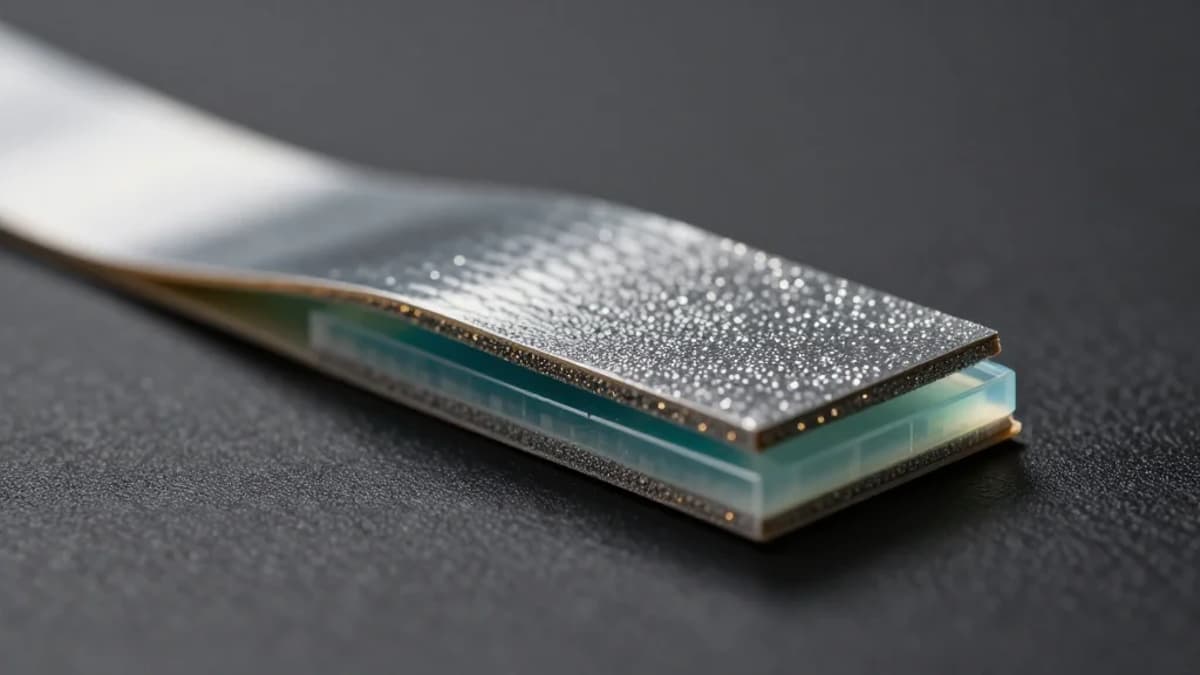
Synergistic Integration of Quantum Materials with Smart Electrolytes for Next‐Generation Multifunctional Supercapacitors: Advances, Challenges, and Future Prospects
•February 6, 2026
0
Companies Mentioned

Why It Matters
By marrying quantum‑engineered electrodes with adaptive electrolytes, manufacturers can produce high‑performance, flexible energy storage that meets the growing demand for wearable and AI‑driven devices, accelerating market adoption of intelligent power systems.
Key Takeaways
- •Quantum materials boost supercapacitor energy density.
- •Smart electrolytes enable self‑healing, stimulus‑responsive devices.
- •Interface engineering improves charge transfer and capacitance.
- •Computational modeling guides quantum capacitance optimization.
- •Scalability and manufacturing remain primary challenges.
Pulse Analysis
The surge in artificial‑intelligence workloads and the push for greener power have placed electrochemical storage at the forefront of research. Supercapacitors, prized for rapid charge‑discharge cycles, are evolving beyond simple energy buffers toward multifunctional platforms. Incorporating quantum materials—such as quantum dots, MXenes, MOFs, COFs, and transition‑metal dichalcogenides—introduces quantum confinement effects and high surface area, directly raising capacitance and energy density. These nanostructured conductors also provide tunable electronic states that can be leveraged for intelligent device behavior.
Smart electrolytes complement quantum electrodes by offering stimulus‑responsive conductivity, self‑healing matrices, and shape‑memory capabilities. When the electrolyte swells, contracts, or changes color in response to temperature, strain, or voltage, the entire supercapacitor can adapt its form factor while preserving performance. Interface engineering—through morphological control, surface functionalization, and atomic‑level bonding—optimizes charge transfer pathways and minimizes resistance. The synergistic QM‑electrolyte interface has demonstrated capacitance gains of 30‑50 % and energy‑density improvements that rival thin‑film batteries, all while retaining flexibility for wearable electronics.
Despite these advances, translating laboratory prototypes into commercial products faces hurdles. Scalable synthesis of defect‑free quantum nanomaterials and uniform smart‑electrolyte formulations remain costly and complex. Computational tools, especially density‑functional theory, are increasingly used to predict quantum capacitance and guide interface design, shortening development cycles. Future research must focus on roll‑to‑roll manufacturing, long‑term reliability testing, and integration with IoT platforms to realize truly intelligent energy storage. Success will unlock wearable health monitors, soft robotics, and autonomous sensors powered by next‑generation supercapacitors.
Synergistic Integration of Quantum Materials with Smart Electrolytes for Next‐Generation Multifunctional Supercapacitors: Advances, Challenges, and Future Prospects
0
Comments
Want to join the conversation?
Loading comments...