Synergistic Movement of the Dual‐Layer Photonic Guanine Crystal Arrays Reveals a Mechanism of Light Stimuli‐Responsive Structural Color Change in the Zebrafish Skin
•February 25, 2026
0
Why It Matters
Understanding this biologically driven, light‑responsive photonic system provides a blueprint for engineering adaptive optical materials, potentially advancing camouflage, sensing, and display technologies.
Key Takeaways
- •Dual-layer guanine crystals drive zebrafish color shift
- •Inclined S‑iridophore crystals tilt with light exposure
- •Horizontal L‑iridophore layer modulates reflectance intensity
- •“Dragon Boat” model outperforms traditional “Venetian blind”
- •Findings guide tunable biocompatible photonic material design
Pulse Analysis
Structural coloration, where micro‑scale architectures manipulate light without pigments, is a hallmark of many marine species. In zebrafish, the iconic striped pattern exhibits a rapid, reversible shift from slate‑blue under dim conditions to vivid blue when illuminated. This phenomenon is not merely aesthetic; it serves camouflage and social signaling functions that are critical for survival. By dissecting the underlying photonic architecture, researchers gain a rare glimpse into nature’s own tunable optical circuitry, a topic that has attracted growing interest from material scientists and optical engineers alike.
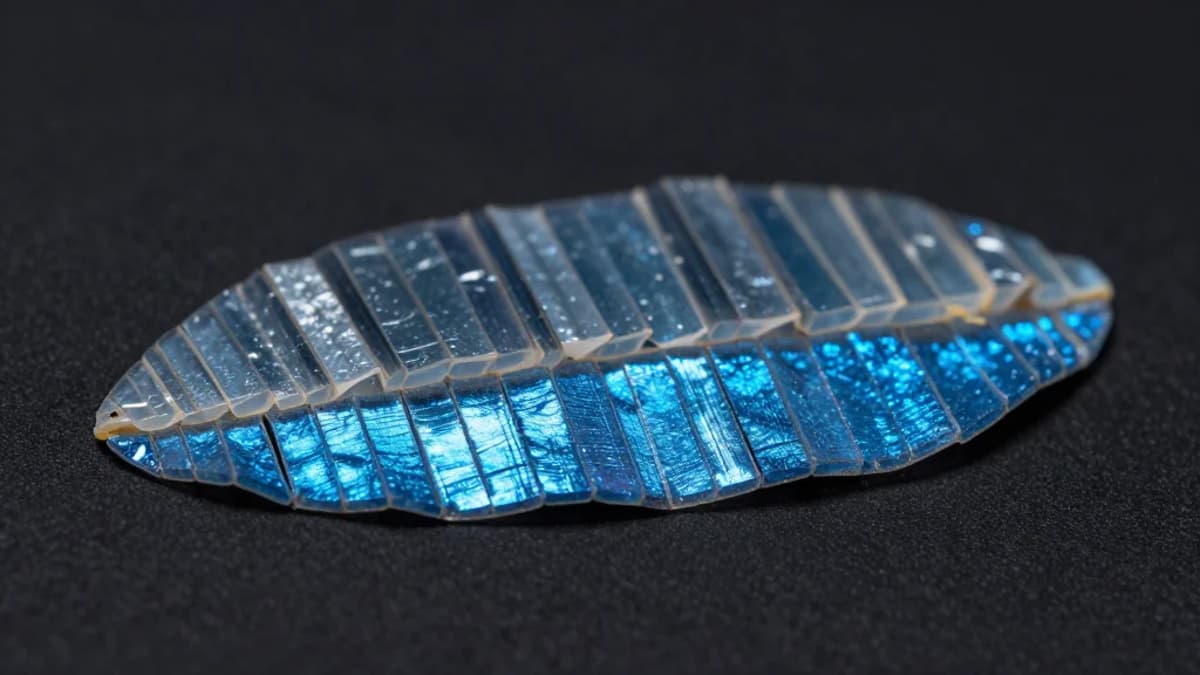
The team identified two distinct iridophore layers: S‑iridophores with inclined guanine crystals and L‑iridophores with horizontally aligned crystals. Light exposure triggers a coordinated tilt of the S‑layer while the L‑layer adjusts its spacing, jointly shifting the reflectance peak and amplifying intensity. This dual‑layer interaction could not be explained by the classic “Venetian blind” model, which assumes a single photonic sheet. Instead, the newly proposed “Dragon Boat” model captures the synergistic motion, linking crystal tilting angles, inter‑crystal spacing, and interlayer distance to the observed color change.
Translating the Dragon Boat principle into synthetic systems could unlock a new class of adaptive photonic devices. By engineering multilayered nanocrystal arrays that mimic the zebrafish’s dual‑layer geometry, manufacturers can create coatings that dynamically adjust hue or reflectivity in response to ambient light, useful for smart camouflage, optical sensors, and energy‑efficient displays. Moreover, the biocompatible nature of guanine crystals opens pathways for medical imaging contrast agents that modulate signals without chemical dyes. Ongoing research aims to scale these bio‑inspired structures while maintaining precise control over tilt angles and interlayer gaps.
Synergistic Movement of the Dual‐Layer Photonic Guanine Crystal Arrays Reveals a Mechanism of Light Stimuli‐Responsive Structural Color Change in the Zebrafish Skin
0
Comments
Want to join the conversation?
Loading comments...