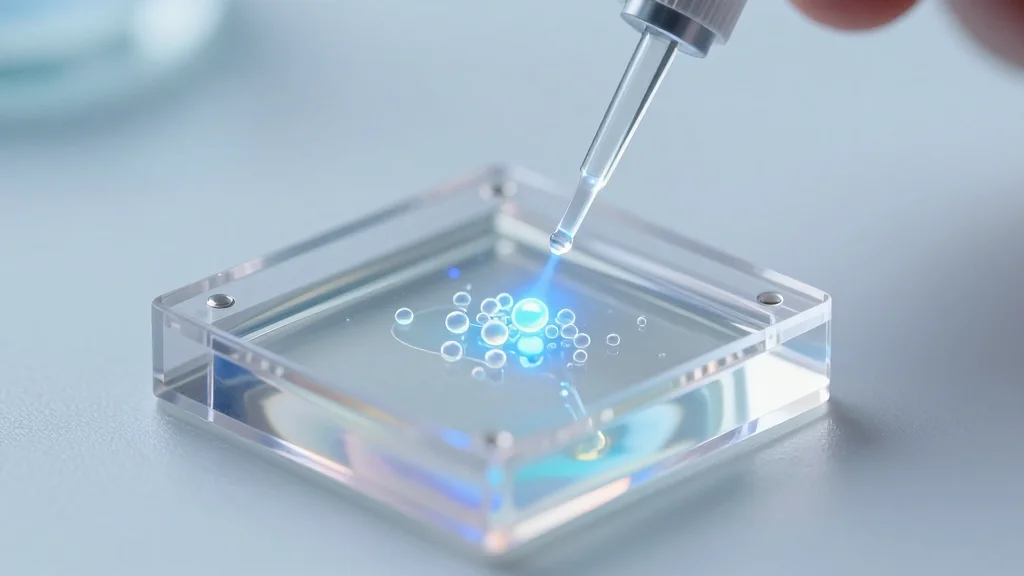
These Nanotweezers Grab Thousands of Tiny Cell Packets in Seconds and Expose Their Hidden Cargo
Why It Matters
IET provides rapid, artifact‑free analysis of individual EVs, a critical step toward scalable nanomedicine diagnostics and drug‑delivery platforms. Its high‑throughput capability could reshape how researchers and clinicians study cellular communication in disease.
Key Takeaways
- •IET traps thousands of extracellular vesicles within seconds
- •Label‑free interferometric imaging paired with Raman spectroscopy
- •Enables high‑throughput, single‑particle analysis without chemical stains
- •Potential applications in nanomedicine, diagnostics, and drug delivery
Pulse Analysis
Extracellular vesicles (EVs) have emerged as pivotal messengers in cellular communication, carrying proteins, RNA, and lipids that reflect a cell’s physiological state. Traditional analysis methods, such as bulk sequencing or flow cytometry, often mask the heterogeneity of individual vesicles, while optical tweezers—though precise—are hampered by sequential trapping and low throughput. The inability to rapidly profile single EVs limits both basic research into disease mechanisms and the development of EV‑based biomarkers.
The interferometric electrohydrodynamic tweezers (IET) introduced by Ndukaife’s team sidestep these bottlenecks by leveraging electrohydrodynamic flows to corral thousands of nanoscale particles simultaneously. Integrated interferometric imaging offers nanometer‑scale positional accuracy without fluorescent labels, while on‑chip Raman spectroscopy provides a molecular fingerprint for each trapped vesicle. This label‑free, real‑time approach preserves the native state of EVs, reducing artifacts associated with staining or fixation, and delivers data at a scale previously unattainable in a laboratory setting.
From a market perspective, the ability to rapidly and accurately characterize EVs opens new avenues for liquid‑biopsy diagnostics, targeted drug delivery, and environmental monitoring of nanoparticle pollutants. Pharmaceutical firms can now screen EV cargo for therapeutic payloads more efficiently, while biotech startups may commercialize portable IET‑based platforms for point‑of‑care testing. As the field of nanomedicine matures, technologies that combine high throughput with molecular specificity—like IET—are likely to become foundational tools, driving investment and accelerating the translation of EV research into clinical applications.
These nanotweezers grab thousands of tiny cell packets in seconds and expose their hidden cargo
Comments
Want to join the conversation?
Loading comments...