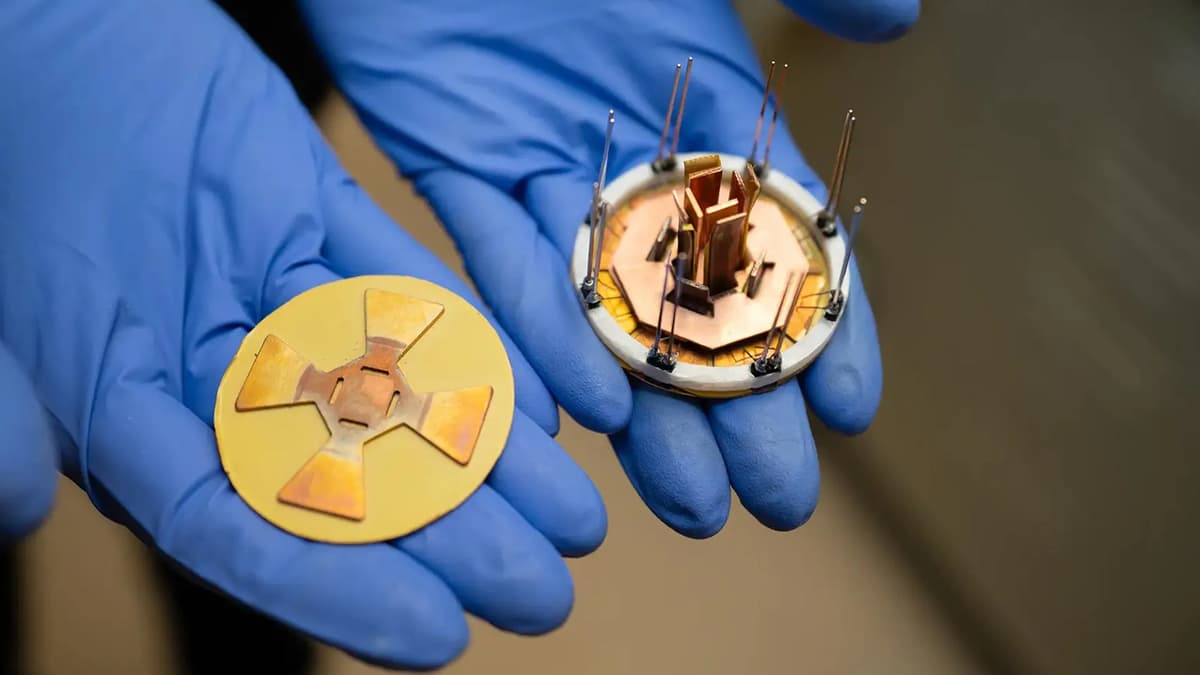
This Tiny Power Module Could Change How the World Uses Energy
•January 19, 2026
0
Why It Matters
By dramatically reducing conversion losses and size, ULIS can lower operating expenses and enable lighter, more reliable high‑power equipment essential for grid modernization and electrified transport.
Key Takeaways
- •5× energy density vs prior SiC modules
- •Parasitic inductance reduced 7‑9× for faster switching
- •Flat octagonal layout cuts size, weight, cost
- •Wireless control enables plug‑and‑play integration
- •Adaptable to future GaN and Ga₂O₃ semiconductors
Pulse Analysis
The ULIS breakthrough stems from rethinking power‑module architecture rather than incremental material tweaks. By flattening the circuitry into an octagonal, pancake‑like stack, NREL eliminated the magnetic choke points that plague conventional boxy designs. Coupled with silicon‑carbide’s high‑temperature tolerance, the module’s ultra‑low inductance slashes energy waste during each switching cycle, delivering efficiencies that rival the best laboratory prototypes while remaining manufacturable at scale. This engineering pivot illustrates how geometry and material synergy can unlock performance gains previously thought exclusive to exotic semiconductor alloys.
Beyond the lab, ULIS promises tangible economic benefits across several high‑growth sectors. Data‑center operators, grappling with ever‑rising power bills, can replace bulky converters with compact units that dissipate less heat and require fewer cooling resources. Grid operators stand to gain from reduced line losses and longer service intervals, while aerospace firms can shave critical weight from electric vertical take‑off and landing (eVTOL) aircraft, accelerating certification timelines. The module’s wireless monitoring further simplifies integration into military vehicles and emerging fusion‑reactor prototypes, where predictive maintenance is a mission‑critical capability. By driving unit costs into the low‑hundreds, ULIS makes advanced power conversion accessible to a broader market.
Looking ahead, ULIS’s design is deliberately semiconductor‑agnostic, positioning it to adopt next‑generation materials such as gallium nitride or gallium oxide as they mature. This future‑proofing aligns with global decarbonization goals, where efficient, compact power electronics are a linchpin for AI‑driven data processing, electrified transport, and renewable‑energy storage. If licensing gains traction, the ripple effect could be a cascade of lighter, smarter power systems that lower carbon footprints while enhancing reliability—a compelling proposition for investors, policymakers, and engineers alike.
This tiny power module could change how the world uses energy
0
Comments
Want to join the conversation?
Loading comments...