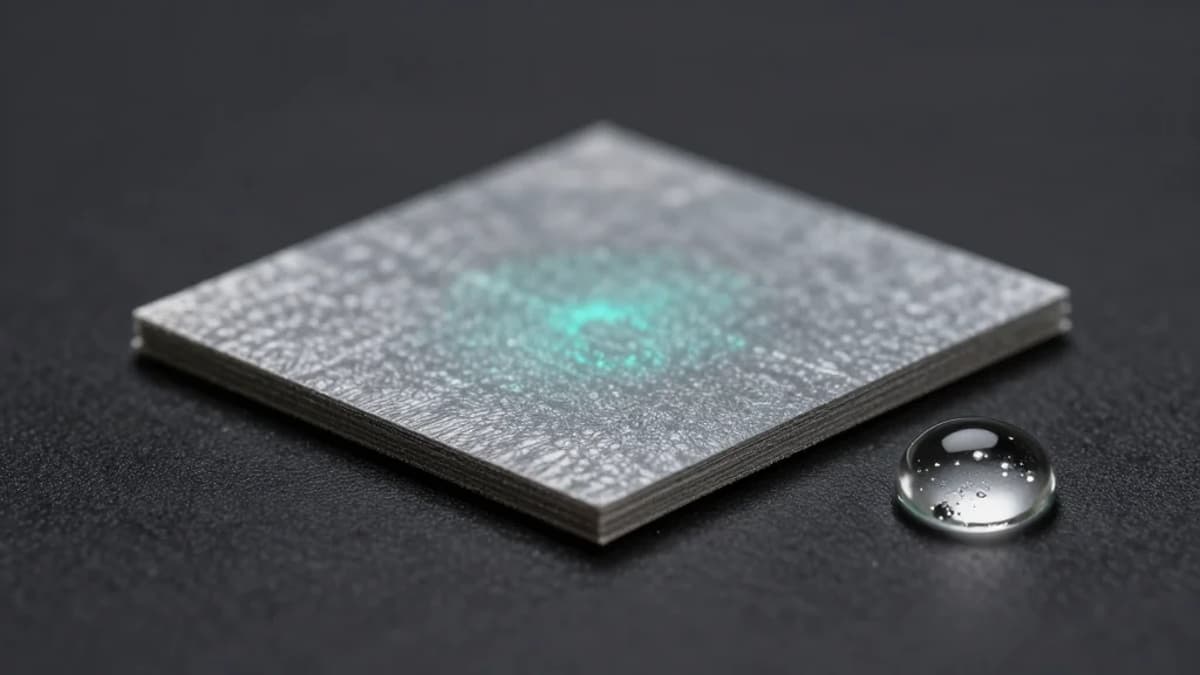
Ti3C2 MXene Nanosheets and K+/Strong Base Synergistically Regulated G‐C3N5 Jointly Construct a Novel Photogenerated Electron Capacitor for Efficient Photosynthesis of H2O2
•February 3, 2026
0
Companies Mentioned

Why It Matters
The breakthrough offers a scalable, metal‑free route to high‑efficiency H₂O₂ production, addressing demand for sustainable oxidants in chemical and environmental sectors. Its capacitor‑like architecture could inspire next‑generation photocatalysts for energy‑conversion applications.
Key Takeaways
- •MKCN achieves 32.61 mmol g⁻¹ h⁻¹ H₂O₂ production
- •Ti3C2 MXene acts as electron‑accepting electrode
- •K⁺/strong base modifies g‑C₃N₅ for better charge separation
- •Apparent quantum yield reaches 11.3 % at 420 nm
- •Structure shows stable cycling over multiple runs
Pulse Analysis
The emergence of MXene‑based photocatalysts marks a pivotal shift in visible‑light driven chemical synthesis. By integrating Ti3C2 MXene nanosheets with a potassium‑ and alkali‑treated g‑C3N5 matrix, researchers have engineered a heterostructure that mimics a traditional capacitor: one component stores photogenerated electrons while the other withdraws them. This spatial segregation curtails recombination, a chronic limitation in semiconductor photocatalysis, and extends carrier lifetimes as confirmed by time‑resolved spectroscopy. Consequently, the system channels electrons efficiently toward oxygen reduction, a critical step for hydrogen peroxide generation.
Beyond charge management, the MXene interface introduces strong oxygen adsorption sites, as revealed by first‑principles calculations. These sites lower the activation barrier for the two‑electron oxygen reduction reaction (2e‑ORR), boosting selectivity toward H₂O₂ over water. Simultaneously, rapid electron extraction from the g‑C3N5 layer elevates hole concentration, prompting upward band bending that drives water oxidation to hydroxyl radicals, providing an auxiliary H₂O₂ formation pathway. This dual‑reaction mechanism underpins the impressive 11.3 % apparent quantum yield at 420 nm, positioning MKCN among the most efficient metal‑free photocatalysts reported.
The practical implications are substantial. Hydrogen peroxide is a cornerstone oxidant in pulp‑bleaching, wastewater treatment, and emerging fuel‑cell technologies, yet its conventional production relies on energy‑intensive anthraquinone processes. A stable, sunlight‑active catalyst like MKCN could decentralize H₂O₂ manufacturing, reducing carbon footprints and operational costs. Moreover, the capacitor‑style design offers a modular blueprint for other MXene‑semiconductor pairings, potentially accelerating advances in solar fuels, CO₂ reduction, and nitrogen fixation. As the field moves toward greener, scalable solutions, the MKCN platform exemplifies how nanomaterial engineering can unlock new efficiencies in photocatalytic chemistry.
Ti3C2 MXene Nanosheets and K+/Strong Base Synergistically Regulated g‐C3N5 Jointly Construct a Novel Photogenerated Electron Capacitor for Efficient Photosynthesis of H2O2
0
Comments
Want to join the conversation?
Loading comments...