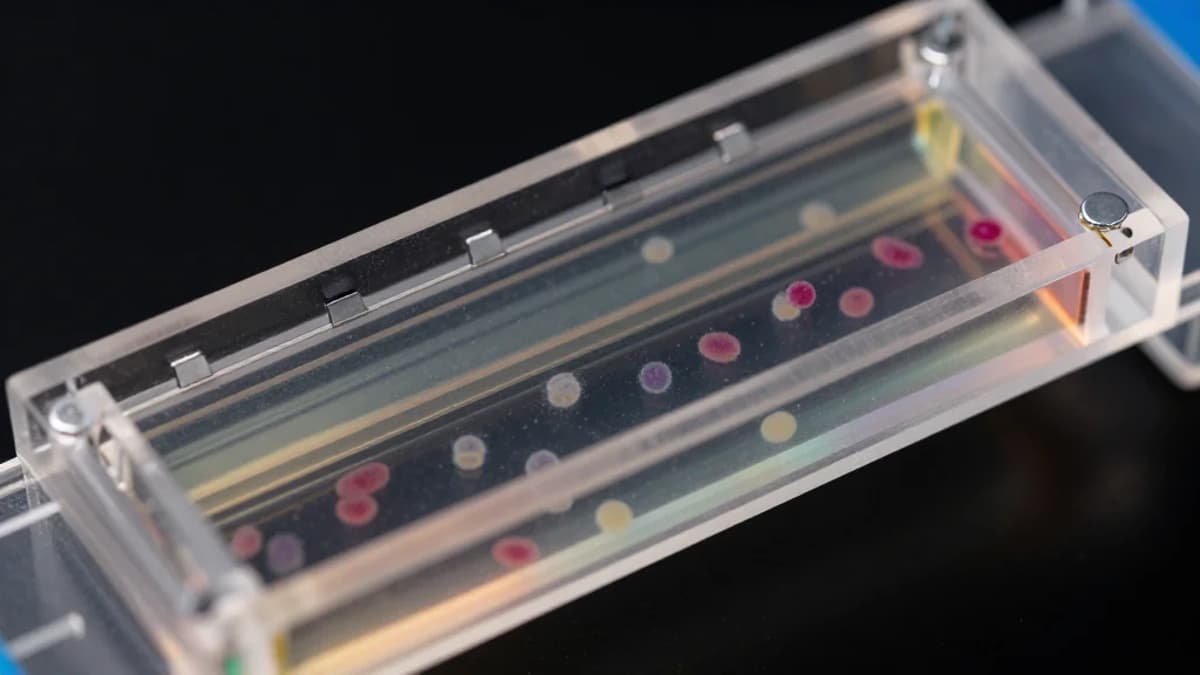
Transducer Systems Integrated Into Organ‐on‐a‐Chip Devices: From Detection to Fabrication
•January 27, 2026
0
Companies Mentioned

Why It Matters
Real‑time transducer data can accelerate preclinical drug evaluation, reducing reliance on animal models and speeding precision oncology pipelines.
Key Takeaways
- •Transducers provide continuous, label‑free cellular monitoring.
- •Microfabrication and 3D printing enable scalable OoC production.
- •Integration complexity limits multi‑modal sensor deployment.
- •Material compatibility affects sensor stability and biocompatibility.
- •Standardized interfaces could streamline future OoC designs.
Pulse Analysis
Organ‑on‑a‑chip technology has moved from academic prototypes to a viable alternative for early‑stage drug screening, promising higher physiological relevance than traditional cell cultures. By recreating tissue‑specific architecture and fluid dynamics, OoCs can predict efficacy and toxicity of candidate compounds with far fewer resources. However, the true value of these platforms hinges on the ability to monitor cellular responses continuously, without disrupting the microenvironment. Integrated transducers—ranging from optical waveguides to electrochemical electrodes—provide the necessary real‑time data streams that bridge the gap between in‑vitro assays and clinical outcomes.
Despite their promise, embedding multiple sensor modalities into a single microfluidic chip presents substantial engineering hurdles. Fabrication techniques must reconcile the precision of cleanroom lithography with the flexibility of 3D‑printed structures, while ensuring that sensor materials remain biocompatible and chemically stable over days or weeks of culture. Mechanical and resistive sensors often require rigid substrates, conflicting with the soft, elastomeric matrices needed for tissue mimicry. Moreover, signal cross‑talk and limited wiring space complicate the deployment of truly multiplexed platforms. Current research therefore focuses on hybrid manufacturing approaches, novel nanomaterials, and wireless readout schemes to mitigate these constraints.
Looking ahead, standardizing transducer interfaces and adopting modular plug‑and‑play architectures could accelerate commercialization and regulatory acceptance of OoC systems. Coupling sensor data with machine‑learning analytics will enable predictive modeling of drug responses, further reducing the need for animal testing. As precision oncology seeks patient‑specific insights, integrated OoC devices equipped with robust, real‑time monitoring will become indispensable tools for personalized therapy development, ultimately shortening timelines and lowering costs across the pharmaceutical pipeline.
Transducer Systems Integrated into Organ‐on‐a‐Chip Devices: From Detection to Fabrication
0
Comments
Want to join the conversation?
Loading comments...