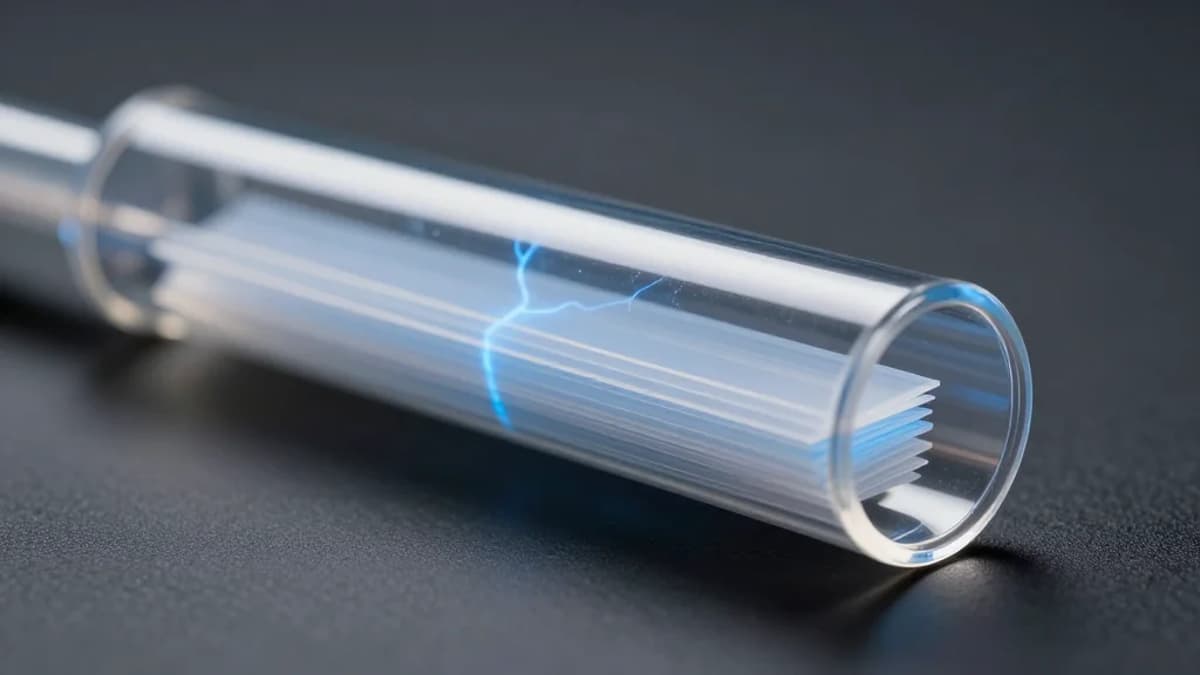
Transistor-Like MXene Membranes Enhance Ion Separation
•February 19, 2026
0
Why It Matters
The ability to dynamically tune ion separations transforms passive membrane processes into active, energy‑efficient systems, accelerating critical applications such as clean water production and strategic material recovery.
Key Takeaways
- •MXene membranes act like transistors via gate voltage
- •Real-time ion transport tuning achieved with electric field
- •Alternating voltage enables self‑pumping, boosting membrane efficiency
- •Applications include water treatment, drug delivery, rare‑earth extraction
- •Ion flow can be turned on/off reversibly during separation
Pulse Analysis
The discovery builds on a decade of MXene research, where two‑dimensional carbides and nitrides have been prized for their conductivity and chemical stability. Traditional membrane designs treat pore size and surface charge as fixed parameters set during fabrication, limiting adaptability to changing feed streams. By leveraging the intrinsic metallic nature of MXenes, LLNL scientists introduced a gate electrode that modulates the electrostatic environment between stacked layers, effectively turning the membrane into a molecular transistor. This approach sidesteps the need for costly chemical modifications while delivering rapid, reversible control over ion flux.
In practice, the team applied both static and alternating voltages to the membrane’s gate, observing a pronounced increase in ion mobility when the polarity switched. The alternating‑field technique creates a self‑pumping mechanism: ions are drawn into the interlayer channels during one half‑cycle and expelled during the next, reducing reliance on external pressure gradients. Such active transport can lower energy consumption in desalination or selective ion recovery, where conventional diffusion‑driven membranes often require high hydraulic pressures. Moreover, the on‑off capability enables precise timing for multi‑step separations, a feature valuable for pharmaceutical purification where product integrity hinges on tight process windows.
Looking ahead, the transistor‑like MXene platform aligns with growing demand for flexible, high‑performance separation technologies. Industries ranging from municipal water utilities to rare‑earth mining stand to benefit from membranes that can be tuned in situ to target specific ions without swapping hardware. The research also opens avenues for integrating smart control algorithms, allowing real‑time feedback loops that adjust voltage based on sensor data. As supply chains for critical minerals become increasingly strategic, the ability to efficiently isolate rare‑earth ions could bolster domestic manufacturing resilience, positioning MXene membranes as a cornerstone of next‑generation resource processing.
Transistor-like MXene membranes enhance ion separation
0
Comments
Want to join the conversation?
Loading comments...