Triboelectric Capacitance Supplementation in Energy Storage Composites with Functionalized Carbon Fiber Electrodes
•January 25, 2026
0
Why It Matters
Integrating triboelectric and piezoelectric mechanisms transforms structural composites into dual‑function energy storage devices, accelerating adoption in high‑performance sectors. This breakthrough bridges the gap between mechanical strength and on‑board power, reducing weight and system complexity.
Key Takeaways
- •Functionalized carbon fibers boost triboelectric charge generation
- •Electrospun nanofiber separators improve ion diffusion and power delivery
- •Hybrid piezo‑triboelectric layer raises voltage and capacitance
- •Specific capacitance reaches 23.1 mF g⁻¹ in structural supercapacitor
- •Enables self‑powered load‑bearing components for aerospace and automotive
Pulse Analysis
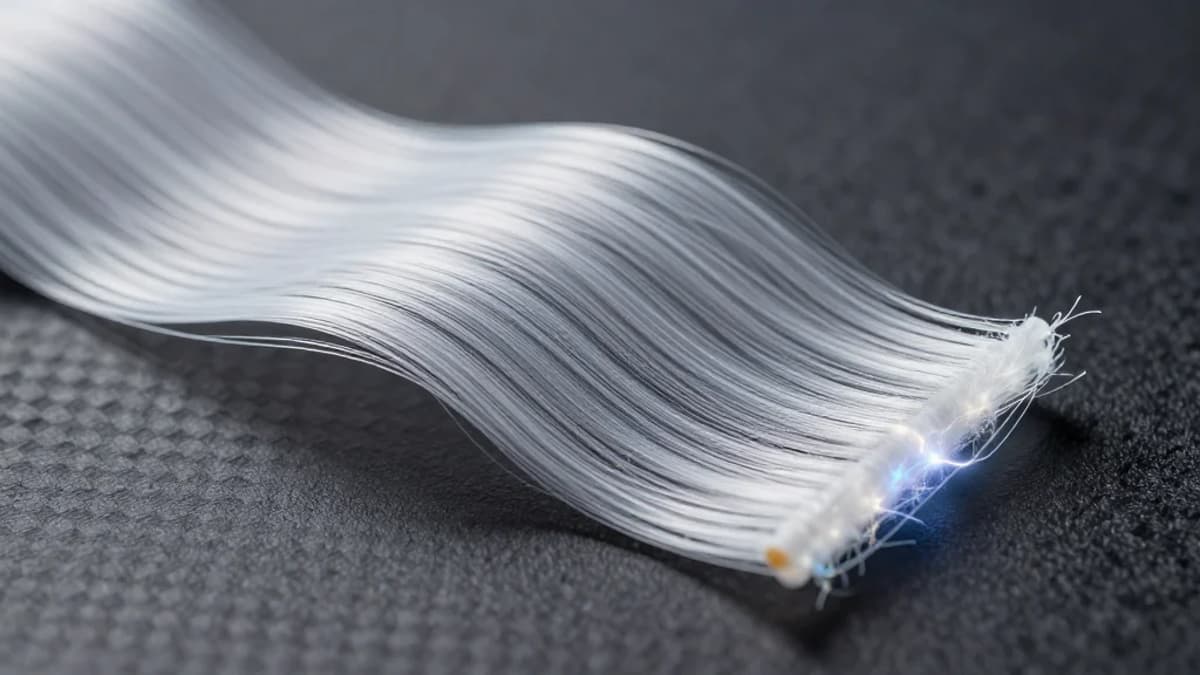
The convergence of triboelectric and piezoelectric phenomena within carbon‑fiber reinforced composites marks a paradigm shift for structural energy storage. By chemically tailoring carbon‑fiber surfaces, researchers create a pronounced charge disparity with electrospun polymer separators, harvesting contact‑electrification currents that supplement traditional double‑layer capacitance. This synergy not only amplifies instantaneous charge output but also stabilizes voltage through the piezoelectric polarization of PVDF‑TrFE layers, delivering a measurable increase in specific capacitance without compromising mechanical integrity.
Beyond the laboratory, the technology addresses a critical bottleneck in aerospace and automotive design: the need for lightweight, multifunctional components that can both bear load and supply power. Traditional supercapacitors add bulk and require separate housing, whereas the functionalized carbon‑fiber architecture embeds storage directly into structural panels. The reported reduction in IR drop and accelerated ion diffusion translate to faster charge‑discharge cycles, making these composites viable for high‑power applications such as electric‑flight control surfaces or regenerative braking systems.
Looking ahead, scaling the electrospinning process and optimizing surface chemistries will be essential for commercial adoption. Industry players can leverage this approach to develop self‑charging fuselage skins, chassis elements, or wearable exoskeletons that harvest mechanical motion while maintaining structural performance. As standards evolve for multifunctional materials, the demonstrated charge density of 19.9 µC m⁻² and 23.1 mF g⁻¹ specific capacitance set a new benchmark, positioning triboelectric‑enhanced structural supercapacitors as a cornerstone of next‑generation, energy‑autonomous platforms.
Triboelectric Capacitance Supplementation in Energy Storage Composites with Functionalized Carbon Fiber Electrodes
0
Comments
Want to join the conversation?
Loading comments...