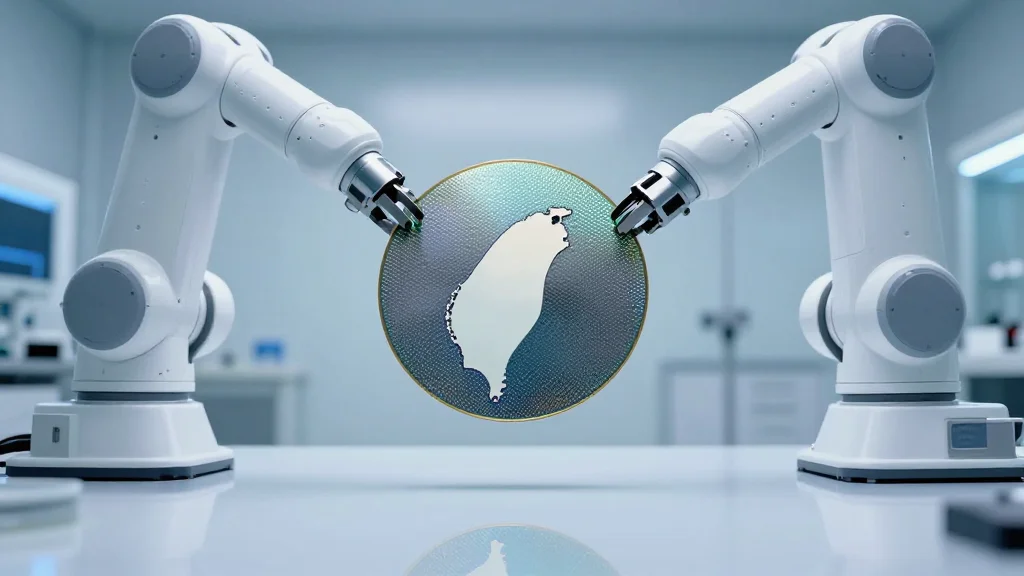
TSMC Accelerates 3nm Rollout, Sparking $56B Capex Surge and Advanced Packaging Boom

Companies Mentioned
Why It Matters
The accelerated 3‑nm rollout signals a turning point for the nanotech sector, where the line between semiconductor fabrication and advanced packaging is blurring. By committing to a global capacity expansion, TSMC not only secures its leadership in AI‑chip production but also creates a sustained demand pipeline for nanomaterial innovators like Everlight. This symbiosis could accelerate the commercialization of next‑gen packaging technologies, reducing time‑to‑market for high‑performance AI hardware and strengthening supply‑chain resilience against geopolitical shocks. Furthermore, the record‑high capex highlights the scale of investment required to keep pace with AI’s exponential growth. Investors and policymakers will watch how TSMC’s distributed fab strategy influences regional tech ecosystems, potentially reshaping the competitive landscape between Taiwan, the United States, and Japan in the high‑value nanotech arena.
Key Takeaways
- •TSMC will add 3‑nm capacity in Taiwan, Arizona and Japan, with mass production slated for H1 2027 (Taiwan) and H2 2027 (U.S.)
- •Capital expenditure forecast raised to $52‑56 billion for 2026, with some analysts projecting up to $70 billion
- •Everlight Chemical’s PSPI material sees stock hit TWD 47.95, revenue up 28.2% YoY to $122.7 million in March
- •AI‑related demand drives 3‑nm chips to account for 25% of TSMC’s sales, up from 6% in Q3 2023
- •TSMC’s safety stock strategy mitigates Middle‑East gas supply risks, ensuring continuity for nanotech manufacturing
Pulse Analysis
TSMC’s decision to re‑expand 3‑nm capacity is more than a supply‑side adjustment; it’s a strategic hedge against the AI megatrend that could outpace traditional Moore’s‑law scaling. By breaking its own precedent, TSMC signals confidence that AI workloads will sustain double‑digit growth for the next decade, a view reinforced by its record profit margins and utilization rates. The move also forces competitors—Samsung, Intel, and emerging Chinese fabs—to reconsider their own node roadmaps, potentially accelerating a race to secure advanced‑packaging talent and materials.
For the nanotech ecosystem, the ripple effect is immediate. Everlight’s rapid stock appreciation underscores how a single material supplier can become a critical bottleneck—or a strategic advantage—when a leading foundry re‑tools its supply chain. Companies that can deliver high‑purity PSPI at scale will likely capture long‑term contracts, while those lagging may find themselves sidelined as AI chip designers demand ever‑more sophisticated packaging solutions.
Looking forward, the success of TSMC’s 3‑nm expansion will hinge on two variables: the pace of AI model evolution and the ability of the broader supply chain to keep up with material and equipment needs. If AI workloads continue to balloon, we could see a second wave of capacity upgrades, perhaps even a premature jump to 2‑nm. Conversely, any disruption—geopolitical, material‑supply, or technical—could stall the momentum, giving rivals a chance to close the gap. Investors should monitor TSMC’s quarterly guidance, Everlight’s inventory levels, and the emerging competitive responses from U.S. and Japanese fabs as the nanotech landscape reconfigures around AI’s insatiable appetite.
TSMC Accelerates 3nm Rollout, Sparking $56B Capex Surge and Advanced Packaging Boom
Comments
Want to join the conversation?
Loading comments...