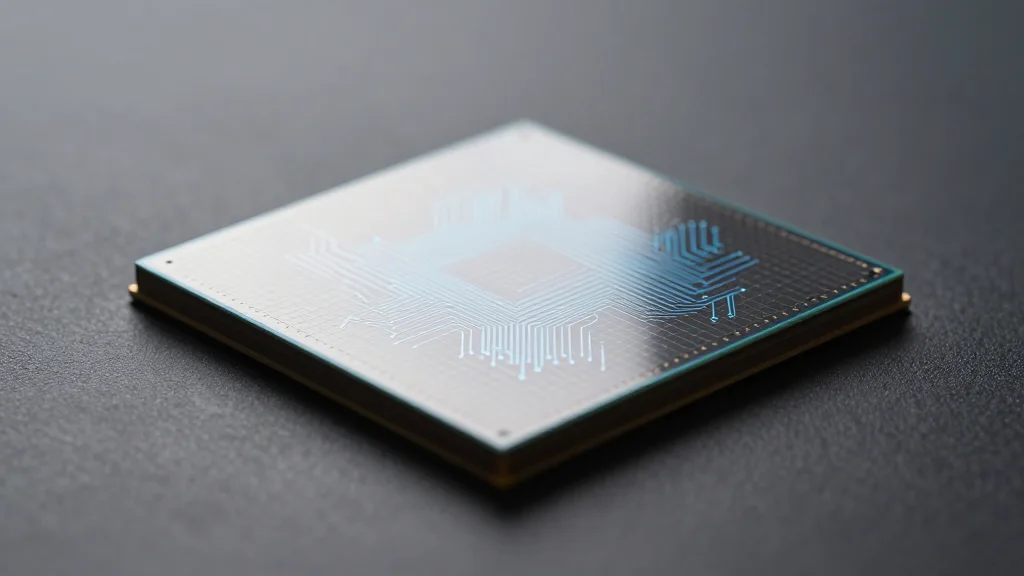
TSMC Unveils 1.6nm A16 Process, Promising 10% Speed Gain and 20% Power Cut for Q4 2026

Companies Mentioned
Why It Matters
The A16 node marks a pivotal moment in the nanotech-driven evolution of semiconductor manufacturing. By delivering measurable speed and power advantages at a 1.6nm pitch, TSMC is extending Moore's Law into the Angstrom era, where every fraction of a nanometer counts for AI and HPC performance. The introduction of backside power delivery could reshape power‑distribution architectures across the industry, reducing the need for complex front‑side routing and enabling denser, more efficient chips. For customers, the node offers a clear path to higher compute density without a proportional increase in power budget, a critical factor as data‑center energy costs climb. For the broader market, TSMC’s roadmap underscores the escalating capital intensity of sub‑2nm development, reinforcing the company’s role as the de‑facto foundry for advanced logic and setting a high bar for rivals.
Key Takeaways
- •TSMC's A16 1.6nm node slated for mass production Q4 2026
- •Promised 8‑10% speed boost or 15‑20% power reduction versus 2nm N2P
- •Introduces Super Power Rail (SPR) backside power delivery
- •Up to 10% increase in logic and SRAM density (1.10× chip density)
- •First commercial chips expected in 2027‑2028, targeting AI and HPC
Pulse Analysis
TSMC’s decision to double‑down on nanosheet transistors and introduce backside power delivery reflects a pragmatic response to the physical limits of front‑side routing at sub‑2nm scales. By shifting power distribution to the backside, the company sidesteps the IR‑drop penalties that have plagued recent node transitions, effectively buying more performance headroom without a radical redesign of the transistor architecture. This move also aligns with Intel’s earlier adoption of similar techniques, suggesting a convergence toward a new power‑delivery paradigm across the leading foundries.
From a market perspective, the A16 announcement reinforces TSMC’s dominance in the high‑volume logic segment. While Samsung and Intel are pursuing GAA and other exotic structures, TSMC’s incremental yet tangible improvements may prove more attractive to customers with existing design‑tool ecosystems. The timing is crucial: AI workloads are pushing data‑center power envelopes to their limits, and a 15‑20% power cut could translate into millions of dollars in operational savings for hyperscale operators.
Looking ahead, the real test will be silicon validation. If TSMC can meet its yield targets while delivering the advertised performance, the A16 node could become the de‑facto platform for the next wave of AI accelerators, cementing the company’s lead into the 2029 horizon when A13 and A12 nodes arrive. Conversely, any shortfall in power or speed gains could open a window for rivals to leapfrog with alternative architectures, making the next 12‑18 months a decisive period for the nanotech foundry race.
TSMC Unveils 1.6nm A16 Process, Promising 10% Speed Gain and 20% Power Cut for Q4 2026
Comments
Want to join the conversation?
Loading comments...