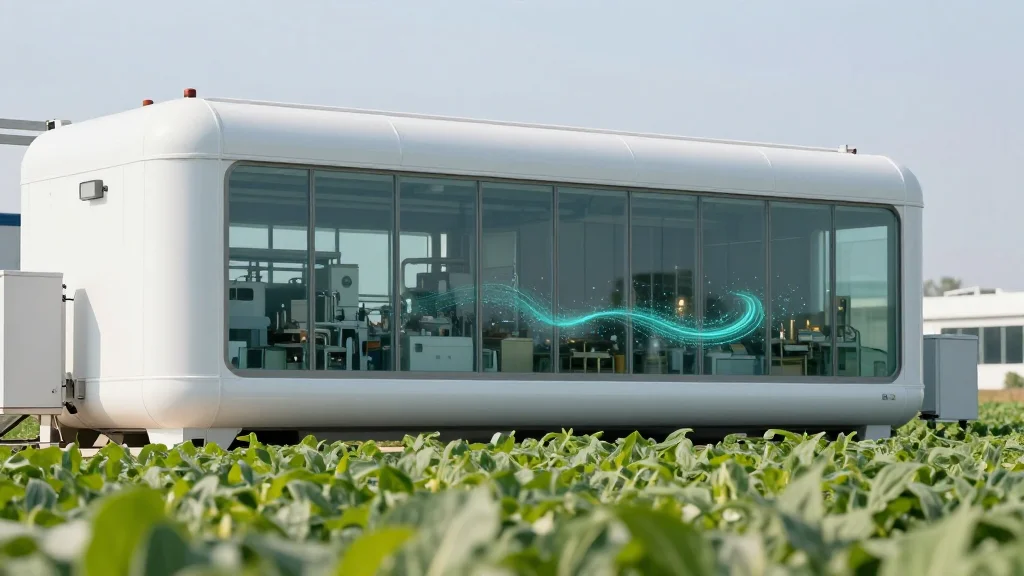
Turkey Opens 3,000‑Ton Nanotech Plant to Cut Farm Water Use by 50% and Boost Yields 25%

Why It Matters
The Istanbul plant makes Turkey one of the few countries capable of industrial‑scale production of agricultural nanomaterials, a sector that has largely remained in the laboratory phase worldwide. By delivering a product that can halve irrigation water use, the initiative directly addresses global water scarcity, a risk factor for food security and climate resilience. Moreover, the plant demonstrates a successful technology transfer model from university research to commercial manufacturing, offering a blueprint for other emerging economies seeking to commercialize high‑impact nanotech. If the promised water‑saving and yield‑enhancing effects materialize at scale, the technology could reshape irrigation practices, lower input costs for farmers, and reduce the environmental footprint of agriculture. The move also positions Turkey to capture export revenues from a growing market for sustainable farming inputs, potentially reshaping trade flows in the agri‑tech sector.
Key Takeaways
- •Turkey inaugurated a 3,000‑ton‑per‑year nanotech plant in Istanbul for the biodegradable soil‑water material NANOTERN.
- •NANOTERN can retain up to 1,800 times its weight in water, cutting irrigation water use by up to 50% and raising yields by up to 25%.
- •The technology, developed at Sabancı University, is already deployed across five continents, including the US, South America, Gulf states, and Africa.
- •ANT Systems CEO Can Yurdakul emphasized the shift from producing more to producing more intelligently with limited resources.
- •Parliamentary Agriculture Committee Chair Vahit Kirisci highlighted the role of technology in addressing Turkey’s water stress and attracting younger farmers.
Pulse Analysis
Turkey’s launch of a dedicated nanotech production line is a rare instance of a nation moving a high‑impact agricultural technology from proof‑of‑concept to mass manufacturing within a single decade. Historically, nanomaterials for farming have been hampered by scaling challenges, regulatory uncertainty, and high production costs. By securing a 3,000‑ton capacity, ANT Systems sidesteps many of these barriers, leveraging domestic R&D and state support to achieve economies of scale that competitors lack.
The strategic timing aligns with a broader geopolitical push for food and water security. As climate change intensifies drought cycles, nations that can deliver water‑efficient inputs will gain a competitive edge in both domestic markets and export corridors. Turkey’s ability to claim a global patent portfolio and field‑tested applications gives it credibility that could translate into standard‑setting influence, especially in regions where water scarcity drives policy incentives for sustainable agriculture.
Looking ahead, the plant’s success will hinge on three factors: the consistency of field performance data, the speed of regulatory approvals in target markets, and the development of complementary digital platforms that can optimize nanomaterial application. If these align, Turkey could catalyze a new segment of agri‑nanotech, prompting incumbents in the United States, Europe, and China to accelerate their own scale‑up efforts. The ripple effect may be a faster global transition toward water‑smart farming, with nanotechnology playing a central, commercially viable role.
Turkey Opens 3,000‑Ton Nanotech Plant to Cut Farm Water Use by 50% and Boost Yields 25%
Comments
Want to join the conversation?
Loading comments...