Ultradense Aligned Nanowires Boost Flexible Electronics
Why It Matters
The breakthrough lowers production costs and accelerates commercialization of high‑performance flexible electronics, opening new markets for wearables, soft robotics, and bendable displays.
Key Takeaways
- •Deterministic roll-contact printing aligns nanowires with sub‑micron precision.
- •Arrays achieve ultradense packing, boosting charge‑carrier mobility.
- •Process integrates with roll‑to‑roll lines for high‑throughput production.
- •Compatible with silicon and compound semiconductor nanowires without damage.
- •Printed devices show higher current density and mechanical durability.
Pulse Analysis
Flexible electronics have long been constrained by the difficulty of arranging nanoscale conductors into dense, orderly patterns. Conventional deposition methods produce sparse or randomly oriented nanowires, limiting charge transport and device reliability. By leveraging nanowires’ superior electrical characteristics while maintaining substrate pliability, manufacturers can create truly bendable circuits, but only if a scalable, precise assembly technique exists. The deterministic roll‑contact printing method addresses this gap, delivering sub‑micron alignment across large areas and preserving the nanowires’ intrinsic properties.
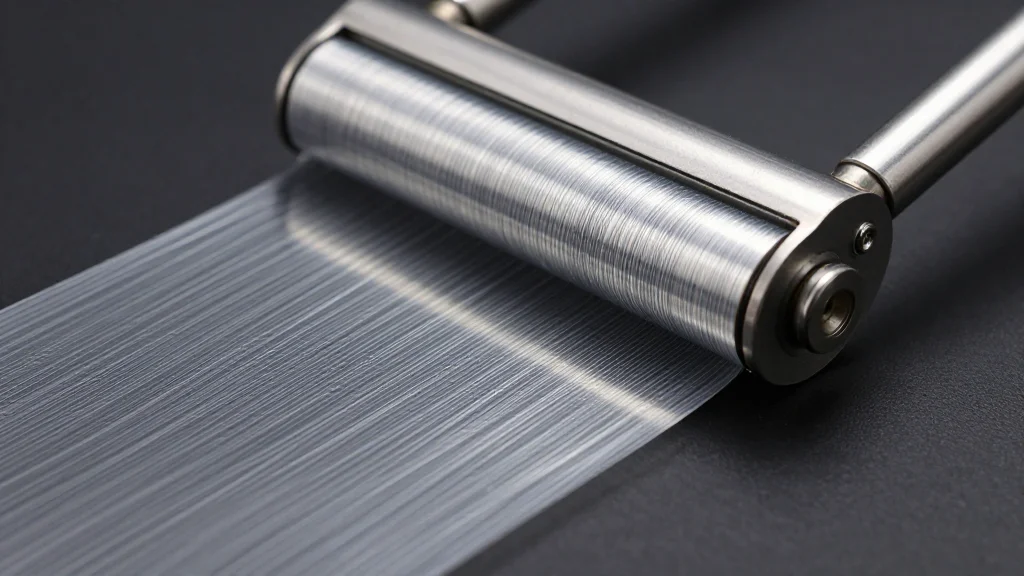
The roll‑contact process uses a engineered stamp that gently picks up pre‑grown nanowires and deposits them onto flexible films under controlled pressure and roll dynamics. Fine‑tuning of surface energy at the interface ensures consistent pick‑up and release, resulting in ultradense, parallel arrays that dramatically improve interwire coupling and carrier mobility. Because the operation is continuous, it dovetails with existing roll‑to‑roll manufacturing lines, offering a high‑throughput, low‑waste alternative to serial techniques such as electron‑beam lithography. Moreover, the method accommodates a range of semiconductor nanowires—including silicon, GaAs, and InP—without inducing damage, broadening its applicability across sensor, display, and energy‑harvesting platforms.
From a business perspective, the technology promises to slash fabrication costs while unlocking performance levels previously limited to rigid silicon chips. Lower material wastage, reduced process steps, and compatibility with inexpensive polymer substrates could drive down the price point of wearable health monitors, soft‑robotic skins, and flexible communication modules. As the industry moves toward hybrid manufacturing that blends additive printing with nanoscale patterning, deterministic roll‑contact printing is poised to become a cornerstone of the flexible electronics supply chain, accelerating adoption and expanding market opportunities.
Ultradense Aligned Nanowires Boost Flexible Electronics
Comments
Want to join the conversation?
Loading comments...