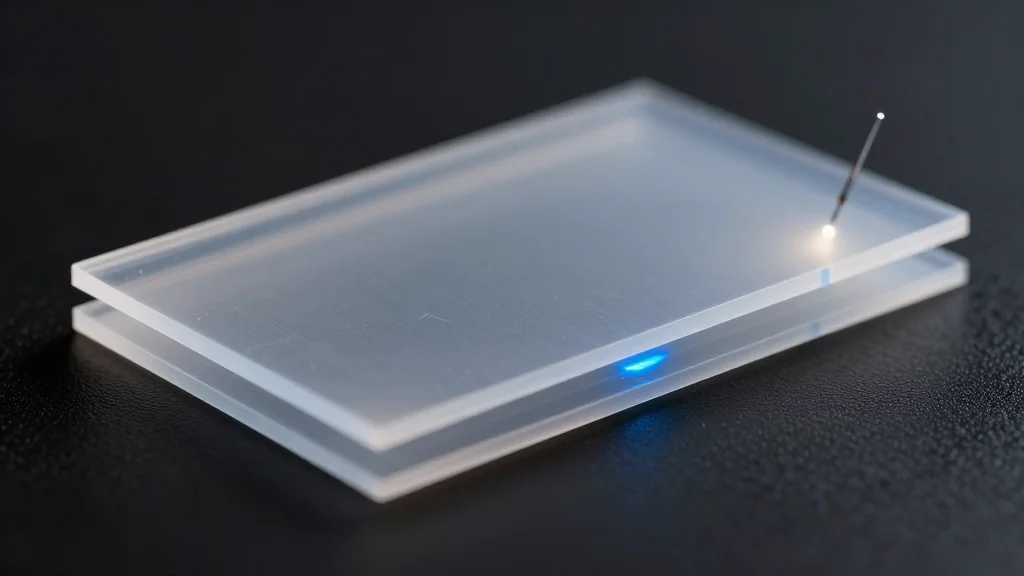
Ultra‑low‑energy Control of Graphene Stacking Could Enable Slidetronic Memory and Logic
Why It Matters
The breakthrough delivers memory and logic operations with energy orders of magnitude lower than conventional technologies, enabling ultra‑compact, power‑efficient nanoelectronics and new neuromorphic architectures.
Key Takeaways
- •Switching uses <1 nN force, <1 fJ energy.
- •Operates on 30‑nm graphene islands.
- •Enables deterministic polytype transitions, e.g., Bernal to rhombohedral.
- •Superlubric interfaces allow near‑frictionless layer sliding.
- •Potential for ultra‑low‑power memory and neuromorphic computing.
Pulse Analysis
Graphene’s electronic properties are highly sensitive to how its layers are stacked, a characteristic that has long intrigued researchers seeking tunable nano‑materials. The recent demonstration of controllable polytype switching—shifting between Bernal and rhombohedral configurations—adds a functional dimension to graphene beyond its intrinsic conductivity. By exploiting the weak interlayer coupling of a deliberately misaligned spacer and engineering nanocavities, the team created a platform where each cavity acts as a discrete, addressable stacking bit, dramatically reducing the mechanical work required for state changes.
The nanomechanical design leverages superlubricity, a regime where incommensurate graphene layers glide with negligible friction. When a minute shear force is applied, boundary solitons nucleate at the island edges and propagate across the cavity, completing the transition without further external input. This soliton‑driven mechanism not only minimizes energy consumption but also ensures repeatable, reversible operation at scales far below previous micrometre‑level demonstrations. The approach sidesteps the need for chemical modification or high‑voltage gating, positioning it as a scalable route for future nano‑electronic architectures.
From a commercial perspective, the ability to toggle graphene’s stacking order with femtojoule‑level energy heralds a new class of slidetronic devices that combine memory, logic and sensing in a single atomically thin platform. The inherent multi‑ferroic nature—simultaneous control of electrical, magnetic and polar properties—makes these nano‑elements attractive for ultra‑dense, low‑power memory arrays and neuromorphic circuits where mechanical coupling can emulate synaptic behavior. As the semiconductor industry pushes toward beyond‑Moore solutions, such graphene‑based, mechanically programmable bits could become a cornerstone of energy‑efficient computing ecosystems.
Ultra‑low‑energy control of graphene stacking could enable slidetronic memory and logic
Comments
Want to join the conversation?
Loading comments...