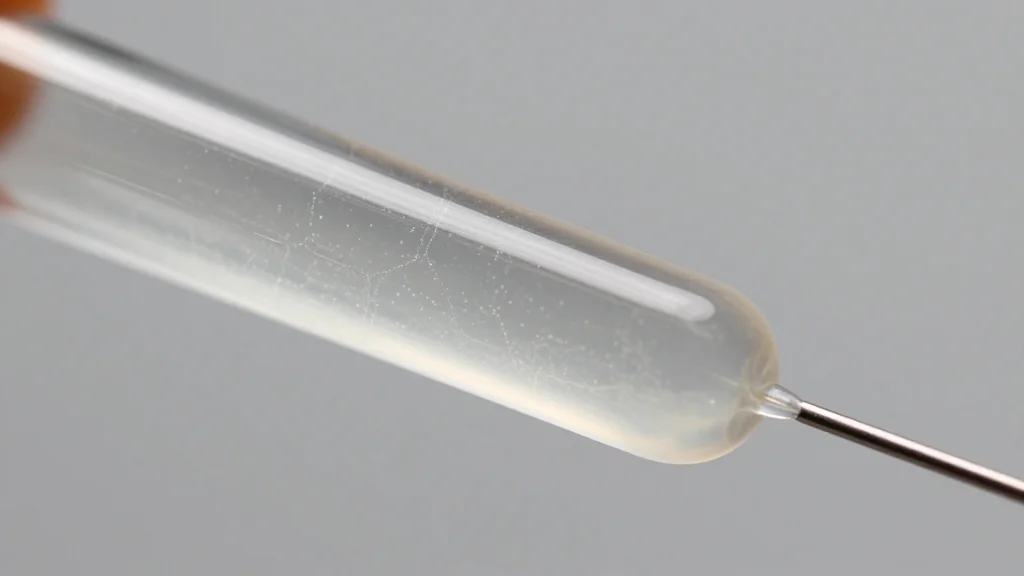
Ultratough Organic–Inorganic Bicontinuous Network Hydrogel via Crosslinking Liquid‐Like Inorganic Ionic Clusters With Polymer Chains
Why It Matters
The breakthrough combines high strength and toughness in a single hydrogel, unlocking durable, self‑healing components for emerging soft‑robotic systems and protective cushioning markets.
Key Takeaways
- •PVA/CPC hydrogel reaches 32.9 MPa tensile strength.
- •Toughness measured at 108 MJ m⁻³, exceeding typical hydrogels.
- •Survives 100,000 stretch cycles in water without fracture.
- •Self‑repair achieved through re‑crosslinking of inorganic clusters.
- •Potential uses include soft robotics and impact‑absorbing cushions.
Pulse Analysis
The new hydrogel leverages a bicontinuous network where liquid‑like calcium‑phosphate clusters act as nanoscale crosslinkers for PVA chains. This ionic‑molecular architecture mimics double‑network designs but replaces brittle polymeric strands with flexible inorganic clusters, delivering simultaneous high strength and toughness—properties that have traditionally been mutually exclusive in hydrogel science.
Performance testing shows the material can sustain a tensile load of roughly 33 MPa while dissipating over 100 MJ m⁻³ of energy before failure, a benchmark that eclipses many synthetic and natural hydrogels. Its fatigue resistance—100,000 uninterrupted stretch cycles in aqueous environments—highlights a resilience suited for repetitive mechanical tasks. Moreover, the hydrogel’s ability to self‑heal via re‑crosslinking of calcium‑phosphate clusters offers a practical route to extend service life without complex external interventions.
From a market perspective, such a combination of mechanical robustness, energy absorption, and reparability opens doors in soft robotics, where compliant yet durable actuators are essential, and in protective cushioning for transportation or sports equipment. The scalable, aqueous‑based synthesis aligns with sustainable manufacturing trends, though challenges remain in controlling cluster distribution at industrial volumes. Continued research into polymer‑inorganic interfacing could further tailor properties for biomedical implants, wearable electronics, and next‑generation structural composites.
Ultratough Organic–Inorganic Bicontinuous Network Hydrogel via Crosslinking Liquid‐Like Inorganic Ionic Clusters With Polymer Chains
Comments
Want to join the conversation?
Loading comments...