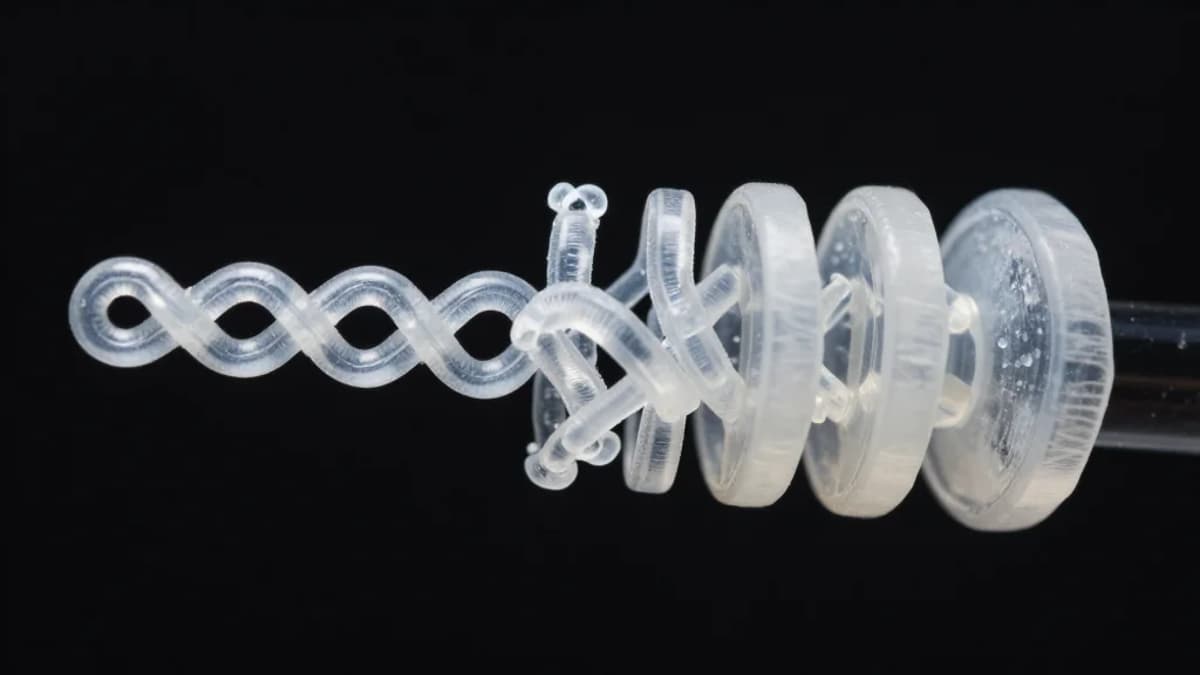
Underlying Polymorphism: Superhelical Crystallization Induces Architectural and Functional Diversity (Small 6/2026)
•January 27, 2026
0
Why It Matters
The ability to program peptide superhelices unlocks new routes for high‑performance, bio‑compatible materials, accelerating innovation in nanotechnology, tissue engineering, and smart coatings.
Key Takeaways
- •Peptide fibrils transition from twisted to plate-like crystals
- •Superhelices enable controllable architecture and mechanical robustness
- •Polymorphic phase transformation expands functional material design space
- •Hierarchical assembly mimics natural biomineralization pathways
- •Findings accelerate bioinspired nanomaterial development
Pulse Analysis
The discovery of superhelical crystallization adds a pivotal chapter to peptide self‑assembly research. By mapping a clear progression—from flexible, twisted fibrils through ribbon intermediates to rigid, plate‑like superhelical crystals—researchers provide a mechanistic framework that explains how hierarchical order emerges in soft matter. This insight aligns with long‑standing goals in materials science to replicate nature’s ability to generate complex, multifunctional structures from simple building blocks, and it introduces a new polymorphic phase that can be toggled through controlled conditions.
From an application standpoint, the ability to dictate architecture at the nanoscale translates into tangible performance gains. Superhelical crystals exhibit superior mechanical strength while retaining the inherent biocompatibility of peptide motifs, making them ideal candidates for load‑bearing scaffolds, targeted drug‑release carriers, and responsive sensor platforms. Moreover, the polymorphic transition bridges the gap between rigid, periodic lattices and adaptable, flexible aggregates, offering designers a versatile toolkit for tailoring surface chemistry, optical properties, and enzymatic activity without sacrificing structural integrity.
Looking ahead, scaling this hierarchical crystallization for industrial production will be a key focus. Researchers must address solvent dynamics, nucleation control, and reproducibility across batch processes to meet commercial standards. Successful translation could reshape markets ranging from regenerative medicine to sustainable electronics, where bio‑derived, high‑performance materials are in growing demand. The study thus not only deepens scientific understanding but also paves the way for next‑generation, eco‑friendly technologies.
Underlying Polymorphism: Superhelical Crystallization Induces Architectural and Functional Diversity (Small 6/2026)
0
Comments
Want to join the conversation?
Loading comments...