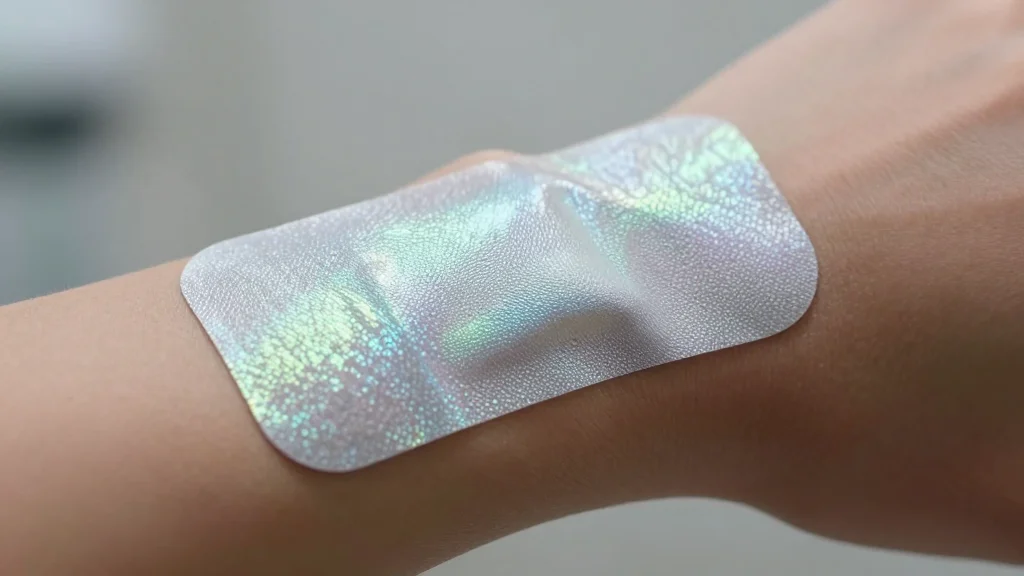
UNIST Unveils MXene Sensor with 3‑4× Sensitivity Boost for Swallowing Detection

Why It Matters
The UNIST MXene sensor demonstrates that nanomaterial engineering can deliver orders‑of‑magnitude improvements in biosignal detection, a prerequisite for reliable wearable health devices. By simultaneously capturing temperature and pressure with minimal interference, the technology addresses a longstanding challenge in electronic skin, where cross‑sensitivity often degrades signal fidelity. This advancement could accelerate the deployment of continuous monitoring solutions for conditions like dysphagia, sleep apnea and cardiac arrhythmias, moving care from clinics to everyday life. Beyond healthcare, the sensor’s robustness and high resolution make it attractive for tactile feedback in soft robotics and human‑machine interfaces. As robots gain finer touch perception, they can perform delicate tasks—such as assisted surgery or prosthetic control—with greater safety and precision. The broader material diversification into nitrogen‑containing carbonitrides also opens pathways for energy storage and catalysis, suggesting that the impact of this breakthrough may ripple across multiple high‑tech sectors.
Key Takeaways
- •UNIST team creates titanium carbonitride MXene (Ti₃CNTz) sensor with >3× temperature and >4× pressure sensitivity vs. Ti₃C₂Tx
- •Sensor distinguishes swallowing, coughing, blinking, pulse waves and gait when attached to neck, eyes, wrist or shoe soles
- •Non‑contact temperature measurement works at 1–2 mm distance, detecting infrared heat from a finger or smartphone flash
- •Research funded by Korea's Ministry of Science and ICT, NRF and InnoCORE; findings published in Advanced Functional Materials
- •Prof. Kim predicts applications in energy storage, catalysts, electromagnetic shielding and advanced robotics
Pulse Analysis
The UNIST breakthrough underscores a pivotal trend: nanomaterials are moving from niche research labs into integrated system components that solve real‑world sensing challenges. Historically, MXenes have been prized for conductivity and flexibility, but their sensitivity plateaued due to limited control over surface chemistry. By introducing nitrogen into the lattice, UNIST engineers unlocked a new degree of freedom, effectively turning the MXene into a tunable transducer. This approach mirrors the broader shift toward compositional engineering—think alloyed 2D materials or doped graphene—to tailor electronic and mechanical responses.
From a market perspective, the sensor aligns with the exploding demand for continuous health monitoring, projected to exceed $200 billion by 2030. Current wearable devices often rely on optical or inertial sensors that struggle with subtle motions like swallowing. A hyper‑sensory MXene patch could fill that gap, offering clinicians a low‑cost, skin‑compatible alternative to bulky acoustic or imaging systems. Early adopters are likely to be telehealth platforms and specialty clinics focused on dysphagia therapy, where objective, real‑time data can improve treatment outcomes.
In robotics, the ability to decouple temperature and pressure signals without cross‑talk is a game‑changer. Soft robots and prosthetic limbs require tactile feedback that mirrors human skin's nuanced perception. The UNIST sensor’s durability—thanks to MXene’s layered structure—means it can endure repeated deformation, a critical requirement for long‑term deployment. As manufacturers integrate such sensors into next‑generation haptic gloves or exoskeletons, we can expect a cascade of new applications, from precision assembly to immersive VR experiences. The key question now is scalability: translating a lab‑scale MXene film into roll‑to‑roll production while preserving nitrogen concentration uniformity will determine whether this technology becomes a commercial staple or remains a laboratory marvel.
UNIST Unveils MXene Sensor with 3‑4× Sensitivity Boost for Swallowing Detection
Comments
Want to join the conversation?
Loading comments...