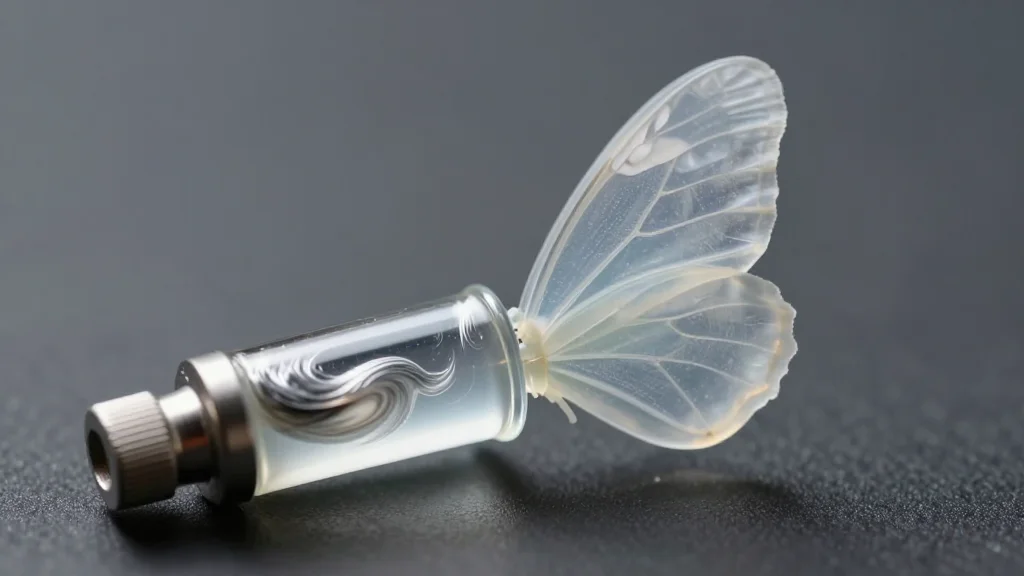
University of Bristol Unveils sub‑0.1 V Liquid‑metal Pump Powering Soft‑robotic Butterfly

Why It Matters
The LIMA pump could redefine how soft robots are powered, shifting the paradigm from bulky, high‑voltage hardware to ultra‑low‑voltage, lightweight modules. This transition enables truly mobile soft‑robotic systems that can operate on small batteries or even harvest ambient energy, expanding applications from field‑deployed environmental samplers to consumer‑grade wearable haptics. Moreover, the pump’s ability to convey chemical energy and information signals through fluidic networks hints at a new class of multifunctional soft devices that blend actuation, sensing and communication in a single element. By lowering the electrical barrier to fluidic actuation, the technology also democratizes research in soft robotics. Laboratories that previously required expensive pneumatic rigs can now prototype with inexpensive, sub‑volt power supplies, accelerating innovation cycles and broadening participation across academia and industry.
Key Takeaways
- •LIMA pump weighs 0.2 g and operates at less than 0.1 V
- •Demonstrated on three prototypes: butterfly wing, colour‑changing bracelet, haptic fingertip pouch
- •Uses liquid‑metal magnetohydrodynamics to generate Lorentz force for fluid motion
- •Potential to replace bulky compressors in wearable haptics and medical micro‑pumps
- •University of Bristol team plans pilot partnership with a UK wearable‑tech startup
Pulse Analysis
The sub‑volt liquid‑metal pump arrives at a moment when the soft‑robotics market is fragmenting into niche verticals—wearables, medical devices, and environmental samplers—each demanding bespoke actuation solutions. Historically, the sector has leaned on pneumatic or hydraulic systems that are either too heavy for on‑body use or require high‑voltage drivers incompatible with low‑power electronics. LIMA’s breakthrough collapses that trade‑off, offering a power‑dense, ultra‑compact alternative that can be powered directly from standard lithium‑ion cells.
From a competitive standpoint, the technology positions the University of Bristol as a potential hub for spin‑outs that could challenge incumbents in micro‑fluidic pump manufacturing, such as Micronit and Fluigent, which currently focus on rigid, high‑voltage designs. If the team can secure a reliable supply chain for gallium‑based liquid metals and streamline the integration with flexible substrates, they could capture early‑stage market share in the emerging wearable‑haptics segment, where device weight and battery life are decisive factors.
Looking ahead, the key risk lies in scaling the liquid‑metal handling process while maintaining the sub‑volt performance envelope. Liquid metals are toxic in certain forms and require careful encapsulation, which could add cost and complexity. However, the research’s emphasis on a “soft, compact heart” that also transmits chemical and informational signals suggests a broader ecosystem of fluidic computing and sensing that could redefine soft‑robotic architectures. If those secondary functions are realized, LIMA could become a foundational building block, much like the micro‑controller did for the IoT, ushering in a generation of autonomous, low‑power soft devices.
University of Bristol unveils sub‑0.1 V liquid‑metal pump powering soft‑robotic butterfly
Comments
Want to join the conversation?
Loading comments...