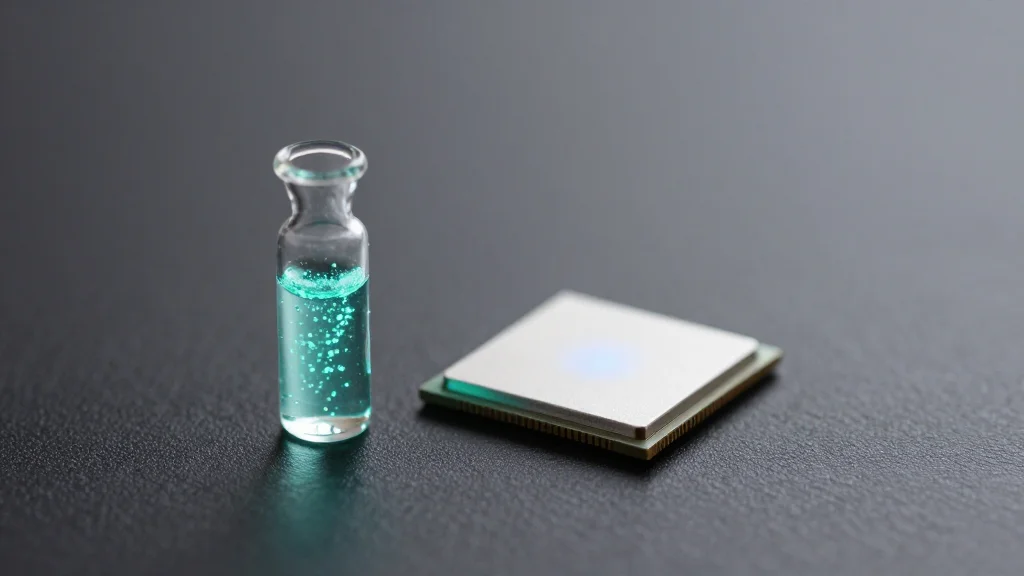
Upconversion Nanoparticles Gain 16‑Fold Brightness via Inorganic Surface Ligands

Why It Matters
Upconversion nanoparticles have long been limited by weak emission and integration challenges, keeping them on the fringe of commercial technology. By delivering a 16‑fold brightness increase through a simple surface‑ligand swap, the new approach directly addresses the two most critical barriers: optical efficiency and device compatibility. This could accelerate the deployment of UCNPs in high‑value sectors such as next‑generation displays, where energy‑efficient color conversion is a priority, and in biomedical imaging, where deeper, clearer visualization can improve diagnostics. Moreover, the ability to embed UCNPs in a semiconducting SnS₂ matrix creates a hybrid platform that merges photonic upconversion with electronic readout. If scaled, this could enable novel solar‑energy converters that harvest otherwise wasted infrared photons, contributing to higher overall solar‑cell efficiencies and supporting broader renewable‑energy goals.
Key Takeaways
- •Researchers replaced organic ligands on UCNPs with low‑vibrational Sn₂S₆⁴⁻ ligands.
- •The new surface chemistry yields up to a 16‑fold increase in upconversion luminescence intensity.
- •Longer emission lifetimes improve signal stability for sensing and imaging.
- •Annealed nanocomposites embed UCNPs in a SnS₂ matrix, enabling electrically accessible particles.
- •A prototype photodetector demonstrates dual UV and near‑IR response, highlighting device integration potential.
Pulse Analysis
The breakthrough underscores a shift from core‑centric nanoparticle design toward surface‑focused engineering. Historically, upconversion research has chased higher dopant concentrations or exotic host lattices, often at the expense of synthesis complexity and reproducibility. By targeting the ligand layer—a relatively low‑cost, tunable component—the authors have opened a scalable pathway that could be adopted by manufacturers without overhauling existing production lines.
From a market perspective, the timing aligns with rising demand for energy‑efficient display technologies and advanced biomedical imaging tools. Companies developing micro‑LED and quantum‑dot displays are actively seeking materials that can convert infrared backlight into vivid colors with minimal loss. The 16‑fold brightness gain positions UCNPs as a viable alternative to traditional phosphors, potentially reducing the power envelope of high‑performance screens.
In the solar arena, the integration of UCNPs into a semiconducting matrix addresses a long‑standing integration bottleneck. Prior attempts at upconversion layers suffered from poor charge transport and thermal stability. The SnS₂‑based nanocomposite not only preserves the upconversion function but also provides a conduit for charge extraction, a prerequisite for practical photovoltaic enhancement. If the approach can be translated to large‑area coatings, it may become a key enabler for next‑generation tandem solar cells that aim to surpass the 30% efficiency ceiling.
Overall, the work illustrates how a modest chemical modification can unlock multiple application pathways, suggesting that the nanotech industry may see a wave of surface‑ligand innovations targeting other quantum‑confined systems. The next few years will likely reveal whether these laboratory gains can survive the rigors of mass production and real‑world operation.
Upconversion Nanoparticles Gain 16‑Fold Brightness via Inorganic Surface Ligands
Comments
Want to join the conversation?
Loading comments...