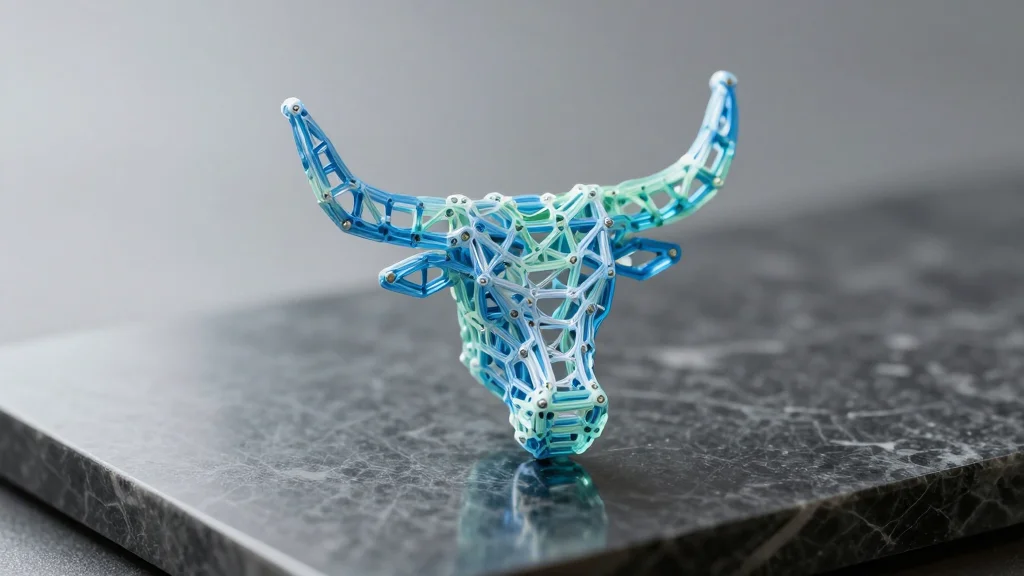
UT‑Austin Engineers 100‑nm DNA Origami ‘Longhorn’, Boosting Nanofabrication Yields

Why It Matters
The breakthrough addresses two long‑standing bottlenecks in DNA nanotechnology: low assembly yields and lengthy production cycles. By delivering a reproducible, rapid‑folding method, the Austin team moves DNA origami closer to real‑world deployment in drug delivery, where precise dosing and rapid manufacturing are critical, and in nano‑electronics, where pattern fidelity at the sub‑10‑nm scale can dictate device performance. The research also provides a quantitative design framework that other laboratories can adopt, potentially standardizing best practices across the field. Beyond immediate applications, the work signals a maturation of nanofabrication techniques that rely on molecular self‑assembly rather than top‑down lithography. As the industry seeks cost‑effective routes to ever‑smaller components, the ability to predict and control folding thermodynamics could reshape supply chains, lower barriers to entry for startups, and stimulate investment in DNA‑based manufacturing platforms.
Key Takeaways
- •UT‑Austin created a DNA‑origami Longhorn measuring ~100 nm × 2 nm, the smallest reported to date.
- •New design rules reduce inter‑helical connections, boosting cooperative folding and yields.
- •A streamlined heating‑cooling cycle cuts assembly time to 1‑2 hours, up from multi‑day processes.
- •Yield improvements of up to 17% enable production of millions of structures per run.
- •The approach promises faster, scalable manufacturing for nanomedicine, electronics, and materials.
Pulse Analysis
The Austin team's thermodynamic insight marks a pivot from trial‑and‑error DNA design to a more engineering‑driven discipline. Historically, DNA origami has been hampered by unpredictable folding pathways, limiting its translation beyond academic proof‑of‑concepts. By quantifying the balance between binding energy and loop penalties, Marras and his collaborators have effectively introduced a design rulebook that can be codified into CAD tools, much like the design rules that underpinned the semiconductor boom.
From a market perspective, the 17% yield lift may appear modest, but in high‑volume nanomanufacturing even single‑digit improvements translate into substantial cost savings. If the method scales to more complex architectures—such as multi‑component drug carriers or nanoscale antennas—the economic case for DNA‑based production could rival conventional photolithography in niche segments where flexibility and biocompatibility are paramount. Venture capital has already begun to flow into DNA nanotech startups; this breakthrough could accelerate that capital influx, prompting larger players to explore hybrid manufacturing pipelines that combine self‑assembly with traditional patterning.
Looking forward, the key question is whether the cooperative‑design paradigm holds for structures exceeding the modest size of the Longhorn logo. Success in larger, functional assemblies would validate the approach as a universal solution rather than a specialized trick. Industry observers should watch for follow‑up publications and potential licensing deals, as the ability to reliably mass‑produce DNA nanostructures could become a cornerstone of next‑generation therapeutics and nano‑electronics.
UT‑Austin Engineers 100‑nm DNA Origami ‘Longhorn’, Boosting Nanofabrication Yields
Comments
Want to join the conversation?
Loading comments...