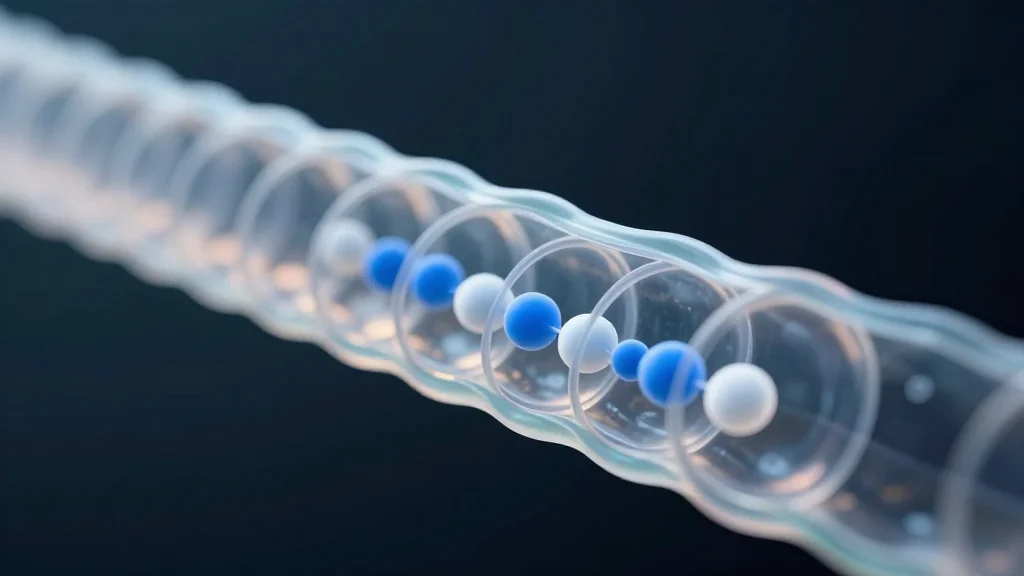
Versatile Heavy Metal Ion Separation via Biological Ion-Channel-Inspired Membranes
Why It Matters
The breakthrough offers a low‑energy, highly selective alternative to solvent extraction, reducing costs and environmental impact for metal‑intensive industries. Its scalability could accelerate compliance with tightening water‑quality regulations worldwide.
Key Takeaways
- •Membrane pores mimic subnanometre ion channels for selectivity
- •Achieves >99% removal of Pb²⁺, Cd²⁺, and Hg²⁺
- •Operates at ambient temperature, reducing energy use
- •Scalable polymer fabrication enables pilot‑scale testing
- •Potential to replace costly solvent extraction in mining
Pulse Analysis
Heavy‑metal contamination remains a costly hurdle for water utilities and mineral processors, driving demand for technologies that combine selectivity with energy efficiency. Inspired by the exquisite ion discrimination of calcium channels, the new membrane incorporates uniformly sized sub‑nanometre pores lined with chelating ligands that preferentially bind divalent and trivalent metal ions. This biomimetic approach leverages coordination chemistry to create a synthetic pathway that rivals nature’s precision, while retaining the robustness required for industrial streams.
In controlled experiments, the ion‑channel‑inspired membrane removed more than 99% of lead, cadmium and mercury from synthetic wastewater at flow rates exceeding 200 L m⁻² h⁻¹, matching or surpassing the performance of high‑pressure reverse osmosis. Because the process relies on passive diffusion rather than high‑pressure pumps, energy consumption drops by up to 40% compared with conventional membrane systems. Moreover, the polymer matrix can be produced via continuous extrusion, allowing seamless integration into existing roll‑to‑roll lines and facilitating rapid scale‑up from lab‑scale sheets to square‑meter modules.
The commercial implications are significant. Mining operations, which traditionally depend on solvent extraction and precipitation, could adopt these membranes to meet stricter discharge limits while cutting chemical usage and waste disposal costs. Municipal water agencies stand to benefit from a plug‑and‑play solution that addresses legacy contamination without extensive retrofits. As regulatory pressure mounts and sustainability becomes a core metric, the convergence of bio‑inspired design and scalable manufacturing positions this technology as a catalyst for greener metal recovery across multiple sectors.
Versatile heavy metal ion separation via biological ion-channel-inspired membranes
Comments
Want to join the conversation?
Loading comments...