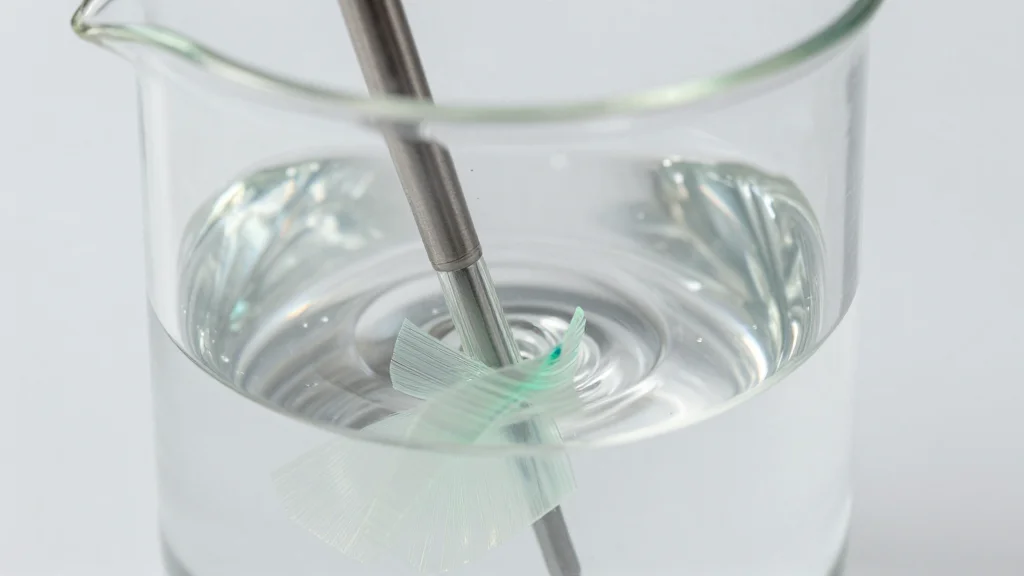
Vibration Technique Boosts Graphene Production Tenfold, Says Birmingham Team

Why It Matters
Accelerating graphene production tenfold directly addresses the material’s chronic supply‑chain constraints, which have kept prices high and limited its integration into mass‑market devices. By eliminating toxic solvents and using inexpensive water‑based liquids, the new method also aligns with tightening environmental regulations and corporate sustainability goals, making graphene a more viable candidate for large‑scale applications such as flexible electronics, high‑capacity batteries and lightweight composites. The breakthrough could therefore reshape the economics of the entire 2D‑materials ecosystem, spurring new product categories and lowering barriers for startups and established manufacturers alike. Beyond graphene, the vibrational exfoliation platform is adaptable to a suite of 2D semiconductors and insulators, potentially unlocking rapid, low‑impact routes to materials that are currently produced only in small batches. This versatility expands the technique’s relevance beyond a single material, positioning it as a foundational manufacturing tool for the broader nanotech industry.
Key Takeaways
- •University of Birmingham team demonstrates vibration‑based exfoliation that speeds graphene production by 10×.
- •Process runs at room temperature using water and tannic acid, avoiding toxic solvents.
- •Method outperforms shear mixing, sonication and ball‑milling in speed and sustainability.
- •Potential to cut graphene costs from ~$100/gram to a fraction, easing supply‑chain pressure.
- •Pilot‑scale field test planned for late 2026 to validate industrial viability.
Pulse Analysis
The vibration‑driven approach arrives at a moment when the nanotech sector is hungry for scalable, eco‑friendly manufacturing routes. Historically, graphene’s promise has been hampered by a classic ‘valley of death’—the gap between laboratory synthesis and cost‑effective mass production. By delivering a tenfold increase in throughput without resorting to hazardous chemicals, the Birmingham team not only narrows that gap but also redefines the cost structure that has kept graphene out of many commercial products.
From a market perspective, the technique could trigger a re‑pricing of graphene‑based components, making them competitive with traditional materials such as copper or silicon in certain niches. This price compression may accelerate adoption in flexible displays, where graphene’s conductivity and transparency are prized, and in energy storage, where its high surface area can boost capacitor performance. Moreover, the method’s compatibility with other 2D materials suggests a platform strategy: a single vibrational reactor could churn out a portfolio of nanosheets, each tailored for specific electronic or catalytic functions, thereby creating economies of scope.
Looking ahead, the key challenge will be translating laboratory vibrational frequencies and amplitudes into industrial‑scale equipment that maintains energy efficiency. If the upcoming pilot demonstrates that the energy input per gram of graphene remains modest, investors are likely to pour capital into specialized vibrational reactors, spurring a new wave of equipment manufacturers. Conversely, if energy costs prove prohibitive, the industry may revert to hybrid approaches that combine vibration with existing methods. Either way, the announcement forces competitors—both incumbents in graphene production and emerging nanomaterial startups—to reassess their roadmaps, potentially reshaping R&D budgets and partnership strategies across the nanotech landscape.
Vibration Technique Boosts Graphene Production Tenfold, Says Birmingham Team
Comments
Want to join the conversation?
Loading comments...