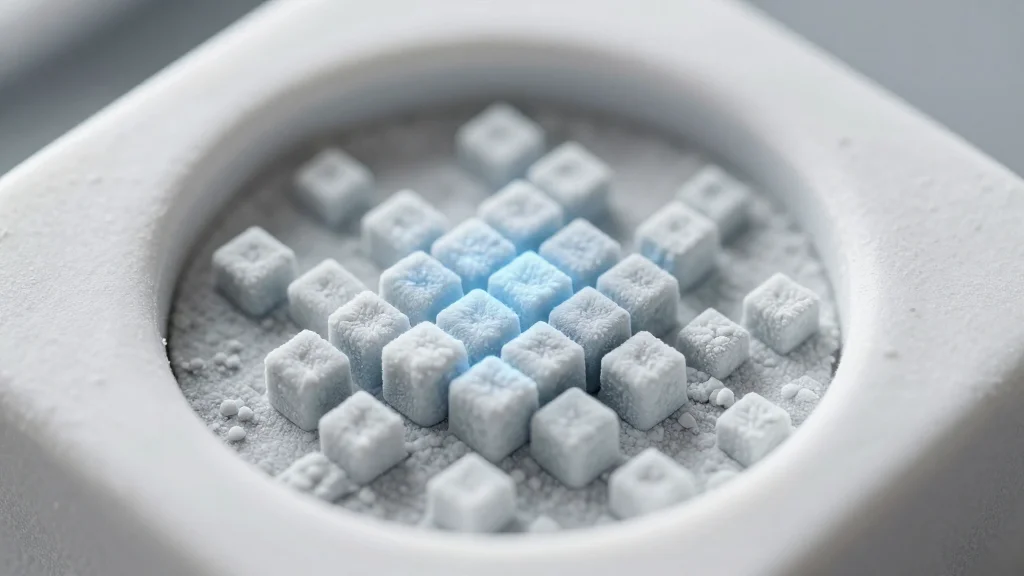
World's Smallest QR Code - Smaller Than Bacteria - Could Store Data for Centuries

Why It Matters
The breakthrough offers a power‑free, ultra‑dense archival medium, potentially reshaping long‑term data preservation strategies for enterprises and cultural institutions. Its durability and minimal energy footprint address growing concerns over the environmental impact of conventional storage infrastructures.
Key Takeaways
- •QR code measures 1.98 µm², visible only via electron microscope
- •Pixels are 49 nm, ten times below visible light wavelength
- •Engraved in ceramic, data could last centuries without power
- •Potential storage density exceeds 2 TB per A4 sheet
- •Researchers aim to scale manufacturing for industrial use
Pulse Analysis
The creation of a microscopic QR code marks a paradigm shift in data storage technology. By leveraging electron‑beam lithography to etch 49‑nanometer pixels into a ceramic substrate, the team has achieved a record‑breaking footprint that conventional optical methods cannot resolve. Unlike magnetic tapes or flash memory, the ceramic matrix is chemically inert and resistant to radiation, offering a storage medium that can survive extreme conditions for centuries without requiring power or active maintenance.
From an archival perspective, this innovation could dramatically reduce the energy and cost burdens associated with long‑term data preservation. Institutions that maintain massive historical archives, scientific datasets, or legal records often rely on climate‑controlled warehouses and periodic data migration. Ceramic‑based QR codes, with their near‑zero power demand and millennial lifespan, present a sustainable alternative that aligns with corporate ESG goals while safeguarding information against technological obsolescence.
However, translating laboratory success into commercial viability will require overcoming significant hurdles. Current fabrication relies on expensive electron‑microscope equipment and slow write speeds, limiting scalability. Future research must focus on high‑throughput manufacturing techniques, cost‑effective materials, and integration with existing data workflows. If these challenges are met, the technology could spawn a new class of ultra‑dense, ultra‑stable storage solutions, opening markets ranging from secure government archives to space‑borne data caches.
World's Smallest QR Code - Smaller Than Bacteria - Could Store Data for Centuries
Comments
Want to join the conversation?
Loading comments...