Yolk‐Double‐Shell ZnPS3/NC@C Polyhedra Engineered via Kirkendall‐Effect‐Driven Etching for Superior Sodium Storage
Why It Matters
The breakthrough tackles low conductivity and rapid degradation that have limited sodium‑ion batteries, moving them closer to cost‑effective grid‑scale storage solutions.
Key Takeaways
- •Yolk‑double‑shell architecture buffers volume expansion during sodiation
- •N‑doped carbon matrix provides continuous conductive network
- •Outer carbon shell blocks polysulfide dissolution, improving reversibility
- •925 mAh g⁻¹ capacity and 96.9% retention over 2,000 cycles
Pulse Analysis
Sodium‑ion batteries (SIBs) are gaining attention as a lower‑cost alternative to lithium‑ion systems for stationary energy storage, but their commercial viability has been hampered by sluggish ion transport and structural instability of anode materials. Transition‑metal phosphosulfides (TMPs) such as ZnPS₃ offer high theoretical capacities, yet intrinsic poor conductivity and severe volume changes during conversion‑alloying reactions cause rapid capacity fade. Researchers therefore focus on nanostructuring and compositing strategies that can reconcile high energy density with long‑term durability.
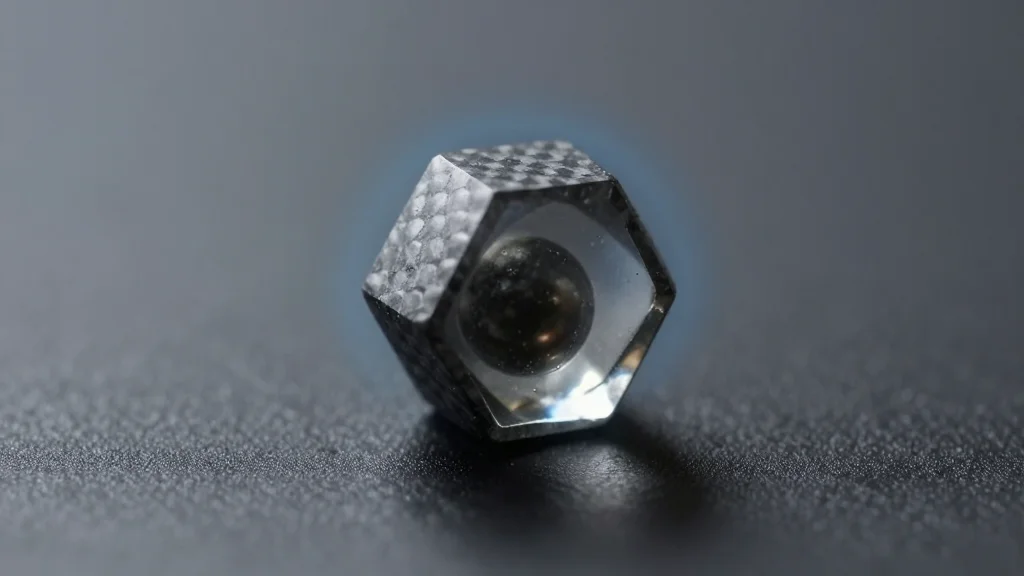
In the new study, a metal‑organic framework (MOF) precursor is leveraged to trigger a Kirkendall‑effect etching process that sculpts ZnPS₃ into a yolk‑double‑shell polyhedron. The inner yolk is encapsulated by an N‑doped carbon (NC) matrix derived from ZIF‑8 and tannic‑acid treatment, while an outer carbon shell originates from a resorcinol‑formaldehyde coating. This hierarchical design creates a continuous conductive network, provides ample void space to absorb expansion, and physically isolates polysulfide intermediates. The synergy of these features translates into rapid charge transfer and mitigated degradation, showcasing how precise morphological control can overcome the fundamental limits of TMP anodes.
Electrochemical testing reveals a reversible capacity of 925.7 mAh g⁻¹ at a modest 0.1 A g⁻¹ and an impressive 96.9 % capacity retention after 2,000 cycles at 2.0 A g⁻¹. Such performance metrics rival or exceed many state‑of‑the‑art SIB anodes, suggesting that yolk‑double‑shell architectures could be a viable route to scalable, high‑power storage solutions. Future work will likely explore scaling the MOF‑derived synthesis, integrating the material into full‑cell configurations, and assessing long‑term safety, all critical steps toward commercial adoption in renewable‑energy grids.
Yolk‐Double‐Shell ZnPS3/NC@C Polyhedra Engineered via Kirkendall‐Effect‐Driven Etching for Superior Sodium Storage
Comments
Want to join the conversation?
Loading comments...