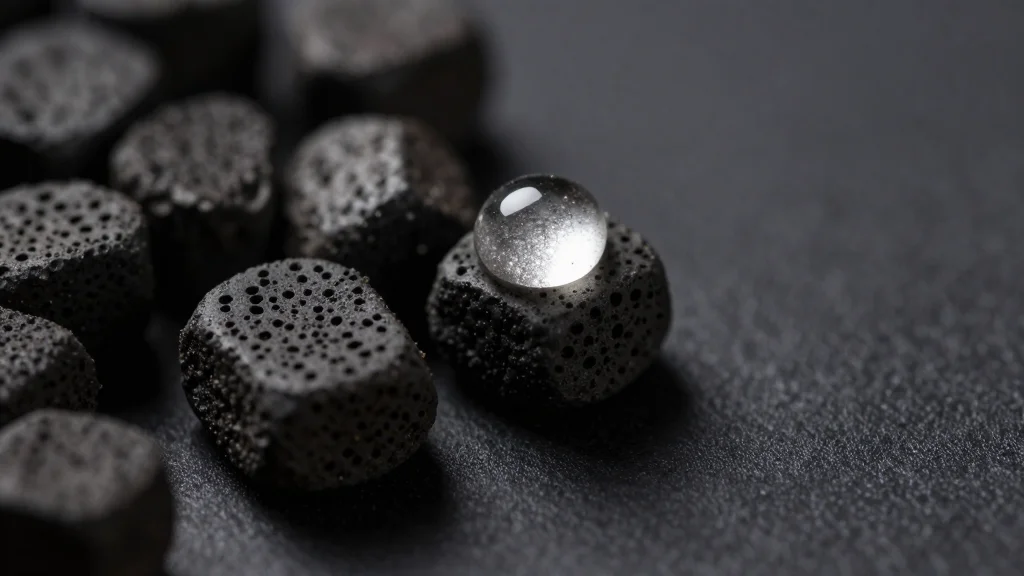
Zhengzhou University Engineers Closed‑pore Hard Carbon Delivering 500 mAh/G for Sodium‑ion Batteries

Why It Matters
The ability to unlock the full pore volume of hard carbon anodes removes a fundamental efficiency ceiling that has limited sodium‑ion batteries for years. By delivering near‑500 mAh g⁻¹ capacity while preserving rapid charge rates, the technology narrows the performance gap with lithium‑ion batteries and does so with a material that is cheaper and more abundant. This could shift investment toward SIB platforms for grid‑scale storage, where cost per kilowatt‑hour is a decisive factor, and also enable faster‑charging electric‑vehicle batteries without relying on scarce lithium resources. Beyond immediate applications, the nano‑space confinement concept may be transferable to other electrode chemistries, such as potassium‑ion or magnesium‑ion systems, where ion size and nucleation dynamics similarly dictate performance. The research thus establishes a versatile toolkit for engineering nanostructured energy materials, potentially accelerating the broader transition to diversified, sustainable battery technologies.
Key Takeaways
- •Zhengzhou University researchers engineered closed‑pore hard carbon with ~500 mAh g⁻¹ reversible capacity
- •Nanopores sized 0.4‑0.6 nm lower sodium nucleation barriers; larger pores up to 2 nm support cluster growth
- •Design raises active pore utilization from ~60% to near‑100%, eliminating a key performance bottleneck
- •Synthesis uses scalable resin cross‑linking and pyrolysis, facilitating industrial scale‑up
- •Prototype electrodes show supercapacitor‑like rate capability while retaining high energy density
Pulse Analysis
The Zhengzhou breakthrough arrives at a moment when the battery industry is actively seeking alternatives to lithium. While lithium‑ion cells dominate consumer electronics and EVs, supply chain constraints and raw‑material price volatility have spurred interest in sodium‑ion platforms. Historically, the anode side has been the Achilles' heel for SIBs, with hard carbon offering modest capacities but poor rate performance. By engineering the nanoconfined environment within hard carbon, the researchers have effectively rewritten the thermodynamic and kinetic rules that govern sodium storage. This not only lifts the ceiling on capacity but also aligns the charge‑discharge profile with the fast‑response demands of modern power grids.
From a market perspective, the technology could compress the cost advantage gap between SIBs and LIBs. Sodium's raw material cost is roughly one‑tenth that of lithium, and if the anode can match lithium‑ion energy densities, total system cost per kilowatt‑hour could drop significantly. That would make SIBs attractive for stationary storage where weight is less critical but cost per stored kilowatt‑hour is paramount. Moreover, the ability to charge quickly without sacrificing capacity could open niche EV segments, such as city‑commuter vehicles that prioritize turnaround time over range.
However, commercial translation will hinge on scalability and long‑term durability. The reported capacity is measured in half‑cell configurations; full‑cell performance, especially under high‑temperature cycling, remains to be demonstrated. Additionally, the electrolyte compatibility and potential side reactions with the engineered pores must be vetted. If these engineering challenges are resolved, the closed‑pore hard carbon could become a cornerstone of a diversified battery ecosystem, reducing reliance on a single chemistries and enhancing supply‑chain resilience.
Zhengzhou University engineers closed‑pore hard carbon delivering 500 mAh/g for sodium‑ion batteries
Comments
Want to join the conversation?
Loading comments...