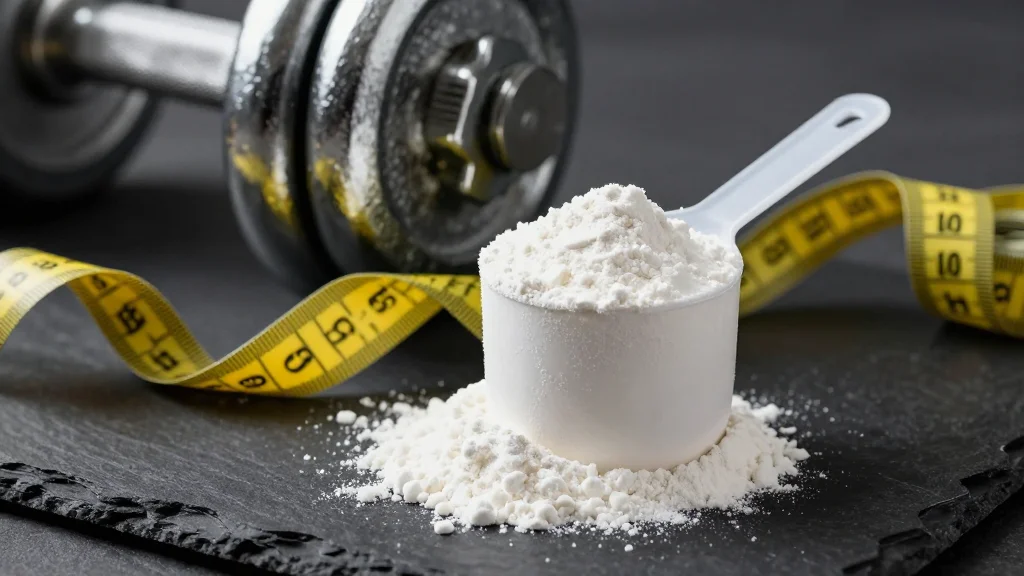
Creatine Supplementation in Young Men Under Resistance versus Non-Resistance Training: A Systematic Review and Meta-Analysis of Strength, Performance, and Lean Mass
Why It Matters
Pairing creatine with structured resistance training is essential for muscle‑mass gains, whereas athletes focused on short‑duration power can benefit from creatine regardless of their training regimen.
Key Takeaways
- •Creatine + resistance training adds ~3 kg fat‑free mass in young men
- •Lean‑mass gains absent when creatine used without resistance training
- •Wingate power improves ~70 W with creatine, independent of training mode
- •Squat 1RM increases ~12 kg across both resistance and non‑resistance contexts
- •Interventions ≥8 weeks yield larger countermovement‑jump improvements
Pulse Analysis
Creatine remains one of the most widely marketed ergogenic aids, prized for its ability to replenish phosphocreatine stores and support rapid ATP regeneration during high‑intensity effort. While dozens of studies have linked creatine to strength and power improvements, many prior meta‑analyses blended disparate training protocols, obscuring how the exercise environment shapes outcomes. By restricting the sample to young men and pre‑specifying resistance versus non‑resistance training, the new review clarifies that the supplement’s impact on muscle hypertrophy is contingent on a progressive overload stimulus, whereas its effect on anaerobic power is more universal.
The pooled data reveal a clear split: when creatine is paired with structured resistance training, participants gain an average of 3.4 kg of fat‑free mass and 2.7 kg of lean body mass—effect sizes that rival many pharmacologic interventions for muscle growth. In contrast, non‑resistance modalities, ranging from sprint intervals to plyometrics, did not produce significant lean‑mass changes, likely because they lack the sustained mechanical tension required for hypertrophy. Regardless of training type, Wingate peak power rose by about 71 W and mean power by 40 W, underscoring creatine’s direct support of the phosphagen system. Strength outcomes also improved, with squat 1RM increasing roughly 12 kg in both contexts, though the non‑RT subgroup was smaller and should be interpreted cautiously. Notably, interventions lasting eight weeks or longer amplified countermovement‑jump gains, suggesting a dose‑response relationship between exposure duration and neuromuscular adaptation.
For practitioners, the findings translate into actionable programming guidance. Athletes whose primary goal is muscle accretion should integrate creatine with a progressive resistance regimen, using loading phases of 20 g/day for five to seven days followed by 3‑5 g maintenance doses—a protocol common across the included trials. Those targeting explosive power or sprint performance can expect meaningful gains even in non‑strength‑focused training, making creatine a versatile addition to diverse sport‑specific plans. The supplement industry can leverage this nuance in marketing, emphasizing context‑specific benefits while avoiding blanket claims. Future research should explore longer‑term supplementation, gender differences, and more granular classifications of non‑resistance activities to refine dosing recommendations further.
Creatine supplementation in young men under resistance versus non-resistance training: a systematic review and meta-analysis of strength, performance, and lean mass
Comments
Want to join the conversation?
Loading comments...