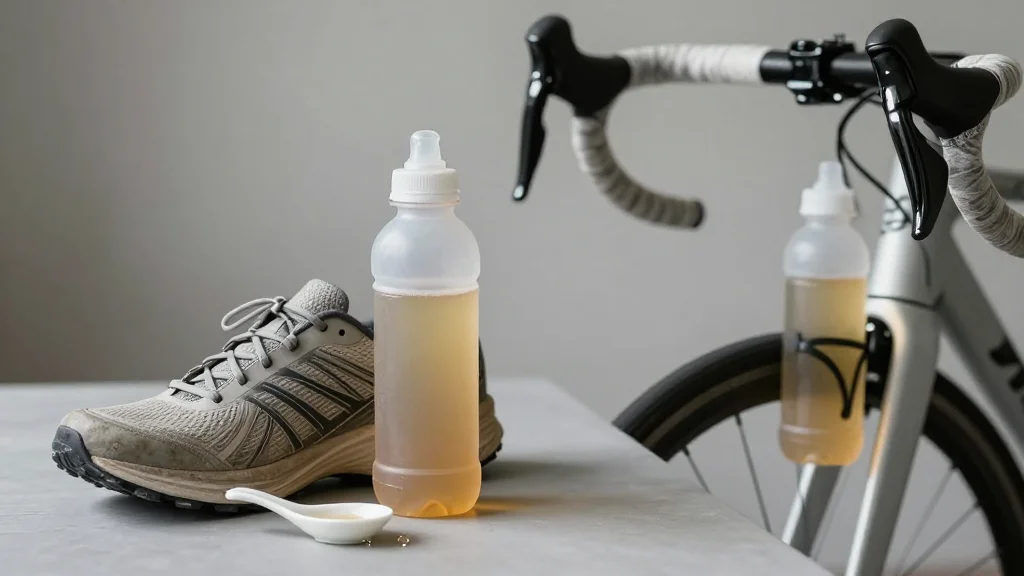
Gastrointestinal Tolerance to a Standardized Milk-Based Hydration Strategy Is Similar Across Exercise Modalities
Why It Matters
The results give athletes and coaches confidence to use milk‑based drinks for hydration regardless of whether they run or cycle, simplifying nutrition planning and potentially improving performance consistency.
Key Takeaways
- •Running and cycling showed equivalent overall GI symptom scores.
- •Cycling increased odds of heartburn, flatulence, urgency, and headache.
- •Low‑fat lactose‑free A2 milk remained palatable in both modalities.
- •Study controlled intensity, duration, and fluid volume for fair comparison.
- •Findings support milk as a universal in‑exercise hydration option.
Pulse Analysis
Endurance athletes frequently cite gastrointestinal distress as a performance‑limiting factor, especially during high‑impact activities like running. Historically, field observations have linked running to higher rates of nausea, cramping, and urgency compared with cycling, but those studies often varied in intensity, hydration volume, and beverage composition, making it hard to isolate the true effect of exercise modality. Recent research has turned to controlled laboratory settings to untangle these variables, recognizing that the mechanical impact of running may not be the sole driver of GI symptoms. By standardizing key parameters, investigators can more accurately assess how the body tolerates fluids and nutrients under stress.
In the latest study, twenty‑eight physically active adults completed both a 60‑minute treadmill run and a stationary bike session at 70‑80% of age‑predicted maximal heart rate, ingesting identical doses of low‑fat, lactose‑free A2 milk throughout each trial. Overall GI symptom scores—encompassing upper, lower, and systemic domains—were statistically indistinguishable between modalities, confirming equivalence despite the differing mechanical forces. Notably, cycling participants exhibited higher odds of specific complaints such as heartburn, flatulence, urgency, and headache, yet these did not translate into a greater composite symptom burden. Palatability assessments using a hedonic scale showed no significant differences, indicating that athletes found the milk equally acceptable whether running or cycling.
These insights carry practical weight for sports nutrition professionals and athletes seeking versatile hydration solutions. The evidence supports A2 milk as a reliable in‑exercise beverage across diverse training modalities, potentially reducing the need for sport‑specific fluid strategies. Coaches can incorporate milk‑based drinks into both running and cycling programs without fearing increased GI upset, while manufacturers may market such products as universally applicable for endurance sports. Future investigations could explore longer durations, hotter environments, or mixed‑modality events like triathlons to further validate milk’s broad utility in real‑world competition settings.
Gastrointestinal tolerance to a standardized milk-based hydration strategy is similar across exercise modalities
Comments
Want to join the conversation?
Loading comments...