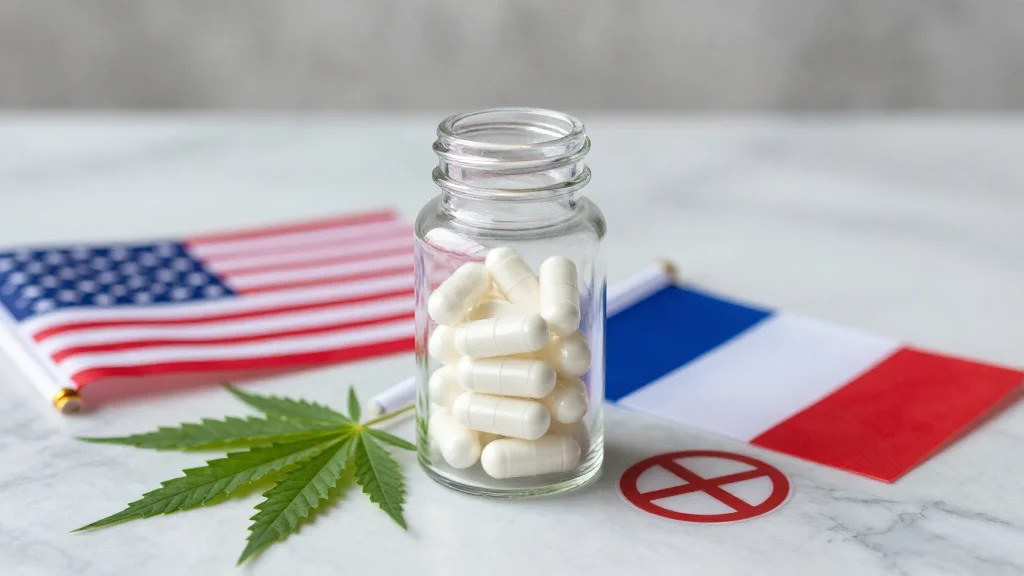
U.S. Senate Advances Dietary Supplements Access Act as France Bans CBD Edibles

Why It Matters
The U.S. Senate’s push to harmonize supplement labeling could lower barriers for innovators, fostering faster product cycles and potentially expanding consumer access to evidence‑based nutrients. Conversely, France’s ban on CBD edibles curtails a fast‑growing segment of the functional food market, threatening jobs and investment in the European hemp sector. Together, these regulatory shifts illustrate how policy can either accelerate or stall growth in the nutrition industry, influencing everything from supply chain logistics to consumer health outcomes. For multinational supplement firms, the divergent approaches demand agile compliance strategies. A streamlined U.S. framework may encourage companies to prioritize the American market, while the European crackdown on CBD could push firms to relocate production or focus on alternative ingredients. The net effect will likely be a reallocation of R&D spend and marketing resources, reshaping the competitive landscape for years to come.
Key Takeaways
- •U.S. Senate advances the Dietary Supplements Access Act to create a single FDA‑approved label for supplements.
- •France bans CBD edibles, gummies, tinctures and supplements under Novel Food rules effective May 15.
- •The French ban threatens an estimated €100 million ($108 million) market, affecting 2,000 hemp producers and 20,000 pharmacies.
- •Critics argue the U.S. bill could weaken state‑level consumer protections, while supporters cite cost savings for manufacturers.
- •Industry groups in both regions are preparing legal challenges and lobbying for clearer regulatory pathways.
Pulse Analysis
The twin regulatory moves underscore a growing polarization in how governments view the supplement sector. The U.S. effort to standardize labeling reflects a broader trend toward deregulation aimed at spurring innovation and reducing time‑to‑market. Historically, the supplement industry has thrived on a patchwork of state rules; a unified label could lower compliance costs, especially for small firms lacking the resources to navigate 50 separate regimes. However, the risk is that a federal standard may overlook regional safety nuances, potentially eroding consumer trust if adverse events arise.
In Europe, the French ban signals a more precautionary stance, especially for novel ingredients lacking a robust safety dossier. By classifying CBD as a reproductive toxicant, France aligns with a stricter interpretation of EU Novel Food regulations, which could set a precedent for other member states. The immediate economic impact—over $100 million in lost revenue—highlights how regulatory decisions can quickly reshape market dynamics, prompting firms to diversify product portfolios or shift focus to jurisdictions with clearer pathways.
For investors, these developments suggest a bifurcated risk profile. Companies with strong U.S. distribution networks may benefit from the labeling reform, while those heavily invested in European CBD products could face valuation pressures. Strategic players will likely hedge by expanding into markets with stable regulatory environments, such as Canada or emerging Asian economies, while lobbying for harmonized standards that balance safety with innovation. The next few months will be critical as the U.S. Senate votes on the act and French industry groups mount legal challenges, setting the tone for global supplement policy for the foreseeable future.
U.S. Senate Advances Dietary Supplements Access Act as France Bans CBD Edibles
Comments
Want to join the conversation?
Loading comments...