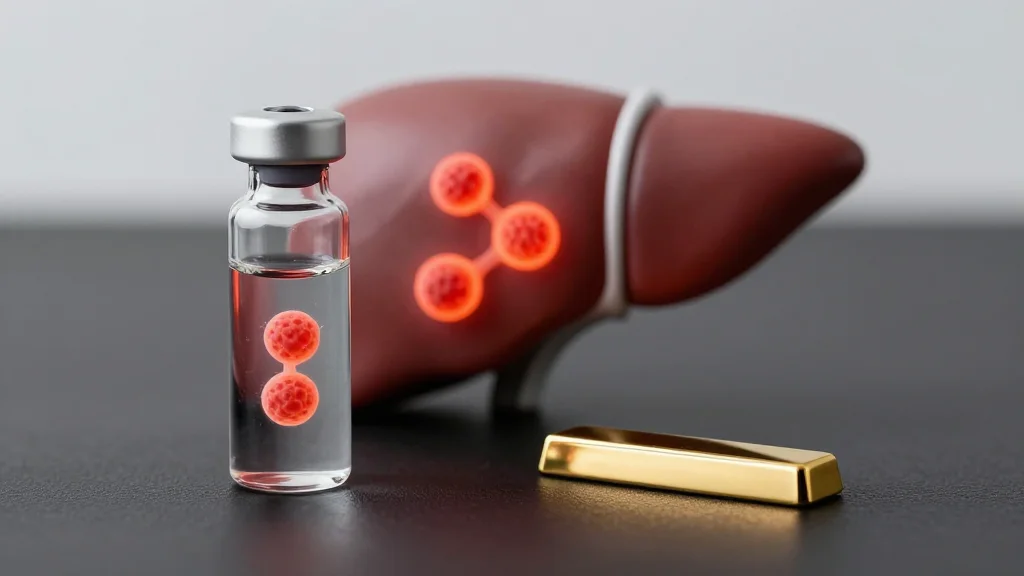
Oricell Therapeutics Secures $110 Million to Push GPC3‑Targeted CAR‑T for Liver Cancer

Companies Mentioned
Why It Matters
The $110 million infusion into Oricell Therapeutics underscores a pivotal shift in oncology investment: confidence that CAR‑T can move beyond blood cancers into solid tumors with high unmet need. A successful GPC3‑targeted therapy could redefine treatment standards for hepatocellular carcinoma, a disease with limited options and poor prognosis. Moreover, Oricell’s progress will influence how regulators, payers and manufacturers approach the complex logistics of autologous cell therapies for solid tumors, potentially accelerating the broader adoption of precision immunotherapies. If Oricell demonstrates safety and efficacy, it could catalyze further capital inflows into similar programs, intensify competition among big pharma and biotech, and spur innovation in manufacturing technologies that lower costs. Conversely, setbacks would highlight the formidable scientific and operational challenges that still constrain CAR‑T’s expansion, informing future investment strategies.
Key Takeaways
- •$110 million financing round announced to fund GPC3‑targeted CAR‑T development
- •Therapy aims at hepatocellular carcinoma, the most common liver cancer subtype
- •No FDA‑approved GPC3 therapies exist, creating a clear unmet need
- •Competing programs from AstraZeneca and Eureka Therapeutics target the same antigen
- •Phase 1 trial planned for later 2026 with safety and early efficacy as primary endpoints
Pulse Analysis
Oricell’s capital raise arrives at a moment when the CAR‑T field is at a crossroads. The technology has delivered blockbuster successes in leukemia and lymphoma, but solid tumors have remained elusive due to physical barriers and immunosuppressive microenvironments. By focusing on GPC3—a tumor‑restricted antigen—Oricell is betting on a high‑specificity approach that could mitigate off‑target effects, a common criticism of earlier solid‑tumor CAR‑T attempts.
Historically, the transition from hematologic to solid‑tumor indications has required not just biological insight but also breakthroughs in cell manufacturing and delivery. Oricell’s investment in a modular GMP facility signals an awareness that scalability will be a make‑or‑break factor for commercial success. If the company can demonstrate a reproducible, cost‑effective production pipeline, it may set a new industry standard that lowers the entry barrier for other cell‑therapy developers.
From a market perspective, the liver cancer segment is projected to grow rapidly, driven by rising incidence and limited therapeutic options. Oricell’s entry could force larger players to accelerate their own GPC3 programs, potentially leading to a wave of combination strategies—such as CAR‑T plus checkpoint inhibition—to overcome tumor resistance. Investors will likely monitor Oricell’s Phase 1 data closely; a positive safety profile could trigger a new wave of financing, while any serious adverse events could dampen enthusiasm for solid‑tumor CAR‑T across the board.
Oricell Therapeutics Secures $110 Million to Push GPC3‑Targeted CAR‑T for Liver Cancer
Comments
Want to join the conversation?
Loading comments...