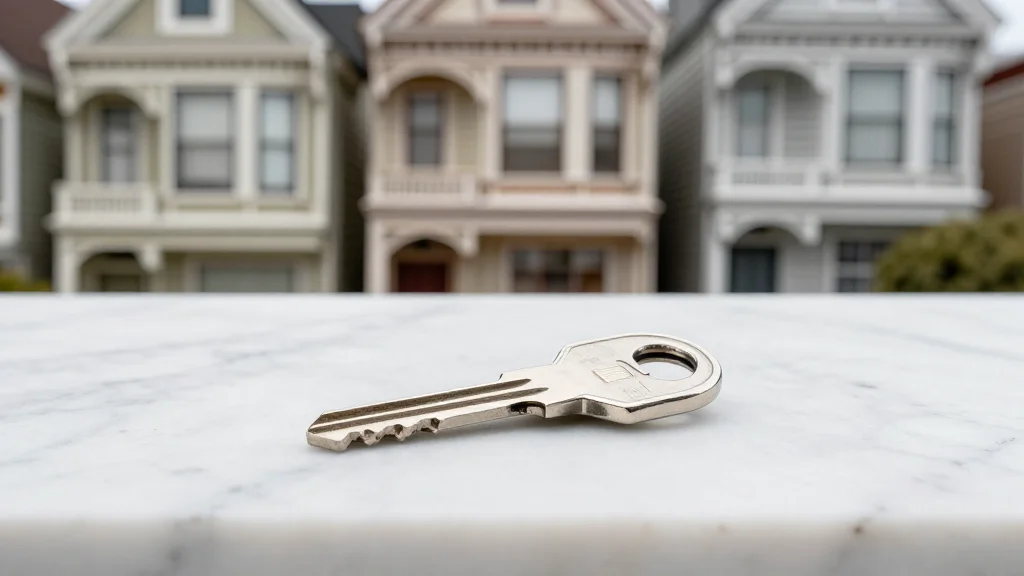
San Francisco Home Listed for $2.99 M Accepting Anthropic or OpenAI Stock



Why It Matters
The transaction highlights a novel financing bridge between the tech equity market and real‑estate, offering a template for liquidity‑constrained buyers in high‑price cities. As AI firms like Anthropic and OpenAI continue to amass multi‑billion‑dollar valuations, their private shares become a de‑facto currency for affluent employees and early investors. Accepting such equity could unlock demand that would otherwise be stalled, potentially softening price pressures in markets where inventory is scarce. If the model proves viable, it could spur a wave of similar listings nationwide, especially in other tech corridors where equity wealth outpaces cash liquidity. Regulators and lenders will need to grapple with valuation standards, tax implications, and the legal mechanics of transferring private stock in real‑estate deals, setting new precedents for both sectors.
Key Takeaways
- •Duboce Triangle home listed at $2,995,000 will accept Anthropic or OpenAI private shares as payment.
- •Listing agent Rachel Swann reports surge in interest within 24 hours.
- •San Francisco home prices up 19% YoY; median days on market down to 14.
- •One‑bedroom rents have risen over 21% to about $4,000 per month.
- •Similar AI‑stock deal attempted previously with a $4.8 M Marin County estate.
Pulse Analysis
The convergence of AI equity and real‑estate financing reflects a deeper structural shift: wealth creation in the tech sector is increasingly decoupled from liquid cash. Traditional mortgage underwriting relies on verifiable income and liquid assets, but a growing cohort of high‑net‑worth individuals hold the majority of their wealth in restricted stock. By allowing private AI shares as payment, sellers are effectively creating a secondary market for illiquid equity, converting it into a tangible asset without waiting for a public liquidity event.
Historically, similar experiments have surfaced in markets like Silicon Valley, where stock‑backed purchases of luxury homes were rare and often informal. This listing formalizes the concept, signaling that developers are willing to assume valuation risk in exchange for faster turnover in a hyper‑competitive market. The risk is not trivial: private AI shares can be volatile, and their transfer may be subject to lock‑up agreements, right‑of‑first‑refusal clauses, and securities regulations. Sellers will likely demand a discount or a built‑in hedge to mitigate these uncertainties.
Looking ahead, the success—or failure—of this deal will inform whether AI‑stock‑backed purchases become a niche strategy or a mainstream financing tool. If buyers can secure favorable valuations and the transaction closes smoothly, other high‑price metros—Seattle, Boston, New York—may see a ripple effect. Conversely, regulatory pushback or valuation disputes could dampen enthusiasm. For now, the listing serves as a litmus test for how quickly the real‑estate market can adapt to the liquidity challenges posed by the modern tech wealth ecosystem.
San Francisco Home Listed for $2.99 M Accepting Anthropic or OpenAI Stock
Comments
Want to join the conversation?
Loading comments...