

Excel Agent Mode Explained: AI That Works Inside Excel
Microsoft unveiled Excel Agent mode, an AI-driven feature that lets users describe desired outcomes and have the spreadsheet automatically construct the necessary workflow. The assistant parses natural‑language prompts, generates formulas, creates new worksheets, and builds charts, effectively handling tasks that traditionally required manual formula writing and data‑modeling expertise. In the demo, the presenter typed commands such as “analyze this sales data set, find top regions” and “build a regression model to predict sales based on marketing spend,” prompting the AI to produce summary tables, regression coefficients, and predictive visualizations entirely within the workbook. By turning Excel into an intent‑based analytics platform, Agent mode could accelerate business reporting, lower the barrier to advanced analytics, and reshape how professionals interact with data.
Claude Code Vs Codex: The Honest Comparison #coding #ai
The video pits two AI coding agents—Anthropic’s Claude Code and OpenAI’s Codex—against each other, walking viewers through the first five core strategies that shape how developers interact with each tool. Installation feels alike, both using npm, but Claude Code immediately adopts...
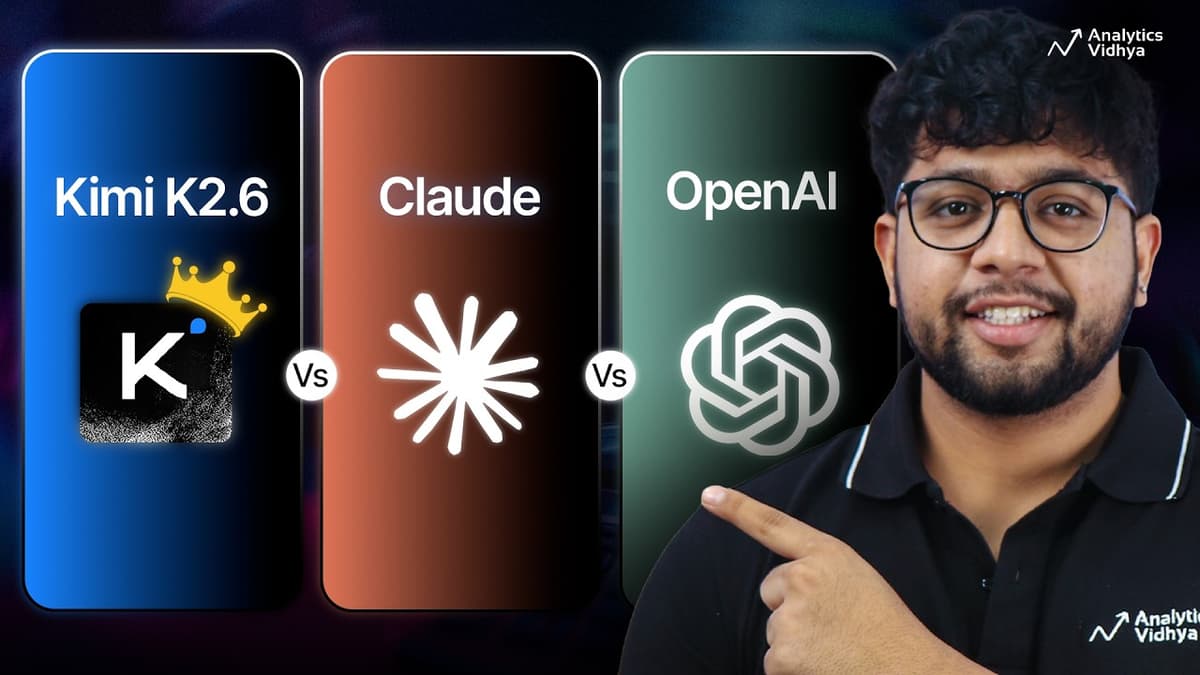
Kimi K2 vs Claude Opus 4.7 vs GPT 5.5 Comparison
The video pits Moonshot AI’s newly released Kimi K2.6 against Anthropic’s Claude Opus 4.7 and OpenAI’s GPT 5.5, focusing on real‑world coding productivity, cost efficiency, and agentic capabilities. K2.6, launched April 20, 2026, boasts a trillion‑parameter backbone, 32 billion active parameters, a 256‑token context window,...
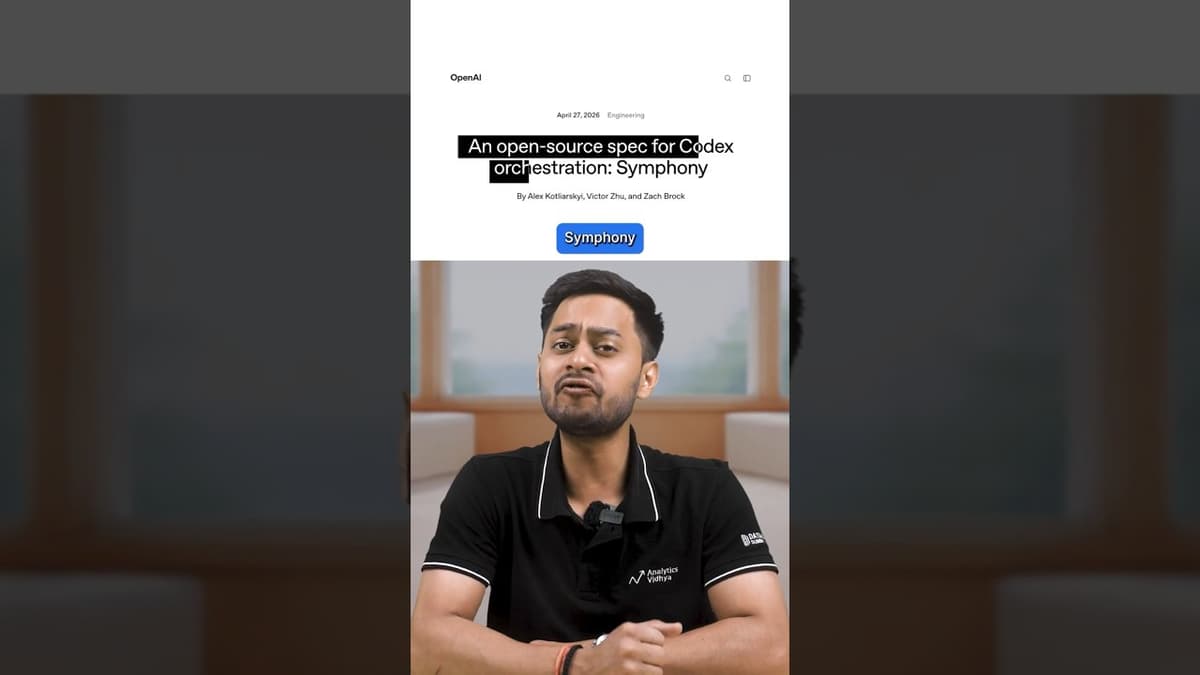
OpenAI Symphony: AI Engineers That Code for You?
OpenAI unveiled Symphony, an open‑source specification that turns an issue‑tracker such as Linear into a control plane for AI‑driven development. The framework coordinates multiple Codeex agents, allowing each open ticket to become an autonomous workspace where code is generated without...
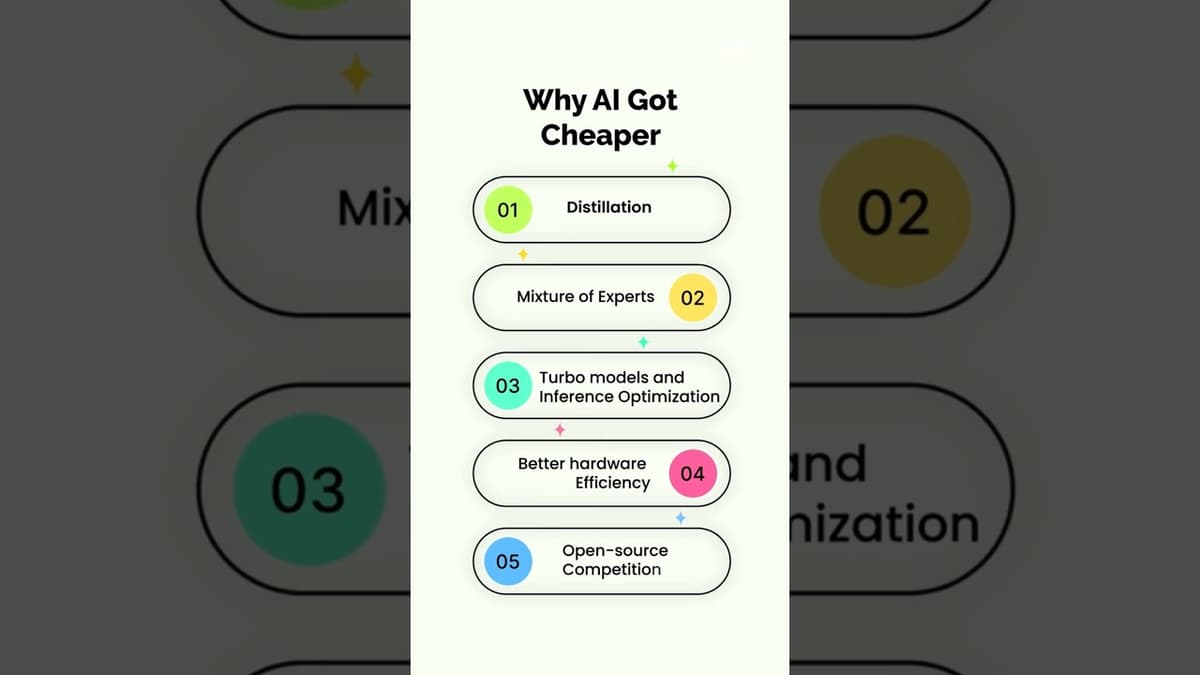
Why AI Getting Cheaper Changes Everything #ai #tech #shorts
The video explains that artificial‑intelligence services are becoming dramatically cheaper, not because the technology is weakening but because it is getting more efficient and smarter. Four technical advances drive the cost drop: model distillation that compresses large frontier models into lightweight...
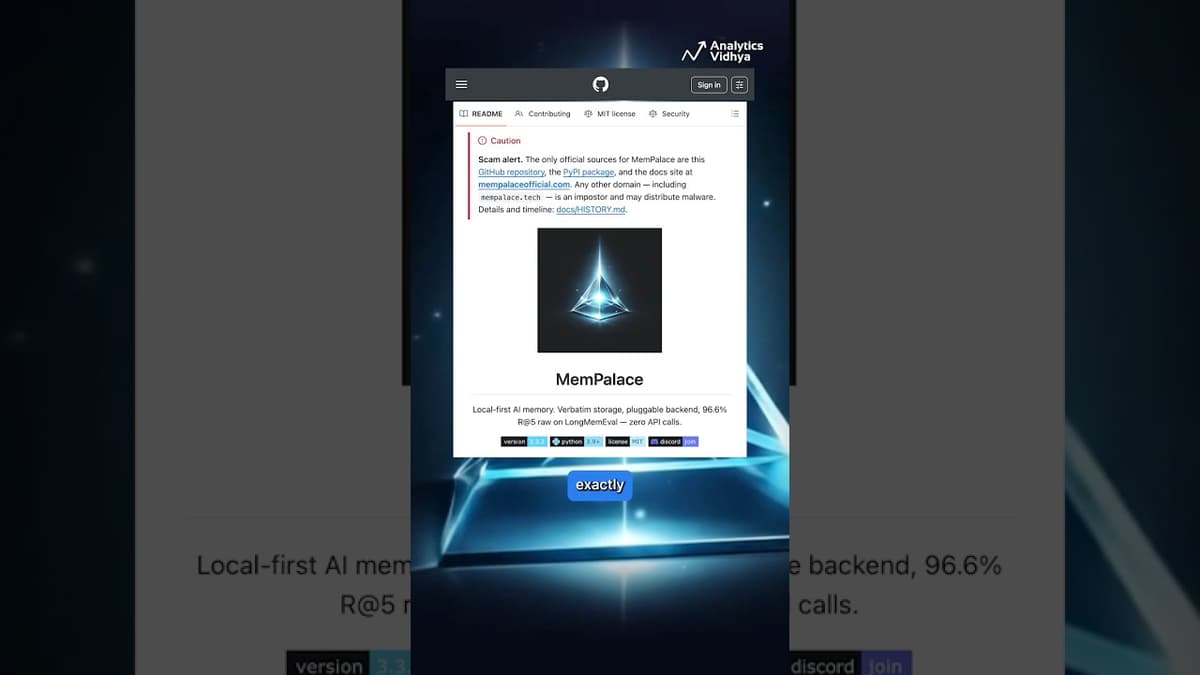
MemPalace Explained: Give Your AI Perfect Memory Locally
MemPalace is a local‑first AI memory platform that captures every conversation verbatim, storing the raw transcript on the user’s own device rather than in the cloud. By preserving the full context, it eliminates the common “memory loss” problem when chat...
Graph RAG Tutorial | Build Knowledge Graph Powered Retrieval Systems LangChain, ChromaDB & RAGAS
The GraphRAG tutorial walks developers through building a knowledge‑graph‑enhanced retrieval system that overcomes the multi‑hop and relationship limitations of traditional Retrieval‑Augmented Generation. Leveraging LangChain, ChromaDB, and NetworkX, the course shows how to extract entities, construct a graph, and query it...
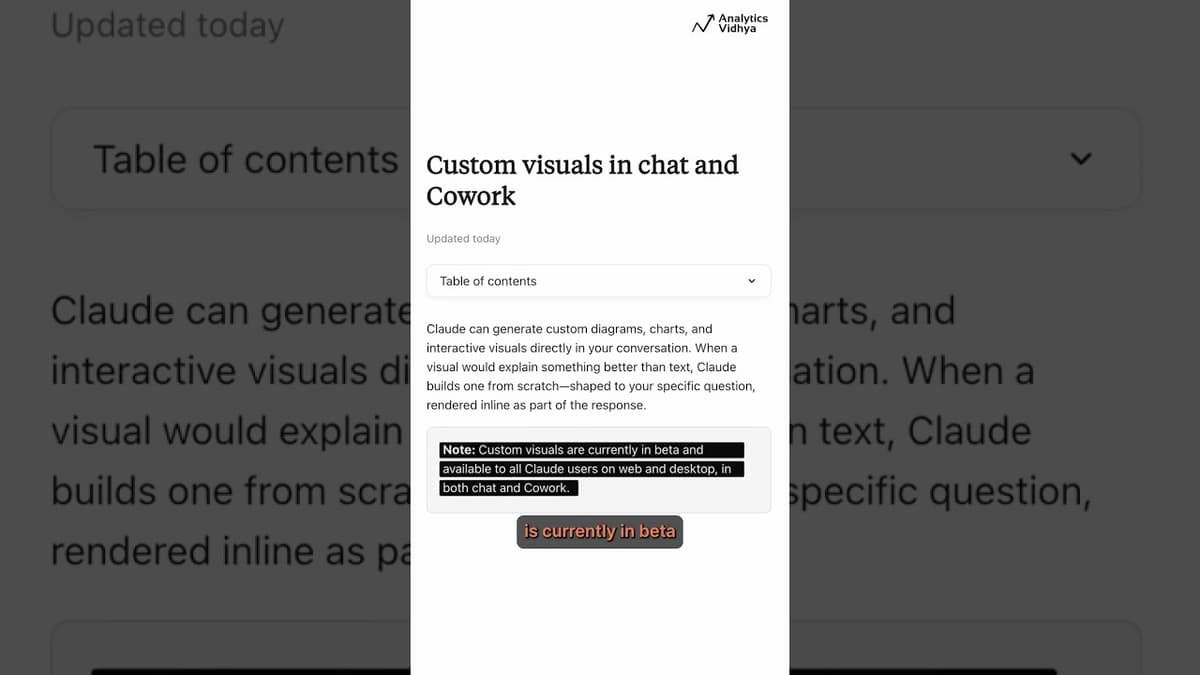
Claude Custom Visuals Explained: AI That Draws Inside Chat
Claude has rolled out a new capability that creates custom diagrams, charts and interactive visuals right inside a chat session. The feature works automatically when the model deems a visual helpful, yet users can also request graphics explicitly with prompts...
Ultimate Generative AI Interview Guide 2026 | Python, ML, RAG & Agentic AI Interview Questions
The video serves as an all‑in‑one interview preparation guide for data‑science and generative-AI roles in 2026, walking viewers through Python fundamentals, core statistics, machine‑learning concepts, deep‑learning foundations, Retrieval‑Augmented Generation (RAG), and emerging agentic‑AI topics. It systematically reviews Python basics—data types, mutability,...
Is ChatGPT Images 2.0 the Best Image Generation Model?
OpenAI unveiled ChatGPT Images 2.0, a major upgrade to the native image‑generation engine inside ChatGPT, positioning it as a visual‑thinking partner rather than a simple picture generator. The new model introduces a smarter workflow that can follow complex instructions, reason about...
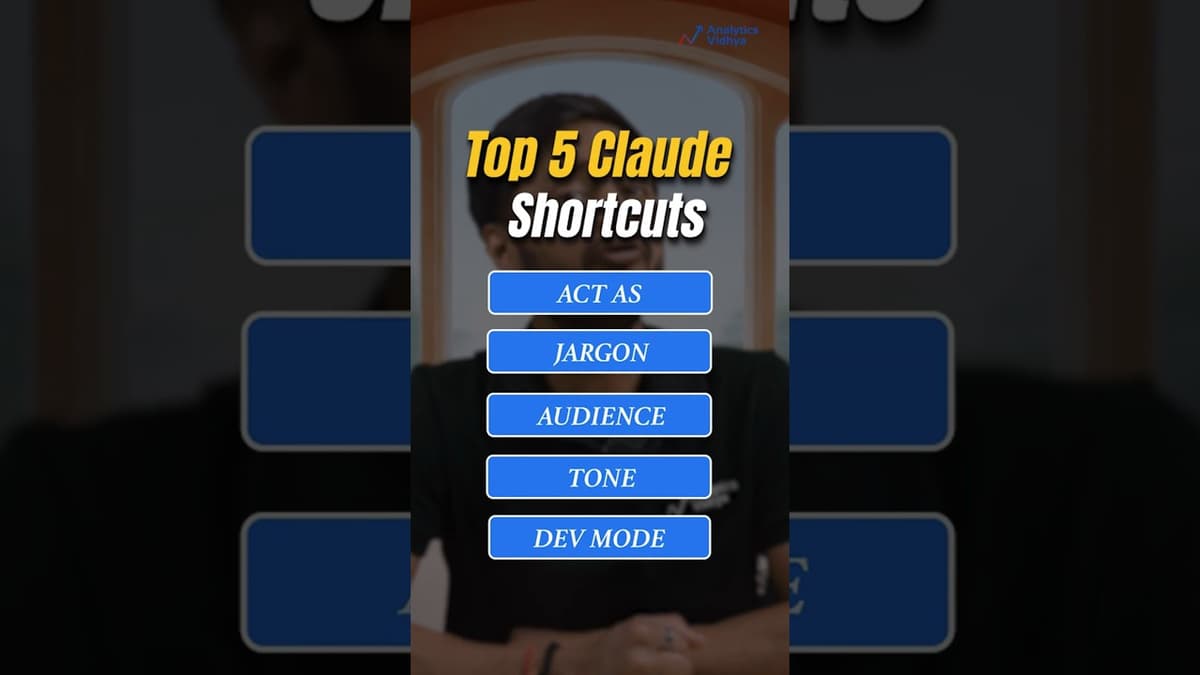
Top 5 Claude Shortcuts that Will 10X Your Speed
The video walks through five prompt‑engineering shortcuts for Anthropic’s Claude that can “10X” user speed by shaping how the model responds. First, the “act as” command assigns Claude a specific role—marketer, teacher, developer, or consultant—so answers come from that perspective. Second,...
OpenAI Just Solved the Wrong Problem in Cybersecurity #ai #cybersecurity #openai
OpenAI announced a new program called Trusted Access for cybersecurity, a framework that restricts powerful AI capabilities to verified users rather than imposing functional limits. The initiative requires identity verification and grants advanced model access only to trusted researchers, enterprises,...
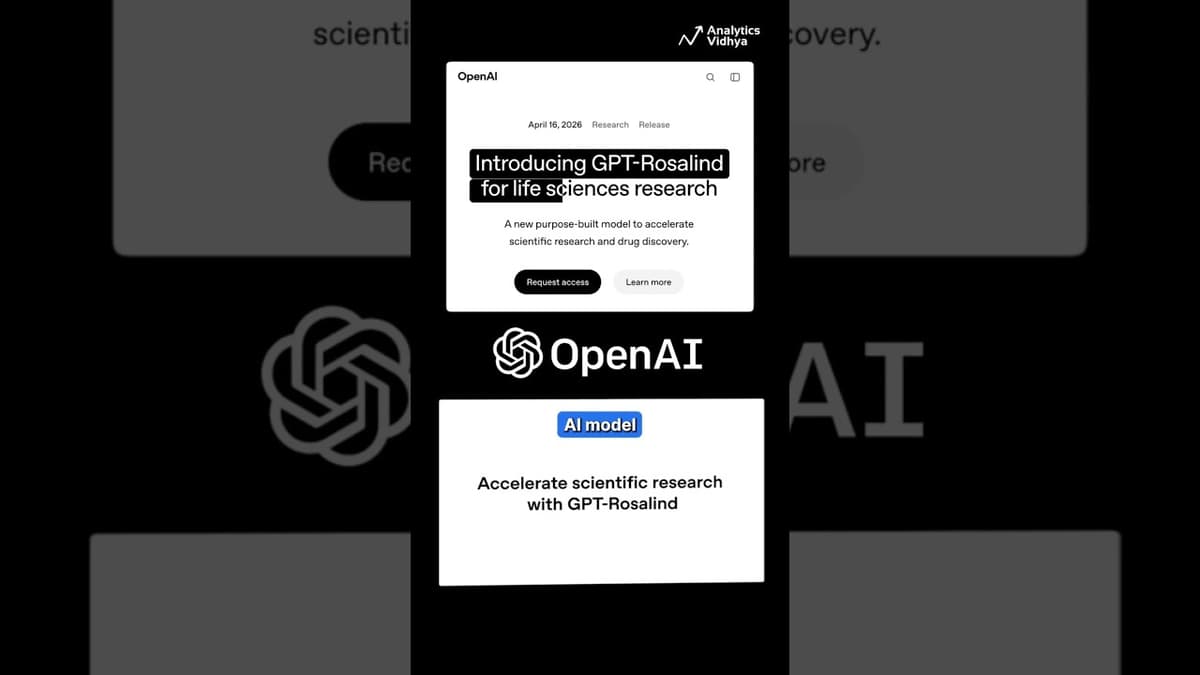
GPT-Rosalind: The AI Scientist Changing Drug Discovery 🧬🚀
OpenAI unveiled GPT‑Rosalind, a frontier‑reasoning model built specifically for live scientific research in biology, drug discovery and translational medicine. Unlike a generic chatbot, it is engineered to think like a scientist, parsing complex protein, gene, chemical reaction and disease biology...
Claude Opus 4.7: Smarter AI Isn’t Enough Anymore 🔐🚀
The video introduces Claude Opus 4.7, Anthropic’s newest widely available model, underscoring a strategic pivot from merely smarter AI to safer, scalable AI that enterprises can trust. Opus 4.7 delivers notable upgrades: it tackles complex software engineering tasks, manages large codebases,...

5 AI Tools Every Data Scientist Must Know in 2026 🚀
The video spotlights five emerging AI tools reshaping data‑science workflows in 2026. It begins with Cloud Code, an agentic coding assistant that can parse entire repositories, write new features, debug, and run multi‑step pipelines, effectively acting as a junior developer...

Prompt vs RAG vs Fine-Tuning 🤯 Which One Should You Use?
The video breaks down three core strategies—prompt engineering, retrieval‑augmented generation (RAG) and fine‑tuning—to improve AI reliability and relevance. It frames the choice as a hierarchy: start with clear prompts, layer in external knowledge, and only then invest in model retraining. Prompt...

Cursor 3 Parallel Agents Will Break Your Workflow #ai #devtools #shorts
The video unveils Cursor 3, a developer‑focused IDE overhaul built around AI‑driven agents that take on the heavy lifting of code generation. Rather than typing every line, developers become architects while autonomous agents act as builders, executing tasks in real...

Build Better Agents with Replit Skills
Replit announced a new feature called agent skills that gives its AI agents a persistent memory layer, allowing them to recall prior actions and apply learned procedures across sessions. Agent skills are essentially markdown‑based playbooks that encode step‑by‑step instructions for specific...

3 Agentic AI Tools That Do Work For You (Not Just Chat)
The video spotlights a new generation of “agentic” artificial‑intelligence platforms that move beyond chat‑based queries to actually perform work on behalf of users. It showcases three products—Manus AI, Open Cloak and Claude Cowork—as exemplars of this shift. Manus AI is presented as a...

From Digital Twins to World Models: The Next Frontier of Industrial AI
The webinar explores the transition from traditional digital twins to AI‑driven world models, positioning the latter as the next industrial AI frontier. Ankit Lad outlines why the shift matters now, citing five converging forces: dramatically cheaper GPUs, mature foundational models,...

23. LLM Ops: Building a Quality Gate for Retrieval & Generation (Regression Detection)
The video explains how LLM operations must treat evaluation as an ongoing monitoring discipline rather than a one‑time development task. It focuses on building a quality gate that safeguards retrieval‑augmented generation systems against silent performance drops caused by model updates,...

LangChain vs LangGraph vs LangSmith vs LangFuse: Which One Should You Use?
The video dissects four rapidly‑growing tools—LangChain, LangGraph, LangSmith and LangFuse—explaining their distinct roles in the LLM‑application stack and offering a clear mental model for developers. LangChain is an open‑source toolkit that abstracts model calls, prompts, chains, retrievers, agents, memory and tools,...

From Chunks to Connections: Graph RAG with Neo4j for Hierarchical Intelligence
Presenter Farukq outlines an approach to build hierarchical knowledge graphs with Neo4j for Retrieval-Augmented Generation (RAG), arguing graph databases preserve parent-child relationships and contextual links lost in flat vector stores like PGVector or Mongo-based embeddings. He explains ingesting multimodal sources...

Supervised vs Unsupervised vs Reinforcement Learning
The video provides a concise overview of three core machine‑learning paradigms—supervised, unsupervised and reinforcement learning—framing them as learning with answers, without answers, and with rewards respectively. In supervised learning, models ingest labeled datasets, such as spam‑tagged emails or housing features paired...

Transformers vs MoE 🤯 Which AI Architecture Wins?
The video examines whether AI models improve by sheer size or by selective computation, focusing on the classic transformer architecture versus the newer mixture‑of‑experts (MoE) augmentation. Transformers rely on self‑attention to view an entire token sequence simultaneously, which powers chatbots, translation,...

5 Beginner-Friendly GenAI Projects You Must Build 🚀
The video outlines five starter‑level generative‑AI projects designed to give newcomers hands‑on experience, providing source‑code links and a concise tool stack for each. Project one uses CrewAI’s web‑scraping combined with Python LangChain to ingest live IPL match data and generate winner...

RAG Evaluation Metrics Tutorial
The video walks through a systematic evaluation of the GraphRAG system, contrasting three retrieval modes—local, global, and hybrid—using the RAGAX benchmark and custom graph-specific metrics. Local mode relies on vector search plus one-hop graph expansion, global draws on LLM-generated community summaries,...

How a Claude Code Leak Turned Into GitHub History
The video chronicles a dramatic chain of events that began when the TypeScript source code for Anthropic’s Claude‑based AI coding agent, known as Claw, was leaked on March 31, 2026. The breach exposed the tool‑harness, agent runtime, and command‑wiring architecture that power...

TurboQuant Explained 🤯 Faster AI Without Bigger Models!
Google unveiled TurboQuant, a novel compression algorithm that slashes the size of key‑value (KV) caches used by modern large‑language models, promising faster inference without expanding model parameters. Current models rely on KV caching to remember past tokens, but the cache grows...

Qwen3.5-Omni vs Gemini 🤯 The Omni-Modal AI Era Begins
The video pits Alibaba‑backed Qwen 3.5 Omni against Google’s Gemini, announcing the launch of a truly omni‑modal model that natively ingests text, images, audio and video. Qwen 3.5 Omni adds a novel “audio‑visual wipe coding” interface, letting users describe concepts to a camera and receive...

The Evolution of Personalization and Context in Generative AI
The webinar, led by Sareshi Pani of Alchemist AI, traced how generative AI has moved from generic large‑language models to highly personalized, context‑aware assistants. It highlighted the shift from early generative techniques—GANs, VAEs, diffusion models—to transformer‑based LLMs trained on internet‑scale...

ChatGPT vs Perplexity vs NotebookLM 🤯 Who’s Best for Learning?
The video pits three AI assistants—ChatGPT, Perplexity, and NotebookLM—against each other to answer a single question: how to become a GenAI scientist by 2026. By feeding each platform the same prompt, the creator showcases how the tools differ in style,...

Your RAG Is Broken 😳 Meet PageIndex (Vectorless AI)
Traditional retrieval‑augmented generation (RAG) relies on chunking documents, embedding each piece, and querying a vector database. The speaker argues this approach shreds tables, footnotes, and hierarchy, often returning superficially similar but factually wrong passages. PageIndex proposes a vectorless alternative that...

Data Analyst to AI Engineer 🚀 | Real Roadmap 2026
The video outlines a practical roadmap for data analysts who want to become AI engineers by leveraging existing analytical skills and adding targeted capabilities. It emphasizes that the transition is not about learning AI in a vacuum but about extending...

Top 5 AI Coding Assistants Every Developer Needs in 2026 🚀
The video spotlights the five AI‑powered coding assistants that have become indispensable for developers in 2026, framing them as a “second brain” that transforms how software is built. Claude Code goes beyond simple autocomplete by deploying parallel agents, persistent memory, and...

15. Build a Subway Surfers Game with Google Anti-Gravity
The video demonstrates building a Subway Surfers‑style endless runner using Google AI Studio’s Anti‑gravity feature, showcasing a prompt‑driven workflow that turns natural‑language specifications into a functional game. It walks through crafting a core prompt that defines the three‑lane runner, player...

Generative AI vs Agentic AI: The Real Difference 🤯
The video contrasts generative AI—software that produces text, images, code from prompts—with emerging agentic AI that can autonomously execute tasks toward a defined goal. While generative models excel at creating drafts, they leave a “work gap” requiring humans to fact‑check, format,...

RAG Mock Interview Questions and Answers for GenAI Job Roles
The video breaks down the 15 most critical RAG interview questions that separate a novice from a principal‑level GenAI architect, emphasizing that modern enterprises expect hallucination‑free, enterprise‑grade AI systems rather than simple API‑wrapped LLMs. Key insights cover the RAG architecture (retriever + generator),...

Learn Machine Learning on YouTube in 2026 🚀 (Top 5 Channels)
The video outlines five YouTube channels that cater to distinct machine‑learning learning styles in 2026. It positions each channel as a curated pathway, from code‑first project builds to visual‑math deep dives, helping viewers cut through the noise of countless tutorials. Syntax...

5 Machine Learning Algorithms You Must Know 🤖
The video outlines five foundational machine learning algorithms that power everyday AI applications, from medical diagnostics to real‑estate pricing. It emphasizes that mastering these models is essential for anyone building predictive systems. The presenter walks through linear regression for continuous predictions,...

Claude Cowork: Clean Your Messy Files with AI 🤯
Claude Co‑work is a new desktop application that brings Anthropic’s Claude AI directly to a user’s local file system, promising to clean up chaotic download folders with a single natural‑language command. The workflow is simple: the user types a request such...

Claude Skills: Stop Prompting, Start Building AI 🤯
The video introduces Claude Skills, a new feature that shifts users from writing repetitive prompts to building reusable AI workflows. By packaging a skill as a simple folder containing a single skill.md file, developers can define the task, trigger conditions,...

5 FREE AI Agent Courses You Can’t Miss 🤖🚀
The video spotlights five free AI‑agent courses, positioning them as essential entry points for anyone eager to build or experiment with autonomous agents. The first course, a hands‑on Hugging Face track, walks learners through building agents that reason, use tools, and...

PageIndex vs RAG: Why Traditional Retrieval Is Broken (PageIndex AI Tutorial)
The video argues that the prevailing Retrieval‑Augmented Generation (RAG) pipeline—chunking documents, embedding each chunk, storing vectors, and retrieving by cosine similarity—is fundamentally broken for long, structured texts. It highlights four failure modes: arbitrary chunking that severs context, similarity metrics that miss...

3 No-Code Automation Platforms to Build Workflows Without Coding
The video spotlights three leading no‑code automation platforms—Zapier, Make, and Lately—showcasing how they enable users to build, connect, and launch digital workflows without writing code. It frames the narrative around the question, “What if you could automate your entire digital...

5 AI Books That Took Me From Confused to Confident 🤯📚
The video opens with the creator admitting to feeling lost in the fast‑moving world of generative AI, then positions five carefully selected books as a step‑by‑step roadmap from confusion to confidence. Each title serves a distinct purpose: Goodfellow, Bengio and Courville’s...

RAG Project: Company Policy Bot
The notebook demonstrates how to build a Retrieval‑Augmented Generation (RAG) pipeline that turns a static HR policy PDF into an interactive assistant. By loading the document, splitting it into overlapping 700‑character chunks, and creating OpenAI embeddings, the workflow stores vector...

ChatGPT vs Claude: Real Tests, Real Winner 🧠⚔️
The video pits OpenAI’s ChatGPT against Anthropic’s Claude in two real‑world tasks—email polishing and Python debugging—to see which AI assistant delivers higher productivity for professionals. In the email refinement test, both models produced a polite, firm, and concise draft, but Claude...

5 FREE Machine Learning Courses with Certificates (Start Now!)
The video highlights five free machine‑learning courses that award certificates, targeting beginners to professionals. It outlines each program’s unique angle—Google Cloud’s production‑grade pipeline, Analytics Vidya’s data‑science workflow, FreeCodeCamp’s project‑based Python/TensorFlow labs, Kaggle’s interactive notebooks with real datasets, and Microsoft Azure’s...

Deep Learning Interview Questions and Answers | Complete DL Interview Prep Guide
The video serves as a comprehensive interview guide, walking candidates through deep learning fundamentals—from the distinction between traditional machine learning and neural networks to advanced architectures like transformers. It emphasizes that interviewers probe conceptual understanding, not just buzz‑word recall, and...