

GLM-5-Turbo: The AI Model Built for Agents (Not Chatbots)
GLM‑5 Turbo is the latest large language model released specifically for AI agents that execute tasks, rather than merely converse. The model boasts a massive 200 k token context window and can generate up to 128 k tokens in a single response, enabling long‑form reasoning and complex workflow orchestration. Designed for multi‑step operations, GLM‑5 Turbo supports function calling, structured output, streaming, and MCP integration, allowing agents to plan, invoke tools, and iterate through automation loops without human intervention. Its architecture prioritizes speed and reliability for high‑throughput agent pipelines such as Open‑Clock. Developers can access the model through OpenRouter’s API and the Z.AI coding platform, with pricing set at $0.96 per million input tokens and $3.20 per million output tokens. The announcement positions the model as a practical building block for production‑grade AI systems rather than experimental chat interfaces. If adopted widely, GLM‑5 Turbo could accelerate the transition from chatbot‑centric applications to autonomous agents that perform real work, reshaping how enterprises automate processes and developers design AI‑first products.

Google Gemini Embedding 2 Tutorial | Multimodal Image Matching Project
The video walks viewers through a hands‑on project that showcases Google’s Gemini Embedding 2, the company’s first natively multimodal embedding model. Unlike traditional text‑only embeddings, Gemini 2 maps text, images, audio, video, and PDFs into a single semantic vector space, allowing developers...

Top 5 FREE Data Analyst Courses with Certificates in 2026 🚀
The video spotlights five completely free data‑analysis certification programs, each promising a marketable credential without any tuition cost. Google’s Data Analytics Professional Certificate targets beginners, teaching SQL, spreadsheets, Tableau and Python through real‑world scenarios. Meta’s Data Analyst Professional Certificate follows the...

OpenClaw vs Claude Code: Which AI Coding Agent Wins? ⚡
Both Claude Code and OpenClaw position themselves as AI‑powered coding assistants, but they target different user segments. Claude Code, an Anthropic‑backed product, markets a subscription‑based, plug‑and‑play experience with enterprise‑grade security, while OpenClaw is an open‑source alternative that leverages the same underlying models...

PhysicEdit: The AI That Finally Understands Physics in Image Editing
PhysicEdit is a new instruction-based image-editing approach that enforces physical consistency by modeling edits as state transitions grounded in real-world physics rather than simple static transformations. Trained on a 38K-video dataset (PhysicTrain) capturing phenomena like reflection, refraction, deformation, melting and...

7 Free Anthropic AI Academy Courses with Certificates
Enthropic has launched Enthropic AI Academy, a free course platform offering seven certificate-bearing AI classes aimed at learners and practitioners in 2026. Courses range from the foundational AI Fluency Framework and Claude 101 for beginners to developer-focused offerings like Building...

Is AI Actually Taking Jobs? Anthropic’s New Study Reveals the Truth
Anthropic’s new study introduces “observed exposure,” a metric comparing AI’s theoretical capabilities to how it’s actually used on the job, and finds that only a fraction of automatable tasks are currently being performed by AI. Jobs with higher observed exposure—notably...

RAG vs Long Context Models: Is Retrieval Still Needed?
The video examines the emerging rivalry between Retrieval‑Augmented Generation (RAG) and the new class of long‑context language models, asking whether expanded token windows render retrieval obsolete. It frames the debate around practical AI application needs, noting that developers now have...

Karpathy’s Autoresearch: AI That Improves Its Own Training
The video spotlights Andrej Karpathy’s open‑source AutoResearch project, an AI agent that runs its own miniature research lab by iteratively tweaking training code and evaluating outcomes. Rather than humans manually adjusting models, the system edits the core training script, launches...

Top 5 AI Deployment Trends Replacing Bigger Models
The video outlines a shift from chasing ever‑larger foundation models toward smarter, more efficient deployment strategies. It lists five trends that are redefining how enterprises bring AI into production. First, edge and on‑device inference is exploding, delivering real‑time decisions, lower latency,...

Gradient Boosting vs AdaBoost vs XGBoost vs LightGBM vs CatBoost | Boosting Explained 🔥
The video demystifies five popular boosting frameworks—Gradient Boosting, AdaBoost, XGBoost, LightGBM, and CatBoost—highlighting that despite similar naming, each follows a distinct training philosophy and performance profile. Gradient Boosting builds trees sequentially on residuals, offering stability but limited scalability. AdaBoost reweights hard‑to‑classify...

LangSmith Skills + CLI: AI Agents That Debug and Improve Themselves 🤖
LangChain unveiled LangSmith Skills together with a new command‑line interface, enabling AI coding agents to debug themselves, generate datasets, and run experiments directly from the terminal. The Skills extend the LangSmith platform—already used for tracing, evaluating, and monitoring LLM applications—by exposing...

Production ML on AWS: Monitoring, Troubleshooting, and Cost Optimization
The video demonstrates how to monitor, troubleshoot, and optimize production ML deployments on AWS, using CloudWatch logs to validate API Gateway and Lambda-based serverless inference pipelines. It walks through triggering an API, inspecting log groups and log streams to confirm...

Enable CORS for Your Machine Learning API: Connect Frontend to AWS API Gateway
The tutorial walks MLOps engineers through enabling Cross‑Origin Resource Sharing (CORS) on AWS API Gateway so web front‑ends can call Lambda‑hosted machine‑learning models. It details configuring the hidden OPTIONS pre‑flight request, redeploying API stages, and fixing common browser CSP errors....

Troubleshooting & Updating AWS Lambda Containers: Fixing ML Model Deployment
The tutorial walks through updating a containerized ML model on AWS Lambda after pushing a new image to Amazon ECR, highlighting why old results can persist. It demonstrates fixing a Python return statement to include readable class labels, redeploying via...

Building a Machine Learning API: Integrating AWS Lambda with API Gateway
Developers can now expose machine learning models hosted on AWS Lambda as RESTful services using Amazon API Gateway. The tutorial walks through creating a new API, adding a /predict resource, configuring a POST method, and linking it to a container‑based...

GPT-5.3 Instant Is Here ⚡ Faster, Smarter ChatGPT Conversations
OpenAI unveiled GPT‑5.3 Instant, a new iteration of its flagship language model designed for quicker, more fluid ChatGPT interactions. The upgrade delivers noticeably lower latency, expanding the context window to handle longer conversational threads without loss of relevance. Under the...

Deterministic vs Stochastic Models Explained in 60 Seconds ⚡📊
The video provides a rapid primer on two fundamental modeling paradigms—deterministic and stochastic—highlighting how each treats uncertainty and output variability. Deterministic models follow fixed mathematical rules, guaranteeing the same result whenever the same inputs are supplied, while stochastic models embed...

Qwen 3.5 Small Series: Big Performance, Tiny Footprint
Alibaba Cloud unveiled the Qwen 3.5 Small series, a family of compact large‑language models ranging from 0.8 billion to 9 billion parameters. The lineup—0.8B, 2B, 4B, and 9B—targets environments where compute, memory, and latency constraints preclude traditional heavyweight models. All variants share the same...

Akshar by Sarvam: AI-Powered Document Intelligence for Accurate Proofreading
Akshar, Sarvam’s newly launched document‑intelligence workbench, extends artificial‑intelligence capabilities far beyond traditional optical‑character‑recognition. Built on a server‑vision foundation, the platform reads, understands, and reasons about documents, offering a true “read‑and‑think” experience. The core innovation is visual grounding, which maps each character...
India’s Sarvam Just Launched 6 Game-Changing AI Models in 2026 🇮🇳🔥
India’s AI startup Sarvam announced the launch of six server‑grade foundation models, positioning itself as a home‑grown alternative to global providers. The models span document intelligence, speech recognition, voice cloning, vision, audio understanding, and multilingual dubbing, all optimized for Indian...

Seedance 2.0: The Future of AI Video Creation Is Here 🚀
ByDance unveiled Seance 2.0, an AI‑driven video generation engine that lets users create short films using only prompts, images, audio, or existing clips. The platform combines text, image, audio, and video inputs into a single unified multimodal architecture, allowing up to...

AWS SageMaker Tutorial: Scikit-Learn Vs. Managed XGBoost Training Jobs
The tutorial walks data scientists through Amazon SageMaker, contrasting a local Scikit‑learn workflow on the Iris dataset with a fully managed XGBoost training job. It shows how to launch a SageMaker notebook instance (ML.T2.xlarge), configure IAM roles, and automate S3...

Introduction to Amazon SageMaker Notebooks: Managed Jupyter for ML
Amazon SageMaker Notebooks, now integrated into SageMaker AI, provides a fully managed JupyterLab environment for data science and machine learning. The service removes the need for manual infrastructure setup, offering elastic compute, shared persistent storage, and AI‑assisted coding tools. Users...

How to Setup Jupyter Notebook on AWS EC2: Step-by-Step Guide
The guide walks users through launching an Ubuntu‑based Amazon EC2 instance and installing a full Jupyter Notebook environment for data‑science projects. It details connecting via EC2 Instance Connect, setting up Python, Pip, virtual environments, and configuring Jupyter for remote access...

AWS Compute for Data Science: EC2 Vs. SageMaker Vs. Lambda Explained
Amazon Web Services offers three primary compute options for data science: EC2, SageMaker, and Lambda. EC2 provides full control and custom environments for high‑performance computing, while SageMaker delivers an integrated platform for training, tuning, and deploying machine learning models. Lambda...

AI War Begins? Anthropic Accuses Chinese Labs of Stealing Claude 🤯
Anthropic has publicly accused three Chinese AI startups—DeepSeek, Moonshot AI, and MiniMax—of illicitly distilling its Claude model through reverse‑engineering techniques. The company alleges that these labs reproduced large‑language‑model capabilities without permission, effectively stealing proprietary data. In parallel, Elon Musk entered...

Prototyping a Social Platform with Claude Sonnet 4.6 in Minutes 🚀
Using Anthropic's Claude Sonnet 4.6, developers transformed a structured product prompt into a functional front‑end demo of a professional networking platform in minutes. The demo features a feed, profile recommendations, a post composer, and a responsive layout. The workflow replaces...

India’s AI Revolution 🇮🇳 | 5 Powerful Made-in-India AI Innovations You Must Know
The video spotlights India’s home‑grown AI surge, unveiled at the India AI Impact Expo 2026, by showcasing five domestically developed products that claim real‑world impact across enterprise, consumer, and health sectors. Serum AI introduced two large‑language models—30 billion and 105 billion parameters—designed to...
Sarvam AI Unveils Two New Foundation Models at India AI Summit 2026
At the India AI Impact Summit 2026 in New Delhi, Indian startup Sarvam AI announced two new large‑language foundation models—Server 30B and Server 105B—marking the country’s first home‑grown releases of this scale. Server 30B runs with only one billion active parameters per token, was pre‑trained...
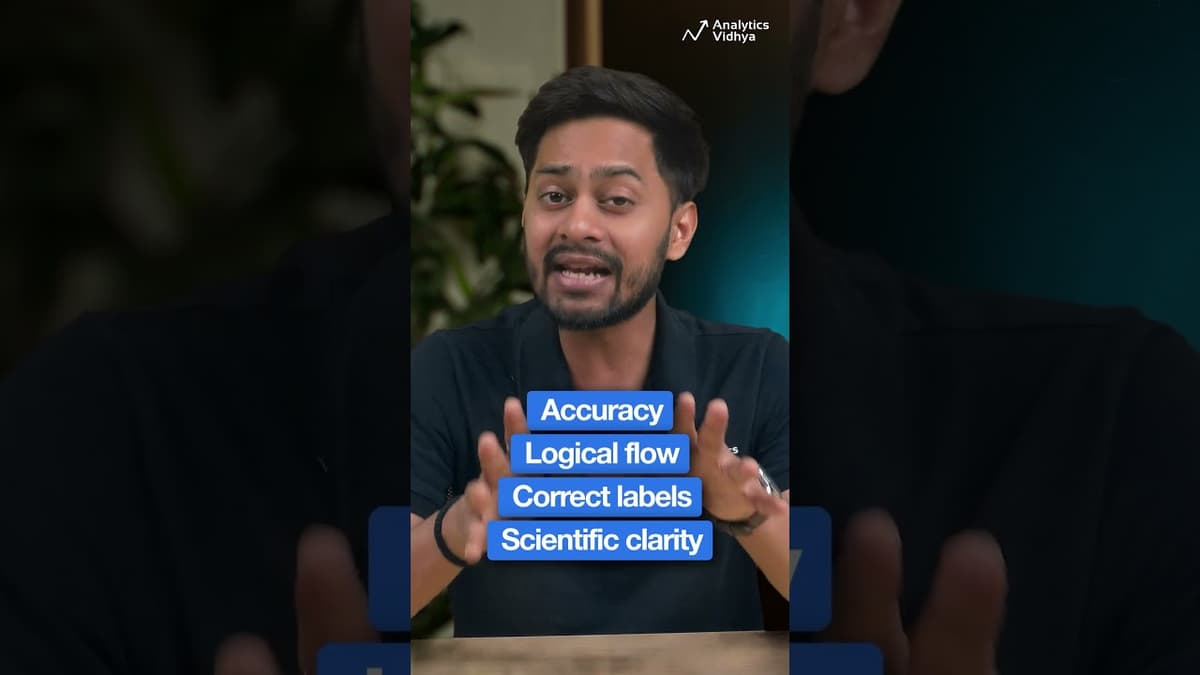
AI Now Creates Research Diagrams in Seconds | PaperBanana Explained
The video introduces Paper Banana, an AI‑driven platform that transforms plain‑language descriptions into publication‑ready research diagrams within seconds, addressing a long‑standing bottleneck in scientific communication. Paper Banana operates through a five‑agent pipeline—retrieving references, planning structure, styling visuals, generating outputs, and critiquing...
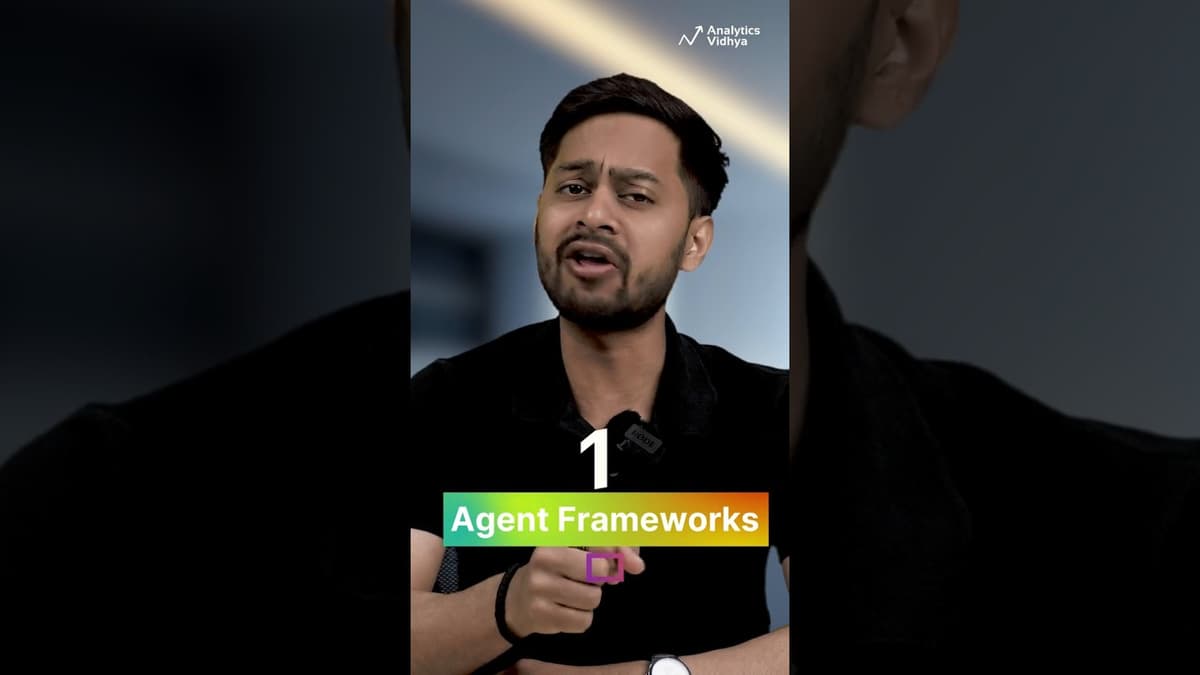
Agent Frameworks vs Runtime vs Harnesses — The Real AI Stack
The video argues that building effective AI agents depends less on model advances and more on the software stack surrounding them. It defines three layers: agent frameworks (design libraries and abstractions for prompts, tools and workflows), agent runtimes (production execution...
Claude Sonnet 4.6 Just Made Frontier AI Affordable
Claude AI unveiled Sonnet 4.6, the most capable model in its series, positioning frontier‑level artificial intelligence at a price point comparable to its predecessor. The announcement highlighted a suite of upgrades—including enhanced coding assistance, computer‑use reasoning, long‑context analysis, agent planning,...

Top AI Companies Hiring From One Challenge (₹20 Lakh Rewards)
A new AI fellowship challenge, powered by Fractile Analytics, is turning the traditional job‑search model on its head by allowing top AI firms to recruit directly from a public leaderboard. The competition offers a ₹20 Lakh cash pool, with the top 1,000...

Qwen 3.5 Just Changed Open AI Models Forever
The video announces Alibaba’s Qwen 3.5 397B A7B, the first open‑weight model in the Qwen 3.5 series, designed as a native multimodal engine for language, vision, and real‑world agentic workflows. By publishing the model under an Apache 2.0 license, Alibaba signals a strategic shift toward...
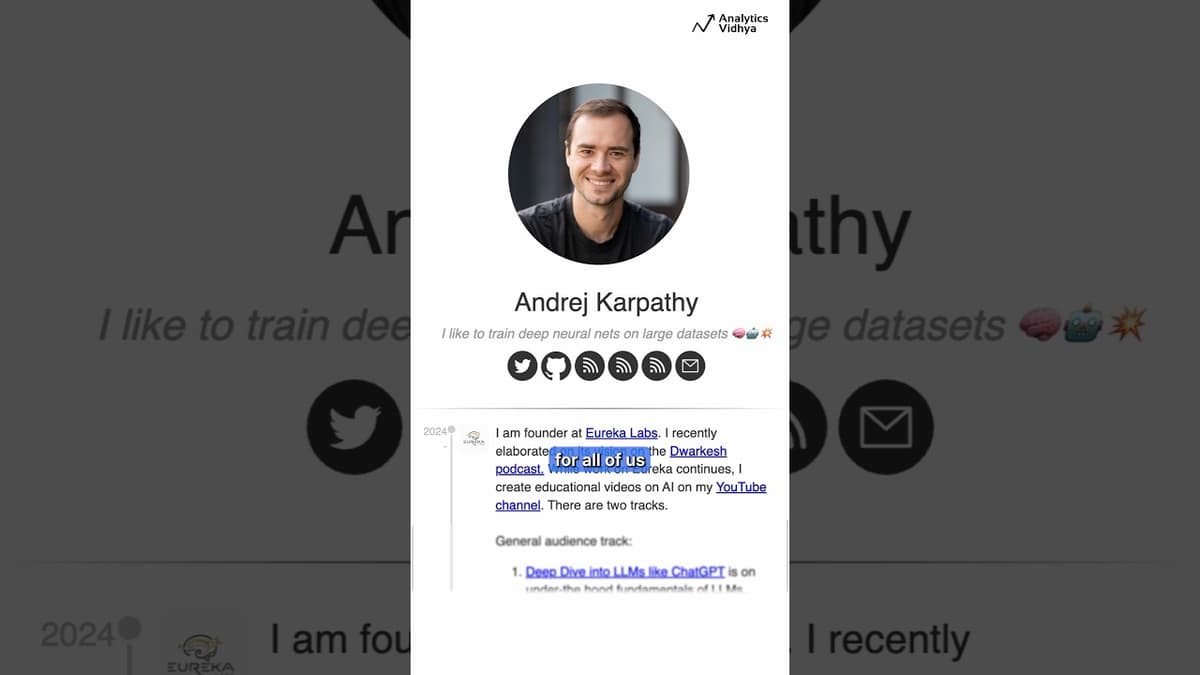
Andrej Karpathy Built GPT in 243 Lines?! Meet MicroGPT
The video introduces MicroGPT, a minimalist implementation of a GPT‑style transformer written in just 243 lines of pure Python. Created by Andrej Karpathy, the project strips away all external dependencies—no PyTorch, TensorFlow, NumPy or other libraries—so that the entire model,...

Stop Writing Long Prompts — Use Prompt Chaining Instead
Prompt chaining is presented as a modern alternative to the common practice of feeding a single, sprawling prompt into large language models. The video argues that breaking a complex request into four to five discrete prompts not only streamlines the...
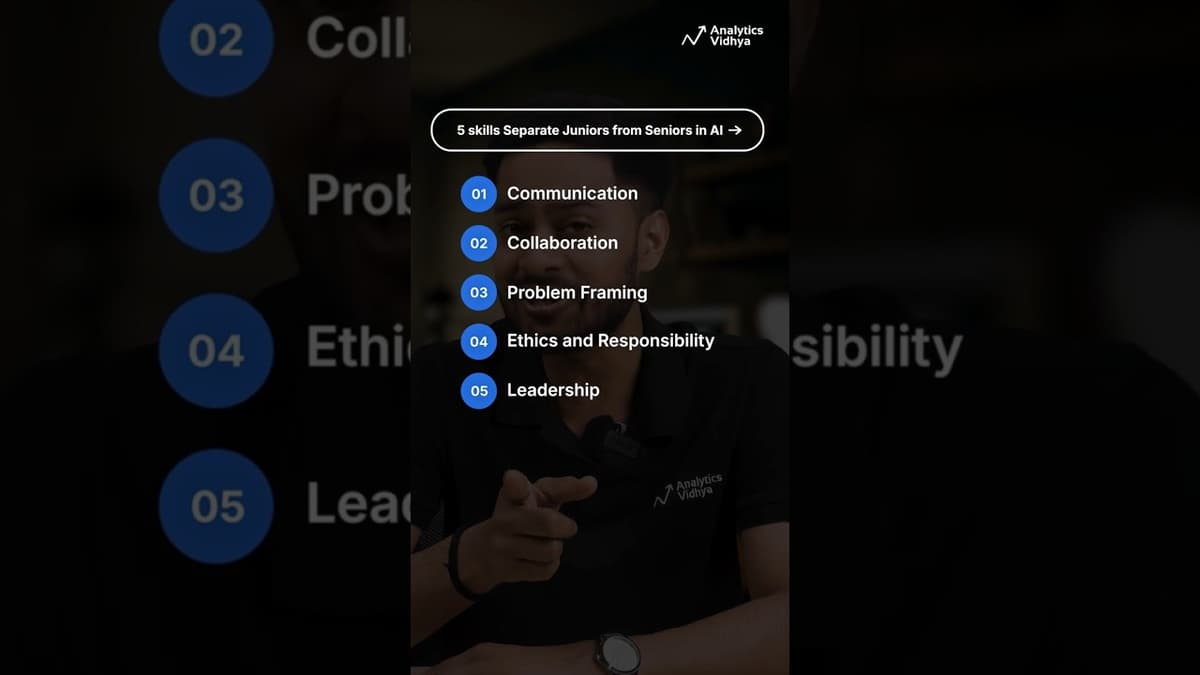
Junior vs Senior AI Engineer | 5 Skills That Actually Matter in 2026
The video argues that moving from junior to senior AI engineer in 2026 is less about mastering newer models and more about cultivating non‑technical capabilities. While junior engineers tend to focus on building and explaining algorithms, senior engineers are expected...
3 AI Career Paths That Can Change Your Future
The video breaks down three distinct AI career tracks—researcher, data/applied scientist, and engineer—explaining how each role contributes to the AI ecosystem and what educational background or skill set it typically demands. It stresses that researchers push theoretical boundaries, data scientists...

Claude Opus 4.6: The AI That Codes & Builds PowerPoints 🤯
Anthropic has released Claude Opus 4.6, a flagship AI with a 1 million-token context window and new agent team collaboration features that can handle complex, long-running work across large documents and codebases. Crucially, Claude is now directly integrated into Microsoft...
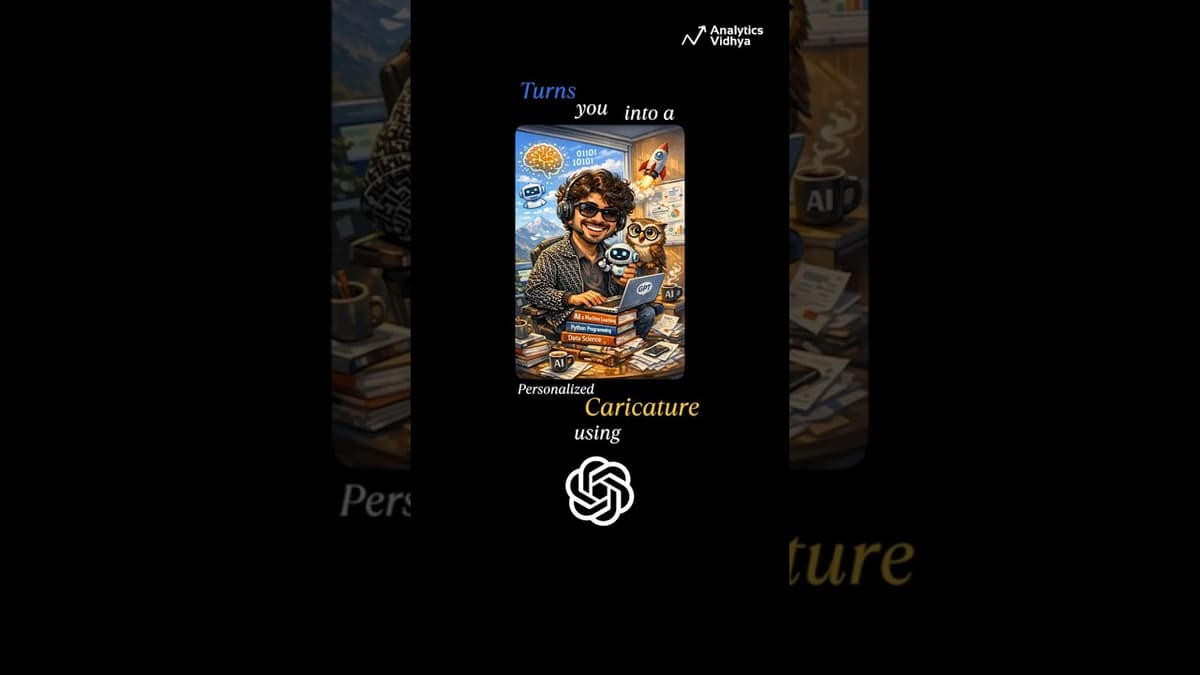
This Viral ChatGPT Caricature Trend Is Taking Over the Internet
A new viral trend uses ChatGPT’s image-generation feature to create personalized caricatures in seconds, requiring no design skills or complex tools. The clip demonstrates a simple four-step process—open the image tab, select a caricature preset, upload a photo, and prompt...
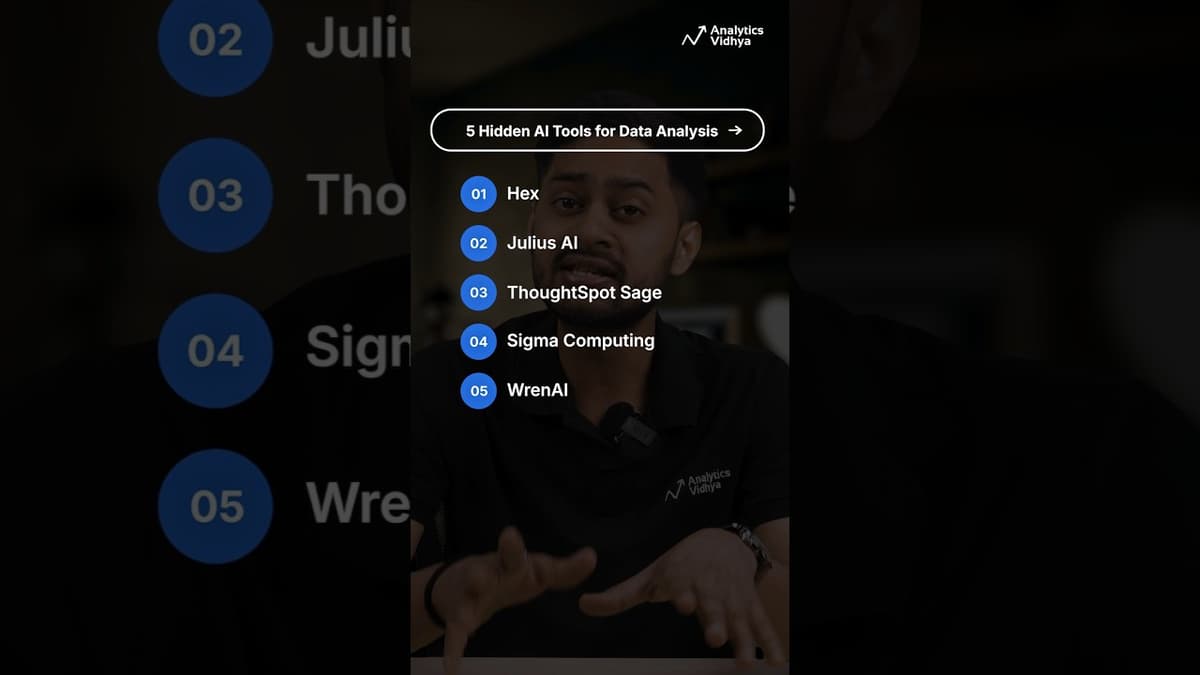
5 Hidden AI Tools Smart Data Analysts Actually Use (Not ChatGPT)
The video spotlights a growing niche of AI‑driven analytics platforms that go beyond generic chatbots like ChatGPT, offering data teams purpose‑built capabilities for faster insight generation. It introduces five relatively unknown tools—AI‑enhanced notebooks, Julius AI, ThoughtSpot Spotfire, Sigma Computing, and...
India’s AI Just Beat Gemini & ChatGPT? Meet Sarvam AI
India’s AI startup Sarvam AI announced breakthrough models that outpace Google’s Gemini and OpenAI’s ChatGPT on several benchmark tests, positioning the Bangalore‑based firm at the forefront of the country’s push for sovereign artificial intelligence. Its vision system, Servum Vision, recorded 84.3 %...

5 Real N8n Projects to Master Low-Code AI Automation
The video showcases five hands‑on n8n projects designed to elevate low‑code AI automation skills, ranging from conversational agents to business‑focused bots. Each example leverages n8n’s visual workflow engine combined with large language models, APIs, and third‑party tools to deliver real‑world...

Google’s MedGemma 1.5 & MedASR: Open AI for Medical Imaging and Dictation
Google unveiled two new open‑source AI models aimed at accelerating medical imaging analysis and clinical documentation, expanding its MedGemma family with version 1.5 and launching MedASR for speech‑to‑text conversion. MedGemma 1.5 is a 4‑billion‑parameter multimodal model trained on the MedMA dataset....
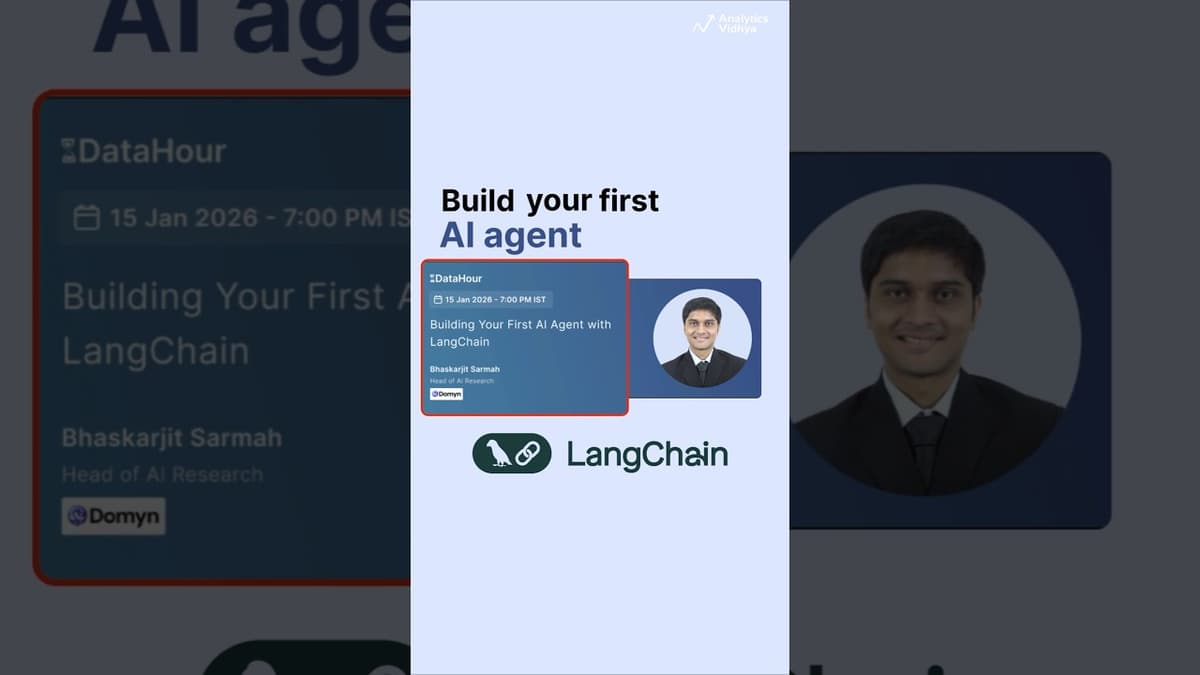
🤖 Stop Writing Prompts! Build Your First AI Agent in 2026! 🚀
The video announces that by 2026 AI agents have moved from research prototypes to production‑grade components that automate decisions and run real‑world applications. It promotes a free Langchain webinar that will walk participants through building their first autonomous agent from...
Google’s Universal Commerce Protocol: AI Can Now Shop for You
Google announced the open‑source Universal Commerce Protocol (UCP), a standardized framework that lets artificial‑intelligence agents complete online purchases end‑to‑end. Until now, AI could only recommend products; actual checkout required bespoke integrations for each retailer. UCP provides a shared language for...

Multimodal AI Just Leveled Up: Alibaba’s Qwen3 Explained
Alibaba unveiled Qwen3VL, a multimodal AI model that combines text and image embeddings into a unified semantic space, alongside a dedicated re‑ranking engine. The new embedding layer lets the model treat a picture, its caption, and a related paragraph as interchangeable...
LangChain vs LangGraph vs LangFlow vs LangSmith (Explained Simply)
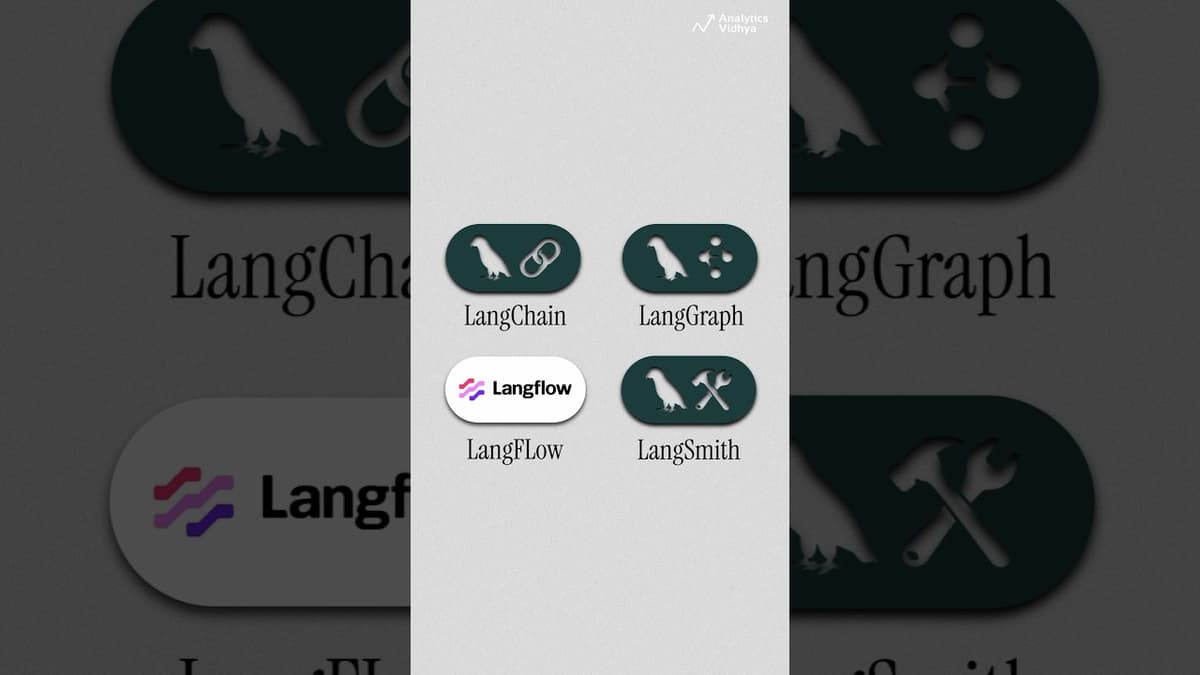
The video demystifies the Lang ecosystem, outlining how LangChain, LangGraph, LangFlow, and LangSmith each occupy a distinct layer in building AI applications. LangChain serves as the foundational library, stitching together prompts, models, tools, and retrievers into reusable workflows for chatbots,...

NVIDIA Just Leaped 5 Years Into the Future at CES 2026
At CES 2026 Nvidia unveiled what it billed as a five‑year leap in artificial‑intelligence technology, showcasing a suite of new hardware, software and networking solutions that together aim to redefine how large‑scale models are trained and deployed. The centerpiece is Reuben,...