Astronomy Magazine
Covers space missions, planetary science, and space technology for enthusiasts
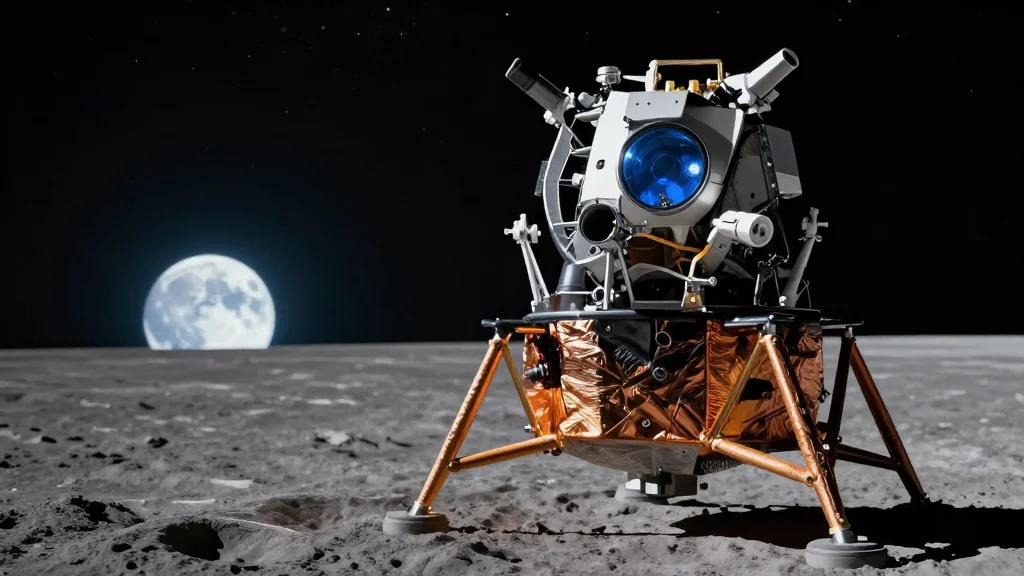
Blue Origin Pauses New Shepard, Shoots for the Moon
Blue Origin announced it will pause New Shepard suborbital flights for at least two years to reallocate resources toward its lunar ambitions. The company is advancing the New Glenn heavy‑lift rocket and the $3.4 billion Blue Moon lander, slated for NASA’s Artemis 5 mission in 2029. New Glenn has already reached orbit and recovered its first stage, while Blue Moon’s MK1 and MK2 variants will support cargo and crew deliveries to the Moon’s South Pole. The move mirrors a similar strategic shift by SpaceX toward a lunar “self‑growing city,” underscoring intensified competition in lunar exploration.
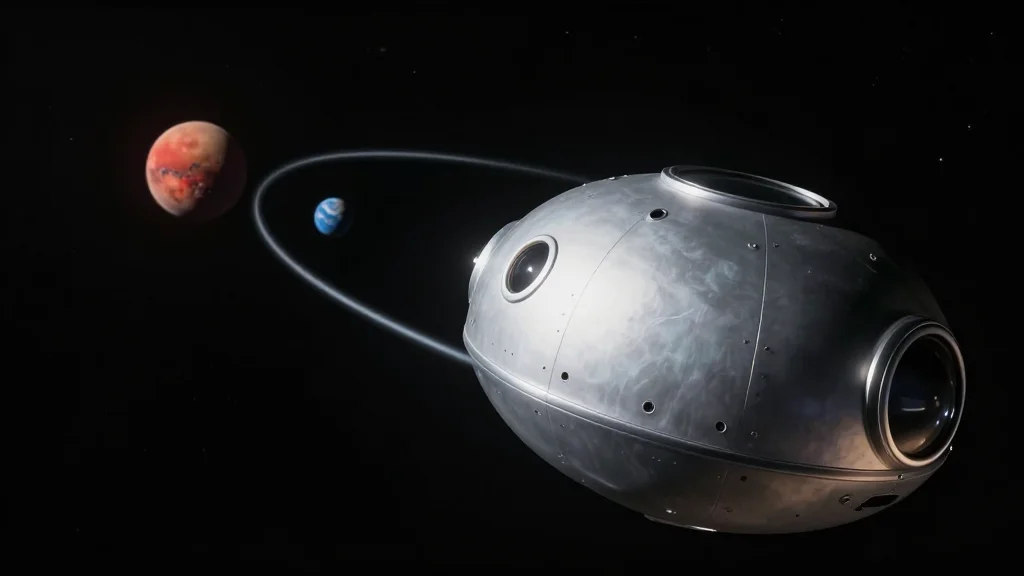
Why Does the Travel Time From Earth to Mars Vary?
Travel time between Earth and Mars is not fixed; it depends on the planets’ relative positions and the orbital path chosen. A Hohmann transfer orbit, the most fuel‑efficient trajectory, typically yields a seven‑to‑nine‑month cruise. Because Earth and Mars align favorably...
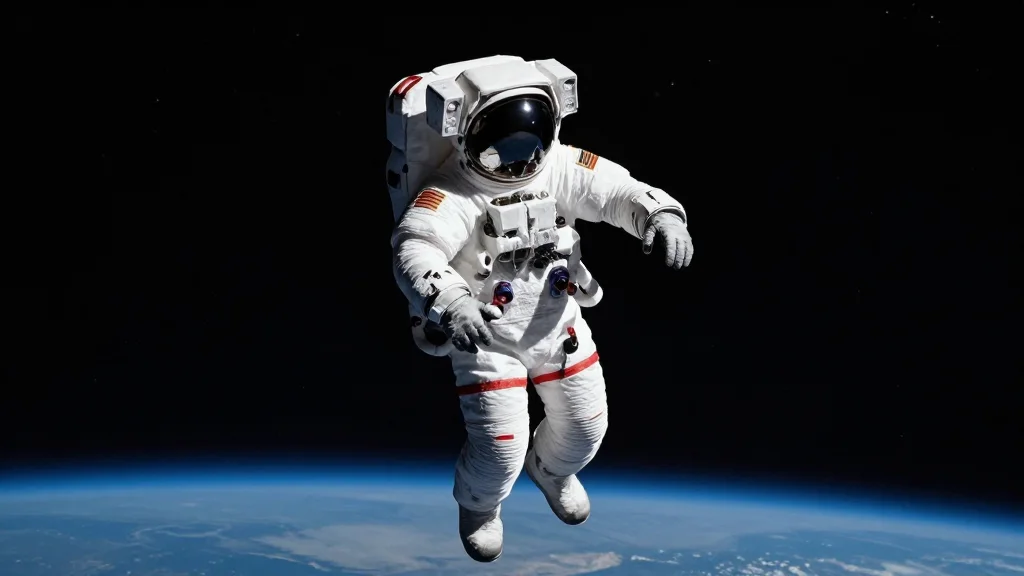
Feb. 7, 1984: First Untethered Spacewalk
On February 7, 1984, astronaut Bruce McCandless II performed the first untethered spacewalk, drifting away from the Space Shuttle Challenger using the Manned Maneuvering Unit (MMU). He reached a maximum distance of 320 feet (98 meters) and stayed outside for 1 hour 22 minutes, testing the nitrogen‑propelled...
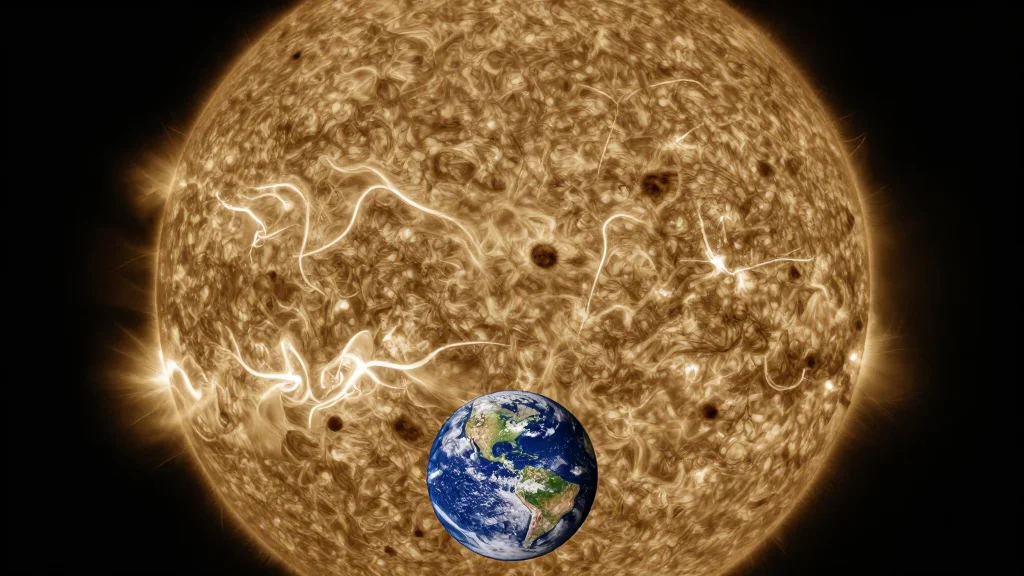
Michael’s Miscellany: 10 More Cool Things About the Sun
Michael Bakich adds ten fresh solar facts, highlighting the Sun’s differential rotation, elemental makeup, magnetic polarity reversal, historic Carrington flare, and expansive corona. The piece quantifies rotation periods (25.6 days at the equator, 33.5 days at the poles) and details...
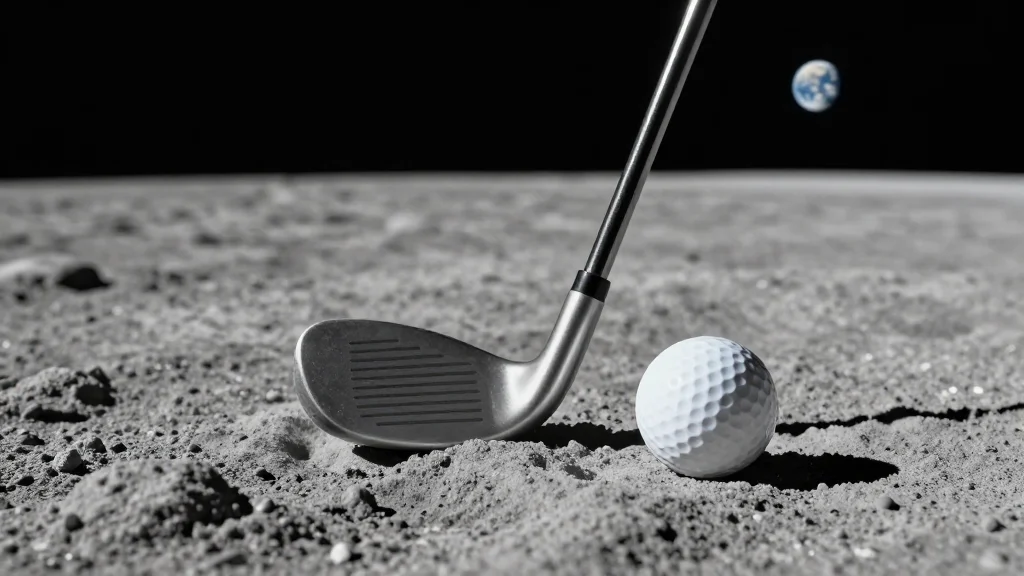
Feb. 6, 1971: Teeing Off on the Moon
On Apollo 14 in February 1971, astronaut‑commander Alan Shepard turned a lunar sampling tool into a makeshift 6‑iron and took two historic golf swings on the Moon. The first ball vanished into a crater, while the second was lofted far enough for...
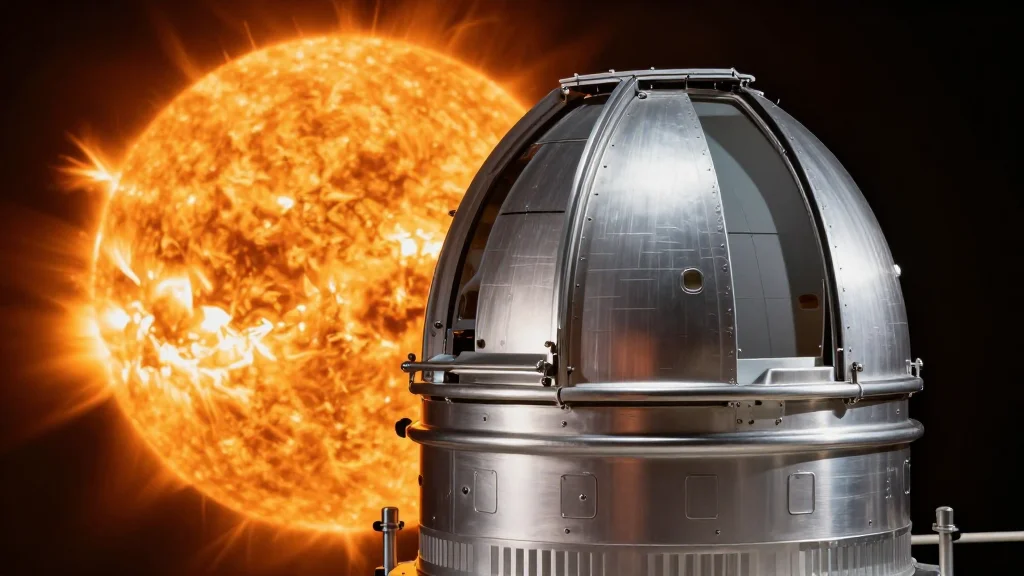
Feb 5, 2002: RHESSI Launches
On February 5, 2002, NASA launched the High‑Energy Solar Spectroscopic Imager (RHESSI), a Small Explorer mission dedicated to capturing high‑energy solar phenomena. RHESSI delivered the first X‑ray and gamma‑ray images of solar flares using its imaging spectrometer, and routinely coordinated observations with...
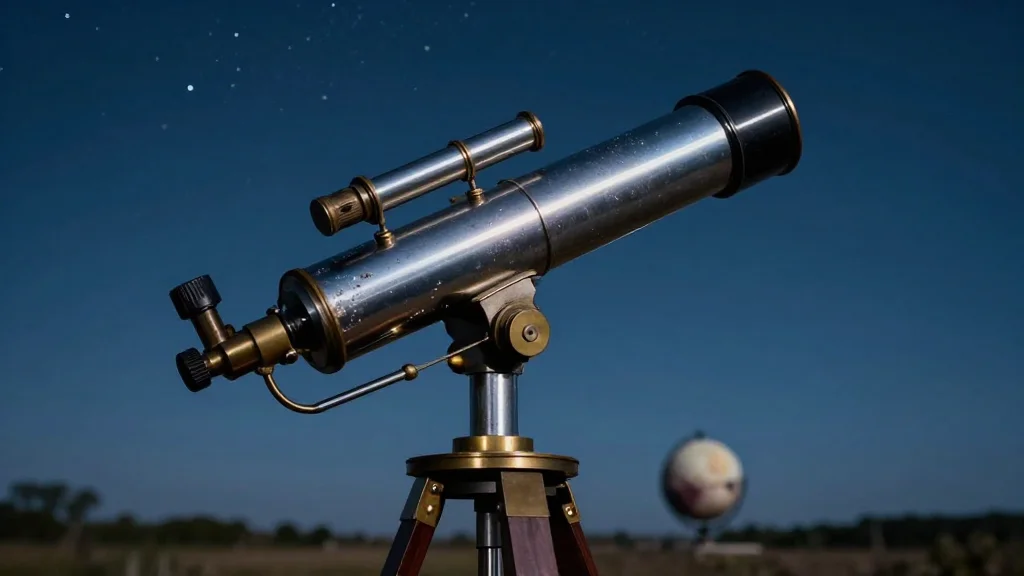
Feb. 4, 1906: The Birth of Clyde Tombaugh
Clyde Tombaugh was born on February 4, 1906, on farms in Illinois and Kansas and taught himself astronomy and optics despite lacking a college education. Using a homemade 9‑inch reflector built from farm machinery, he sent detailed planetary drawings to Lowell Observatory,...
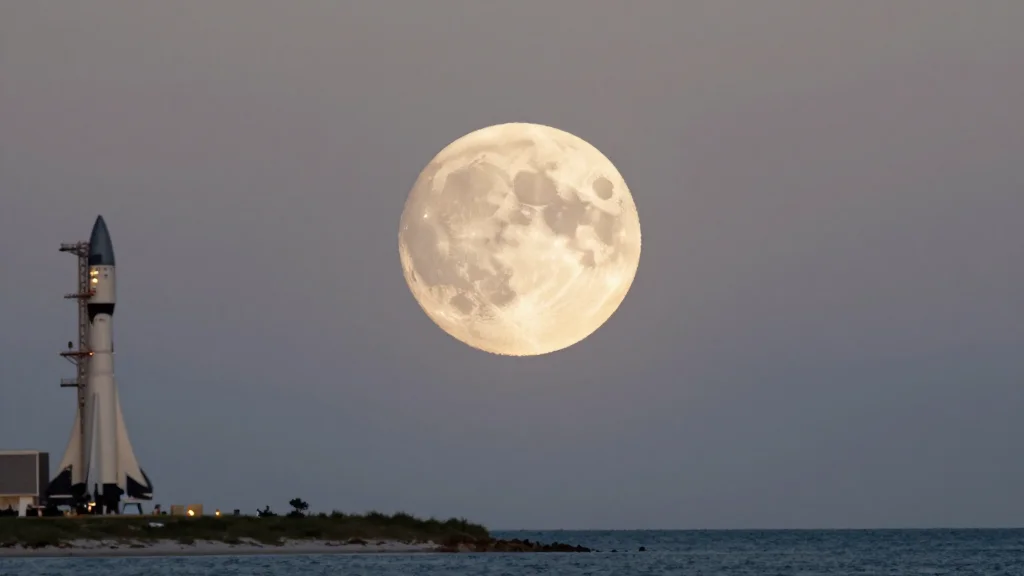
Departure Delay
NASA announced that the Artemis 2 crewed lunar flyby will not launch before March, after the mission’s first wet‑dress rehearsal revealed multiple technical issues. The delay pushes back the departure from Launch Complex 39B at Kennedy Space Center, originally slated for early...
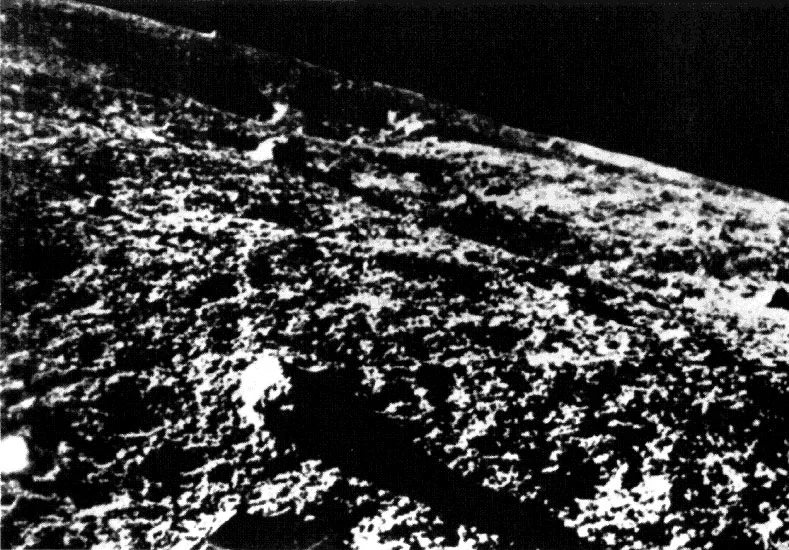
Feb. 3, 1966: Luna 9 Successfully Lands
On February 3, 1966 the Soviet Luna 9 probe achieved the first soft landing on the Moon after a series of failed attempts. The 100‑kg lander descended from orbit, firing retrorockets at 75 km altitude and touching down in the Oceanus Procellarum. Its petal‑opened capsule...
February 2026: What’s in the Sky This Month? Jupiter Continues to Dominate the Night; Mercury, Venus, and Saturn Are Visible
February 2026 offers a rich celestial lineup, with Mercury reaching its greatest eastern elongation on Feb 19 and Venus brightening the western twilight. Jupiter dominates the night after its recent opposition, providing multiple moon transits and shadow events throughout the month. Saturn...

Did Earth’s Water Really Come From Meteorites?
A new study using triple oxygen isotopes in Apollo lunar‑regolith samples shows that only about 1 percent of the Moon’s soil is derived from carbon‑rich meteorites, implying a similarly modest contribution to Earth’s water. Even assuming Earth captured roughly twenty times...

Jan. 27, 1967: The Apollo 1 Fire
On Jan. 27, 1967, a pre‑flight test of Apollo 1 ended in a catastrophic fire that killed astronauts Gus Grissom, Ed White, and Roger Chaffee. The Block 1 capsule used a pure‑oxygen atmosphere and contained flammable materials, causing the blaze to spread in seconds. The inward‑opening hatch...

Jan. 26, 1949: The Hale Sees First Light
On January 26, 1949 the 200‑inch Hale Telescope at Palomar Observatory achieved first light, marking the debut of the world’s largest optical instrument at the time. After 11 years of mirror fabrication and a six‑month dedication period, Edwin Hubble operated...

How Can the Sun Contain so Many Elements without Its Heat Destroying Them?
The Sun’s extreme temperatures ionize its gases, but its immense gravity prevents them from escaping, creating a stable star. Hydrogen accounts for roughly 70 % of its mass, helium 28 %, and all heavier elements together make up about 2 %. A tug‑of‑war...

Jan. 25, 2004: Opportunity Lands on Mars
On January 25, 2004 NASA’s Opportunity rover touched down on Mars after a dramatic “six minutes of terror” descent involving parachutes, retrorockets, and an airbag‑cushioned landing. The rover bounced 26 times before settling inside Eagle Crater, an ideal scientific site that allowed...

Jan. 24, 1986: Voyager 2 Flies by Uranus
On Jan. 24 1986, NASA’s Voyager 2 performed its closest approach to Uranus, passing within 81,400 km of the planet’s cloud tops. The flyby revealed a magnetic field tilted 55 degrees and offset from the planet’s center, discovered ten new moons (an eleventh later identified),...

Jan. 23, 2003: Pioneer 10’s Last Words
Pioneer 10, launched in 1972, became the first spacecraft to fly past Jupiter and later crossed Saturn, Uranus and Neptune before entering interstellar space. After enduring severe radiation damage that darkened its optics and fried transistors, it continued its mission and...

Arizona Aurora
A G4‑level geomagnetic storm on the night of Jan. 19/20 produced a rare aurora borealis visible across the southern United States, including Arizona. The display peaked around 4:30 a.m. MST at Westwood Ranch, where photographer Greg Meyer captured the scene with a...

Jan. 21, 1960: Miss Sam Launches
On January 21, 1960, a rhesus monkey named Miss Sam was launched aboard a Little Joe rocket to test the Mercury spacecraft's Launch Escape System (LES). The flight reached roughly nine miles altitude before the capsule separated and splashed down in the Atlantic, where...

Jan. 20, 1930: The Birth of Buzz Aldrin
Buzz Aldrin was born on Jan. 20, 1930, in New Jersey and later earned a Ph.D. from MIT, becoming NASA’s first astronaut with a doctorate. After serving as a Korean War fighter pilot, he joined NASA’s third astronaut group in 1963. Aldrin...

Jan. 19, 1965: Gemini 2 Launches
The Gemini program served as NASA’s bridge between Mercury and Apollo, focusing on long‑duration spaceflight and rendezvous capabilities. After the uncrewed Gemini 1 proved the Titan II could reach orbit, Gemini 2 launched on Jan 19 1965 to test heat shields, retrorockets, and parachutes. The...

Jan. 18, 2004: Mars Express Maps the Red Planet’s South Pole
On Jan. 18, 2004, ESA’s Mars Express successfully mapped the Martian south pole, revealing both water ice and carbon‑dioxide ice for the first time. Launched in June 2003, the orbiter arrived at Mars in December 2003 and has been equipped...

Jan. 16, 2003: Space Shuttle Columbia’s Final Launch
On Jan. 16, 2003 the Space Shuttle Columbia launched on its 28th mission, STS‑107, dedicated to scientific research. The crew performed nearly 80 experiments over 16 days before a foam‑insulation strike damaged the left wing during ascent. The breach allowed super‑heated gases...

Jan. 15, 2006: Stardust Touches Down
NASA’s Stardust mission, launched in February 1999, achieved the first successful comet sample‑return by flying past comet Wild 2 in January 2004 and capturing more than 10,000 dust particles with an aerogel collector. After a two‑year return trip, the sample‑return capsule...

Jan. 14, 2005: Huygens Lands on Titan
On Jan. 14, 2005 the Huygens probe survived its descent through Titan’s dense atmosphere and achieved the first soft landing on Saturn’s moon. After shedding its heat shield and executing a staged parachute sequence, it touched down on a sand‑like surface, avoiding...

NASA Unveils Artemis 2 Launch Windows: What We Know
NASA announced three launch windows for Artemis 2, the first crewed deep‑space flight since Apollo, with the earliest opportunity on Feb 6, 2026. The mission will carry four astronauts on a ten‑day lunar flyby, testing Orion, the Space Launch System, and critical...

Jan. 13, 1920: The New York Times Doubts Spaceflight
Robert Goddard’s pioneering rocketry faced harsh media skepticism in 1920 when the New York Times called his lunar‑rocket proposal “a severe strain on credulity.” Despite this, Goddard demonstrated rockets operate in vacuum in 1915, secured a Smithsonian grant, and during WWI contributed...

Why Don’t Planets Fall Into the Stars They Orbit?
Planets remain in orbit because their tangential velocity is high enough to keep the star’s curvature away from their path, creating a continuous free‑fall around the Sun. Newton’s law of universal gravitation explains that gravity pulls inward while orbital speed...

Jan. 12, 2005: A Comet Impactor Launches
NASA’s Deep Impact mission, launched on Jan. 12 2005, deployed an impactor that struck Comet 9P/Tempel 1 on July 4, creating a 150‑meter crater. The collision revealed the comet’s interior to be roughly 75 % porous, with fine dust and intact water ice and organic compounds....

Jan. 10, 1946: The US Bounces a Radar Wave Off the Moon
On January 10, 1946, the U.S. Army Signal Corps successfully bounced a radar signal off the Moon in an experiment known as Project Diana. Led by Lt. Col. John DeWitt at Fort Monmouth, the team transmitted a pulse that returned...

Animal Life Unlikely Around a Third of Stars in the Galaxy, Study Says
A new arXiv study finds that late‑type M‑stars, which host many detectable Earth‑sized planets, are unlikely to nurture complex animal life. Their red‑shifted spectra provide less than one percent of the photosynthetically active radiation needed for oxygenic photosynthesis, dramatically slowing...

Jan. 7, 1610: Galileo Sees Four Moons of Jupiter
On January 7, 1610 Galileo Galilei turned his refined telescope toward Jupiter and recorded three luminous points that would soon be recognized as moons. Within a week he identified a fourth body, and by January 15 he concluded all four orbited the planet,...