
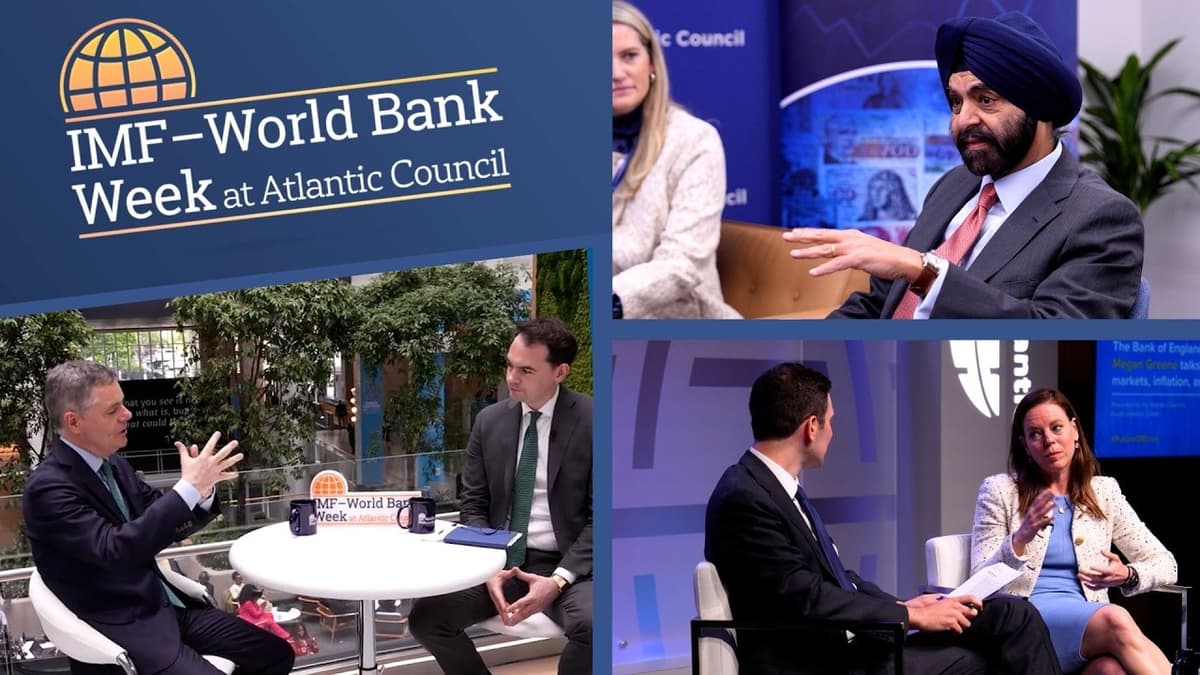
Highlights From 2026 IMF-World Bank Spring Meetings at the Atlantic Council
The Atlantic Council hosted a marathon of more than 75 events during the IMF‑World Bank Spring Meetings, bringing together finance ministers, senior policymakers, and CEOs to discuss the macro‑economic outlook for emerging and developed economies. Panelists warned that the ongoing Middle‑East conflict could cut growth in emerging markets by 0.4‑1.4%, while inflation is expected to breach the 3‑3.5% range that catches consumers’ attention. U.S. companies reported a sharper tariff‑induced shock than their European peers, and Sub‑Saharan Africa posted its fastest growth in a decade, despite a sizable U.S. balance‑of‑payments deficit. A recurring theme was the role of human capital, which accounts for roughly two‑thirds of the per‑capita GDP gap between rich and poor nations. Speakers quoted a “golden rule” for energy‑security diversification and stressed the need to move from aid‑driven models to trade‑focused partnerships, invoking the legacy of the system’s founders and the imperative to reinvent it where necessary. The discussion signals that policymakers must prioritize predictability, invest in skills development, and redesign trade frameworks to cushion growth and inflation risks. Failure to act could deepen the development divide, while coordinated action offers a pathway to more resilient, inclusive global growth.
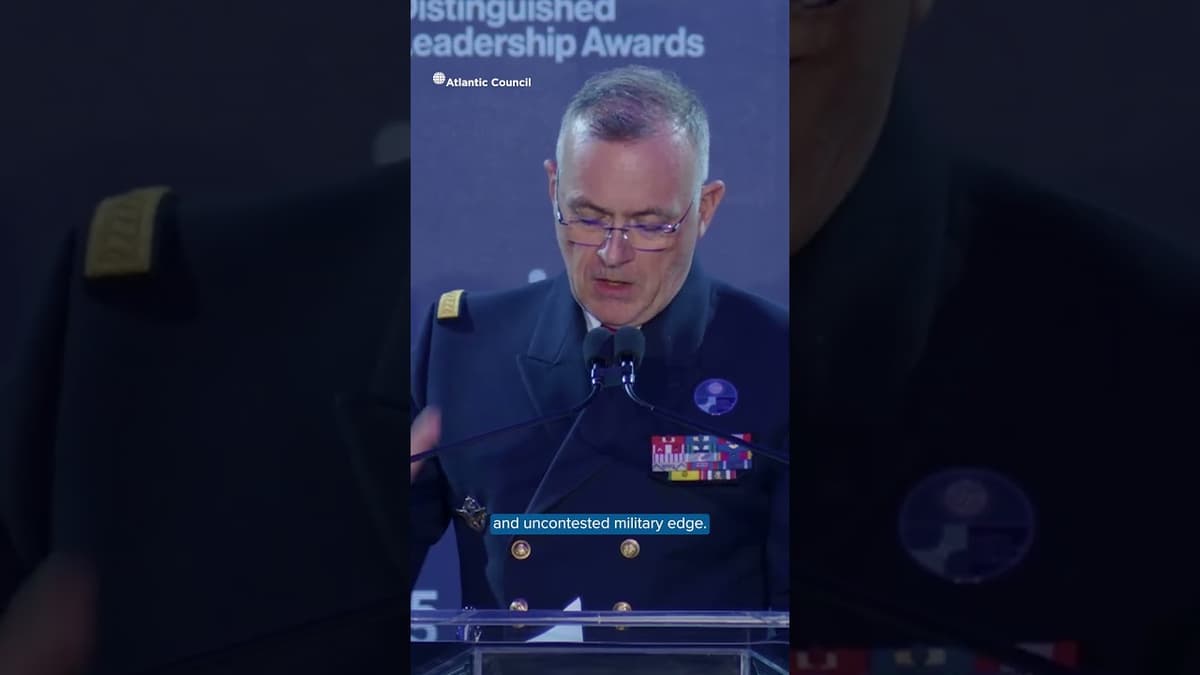
NATO Must Develop New Capabilities and Unite 32 Nations, Says Admiral Pierre Vandier
Admiral Pierre Vandier warned that NATO faces a pivotal crossroads: the alliance must develop fresh capabilities to win wars that have not yet been imagined. After three decades of relative peace and unquestioned military superiority, the strategic environment has shifted,...
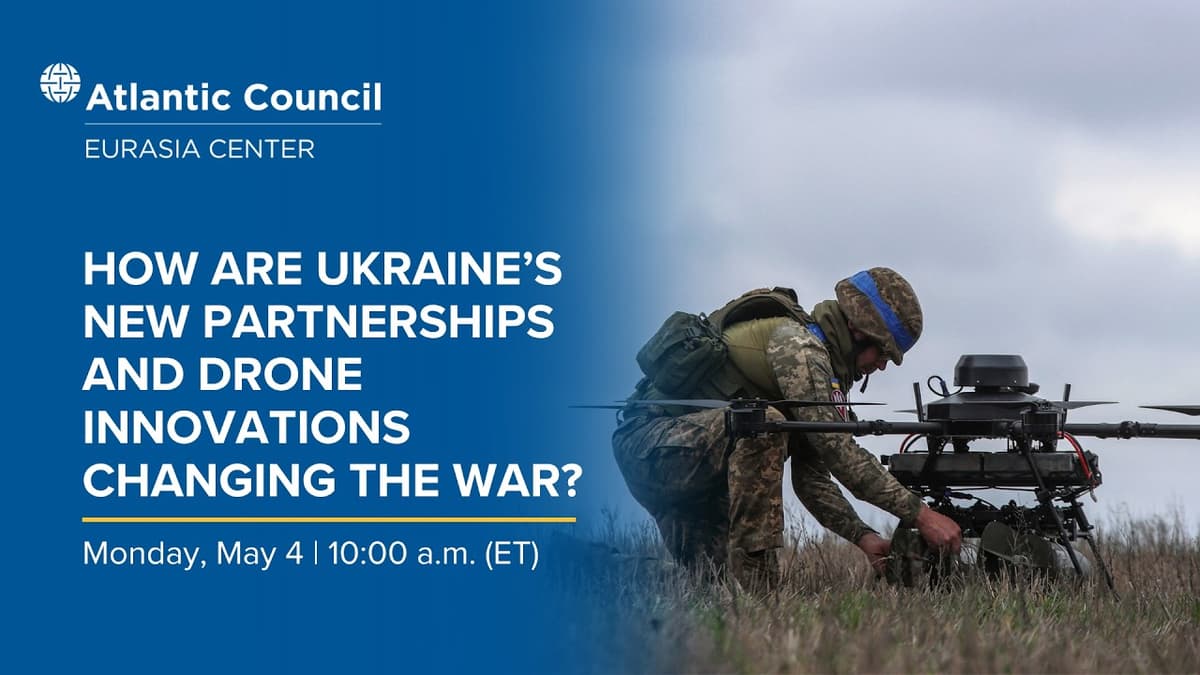
How Are Ukraine's New Partnerships and Drone Innovations Changing the War?
Speakers at an Atlantic Council panel described 2026 as a turning point in the Ukraine war driven by rapid Ukrainian drone innovation and new partnerships. Ukrainian forces are deploying tactical, mid-range (≈100 km) and long-range (up to 2,000 km) strike...
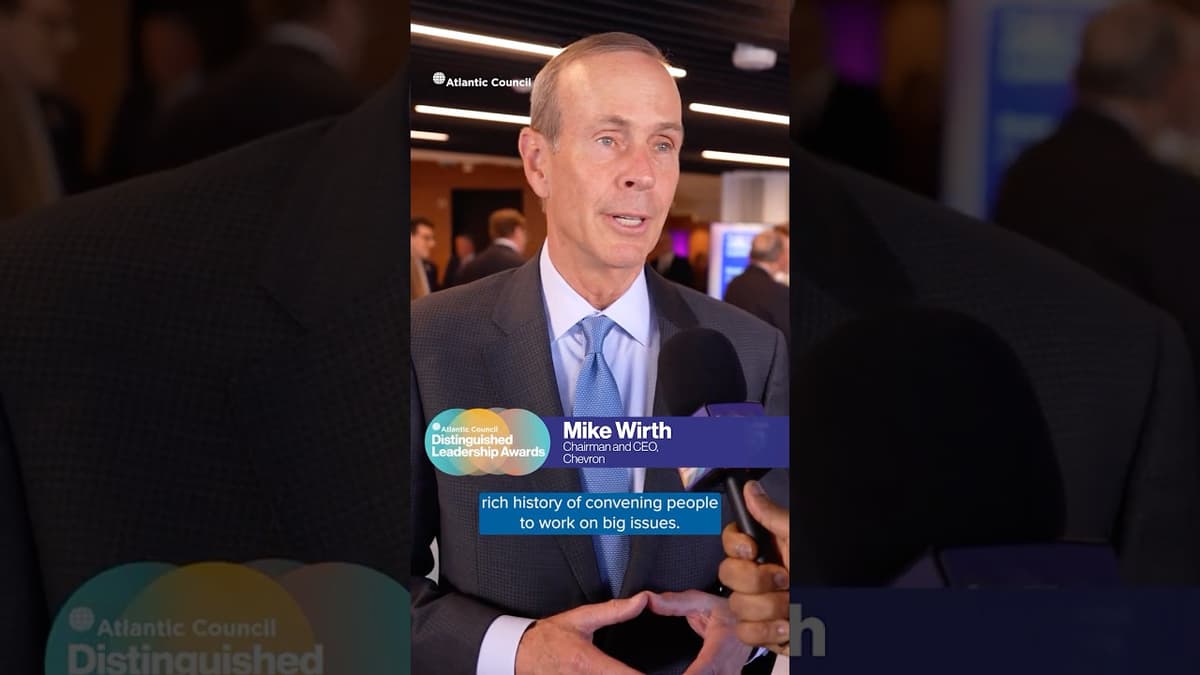
Chevron CEO Mike Wirth on Today’s Market Volatility and What Global Leaders Should Prioritize
Mike Wirth, Chevron’s chief executive, accepted the 2026 Atlantic Council Distinguished Leadership Award and used the platform to address the heightened volatility in global energy markets caused by the Middle East conflict. He highlighted how the disruption has strained energy...
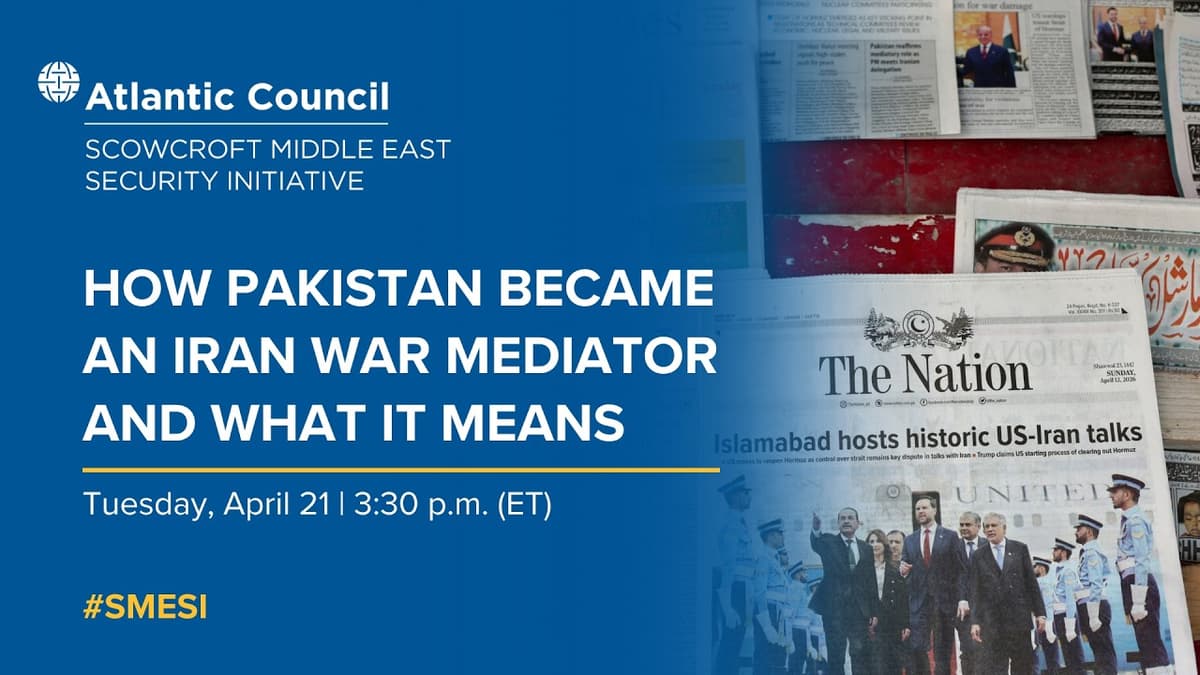
How Pakistan Became an Iran War Mediator and What It Means
Pakistan unexpectedly emerged as a key mediator between the US and Iran, brokering an April 8 ceasefire and hosting high-level face-to-face talks April 11–12, with a second round planned amid some uncertainty. Observers were surprised given Pakistan’s close ties to...
BNY’s Jayee Koffey Explains What It Takes to Move Digital Assets From Pilot Experiments to Launch
In a recent interview, BNY Mellon’s digital‑asset lead Jayee Koffey outlined the firm’s roadmap for turning experimental pilots into production‑grade services. He emphasized that the industry is at a crossroads where proof‑of‑concept projects must evolve into scalable, regulated solutions. Koffey said...
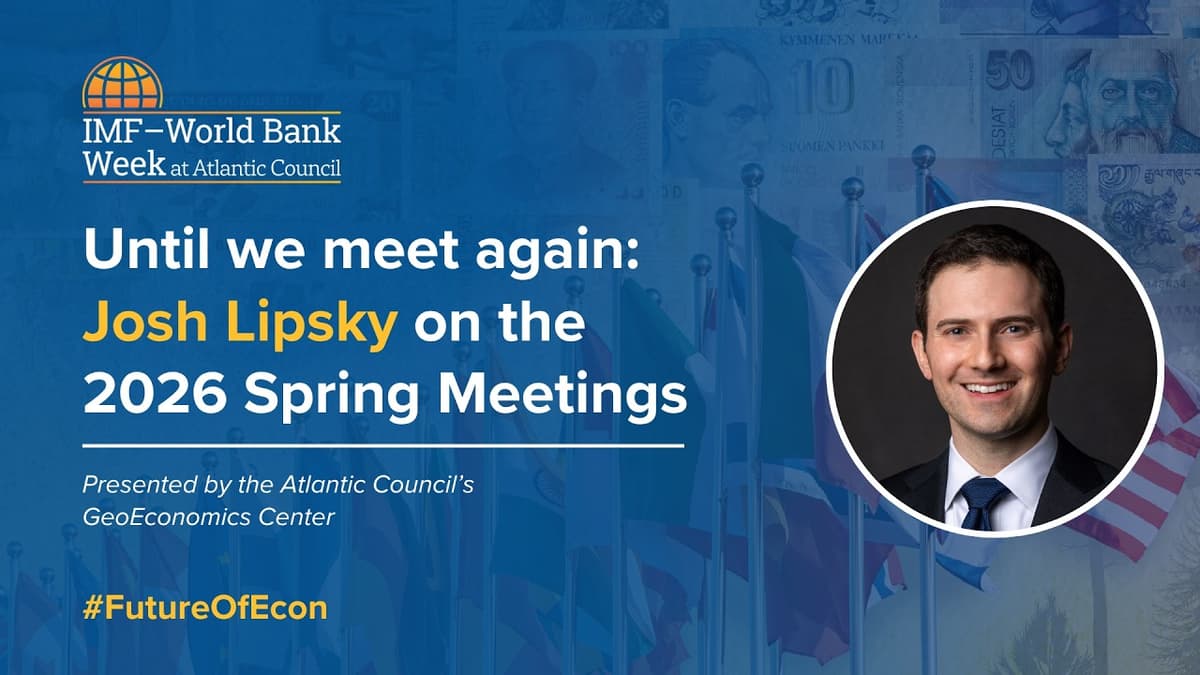
Until We Meet Again: Josh Lipsky on the 2026 Spring Meetings
Josh Lipsky closed the IMF‑World Bank spring meetings by warning that policymakers are suffering “shock fatigue” after navigating COVID, the Ukraine war, Gulf crises and now looming uncertainties. He noted that while tariffs, energy and debt dominate hallway conversations, concrete...
What We Heard: Takeaways From the 2026 IMF-World Bank Spring Meetings
The Atlantic Council wrapped the IMF‑World Bank spring meetings with a rapid debrief, noting that the usual focus on growth and innovation gave way to “crisis‑management mode” as policymakers grappled with a deepening energy shock and geopolitical turbulence. Participants highlighted that...
World Bank's Carlos Felipe Jaramillo on Three Key Areas of Reform to Boost Job Growth and Creation
World Bank economist Carlos Felipe Jaramillo outlined three priority reforms—physical and digital infrastructure, business regulation, and skills development—to accelerate job creation across the region. He warned that despite recent infrastructure gains, gaps persist, especially in digital networks essential for AI adoption....

The State Department's Dane Johnston on Strategic Redundancy for Mideast Trade
Deputy Assistant Secretary of State Dane Johnston outlined a U.S. strategy to champion multimodal trade corridors, notably the India‑Middle East‑Europe Economic Corridor. He emphasized creating strategic redundancy in transport routes to mitigate disruption risks and boost regional interconnectivity. By leveraging...

Financing Europe’s Priorities with the European Investment Bank’s Nadia Calviño
At IMF‑World Bank Week, European Investment Bank President Nadia Calviño outlined the bank’s shifting focus toward security, climate and technology as Europe confronts geopolitical turbulence and energy volatility. She highlighted a dramatic four‑fold increase in defense‑related financing, surpassing €4 billion in...

Driving Digital Growth Through Connectivity Investment
The Atlantic Council convened a round‑table during the World Bank‑IMF spring meetings to examine how to close the global digital divide. Speakers highlighted that between one‑third and one‑half of the world still lacks affordable, reliable internet, a gap that hampers...
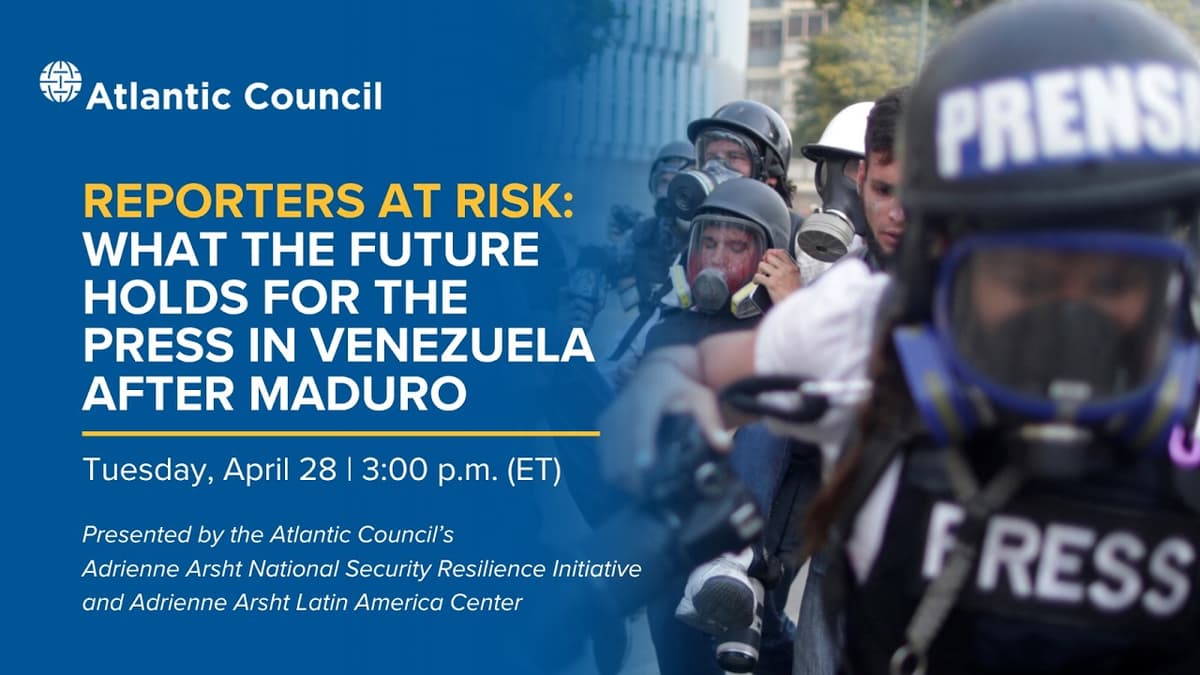
Reporters at Risk: What the Future Holds for the Press in Venezuela After Maduro
The Atlantic Council’s Reporters at Risk panel examined the outlook for Venezuela’s press following the U.S. custody of former President Nicolás Maduro. Moderated by Salomé Ramírez Vargas, the discussion featured CNN’s David Culver, Telemundo’s Javier Vega, freelance journalist Corey Weddle and CBS’s Sam Vinograd, all of...

What to Watch at the 2026 IMF-World Bank Spring Meetings
The 2026 IMF‑World Bank Spring Meetings will center on debt sustainability, climate finance, digital currency regulation, and strategies for emerging‑market growth. Senior Fellows Hung Tran, Nicole Goldin and Martin Mühleisen will outline expectations, emphasizing policy coordination and financing gaps. Their...

Paschal Donohoe on the World Bank's Role in a Changing World
The interview with Paschal Donohoe, World Bank Managing Director and Chief Knowledge Officer, at the 2026 spring meetings centers on the Bank’s response to geopolitical shocks and its renewed job‑creation agenda. Donohoe warns that the Iran‑related crisis and broader Middle‑East conflict...

Foreign Minister Timčo Mucunski on North Macedonia’s Transatlantic Priorities
Foreign Minister Timčo Mucunski used a Washington‑based Atlantic Council event to outline North Macedonia’s transatlantic agenda, emphasizing the country’s historic first strategic dialogue with the United States and its broader Euro‑Atlantic trajectory. He highlighted concrete deliverables from the talks, including U.S....

IMEC During a Time of War
The Atlantic Council panel examined the India‑Middle East‑Europe Economic Corridor (IMAC) amid the Iran‑Israel war that has shut the Strait of Hormuz, driving up prices for oil, fertilizer and aluminum. Speakers highlighted how the conflict underscores the need for...

Ajay Banga on the World Bank Group’s Jobs Agenda and Global Development
Ajay Banga, President of the World Bank Group, used the Atlantic Council forum to outline the institution’s dual focus on immediate geopolitical crises – from the Middle‑East war to the Ukraine conflict – and the slower, structural forces reshaping global...

The Red Sea Front and Yemen's Role in the Iran War
Panelists said the 2022 truce between the Houthis and Saudi-aligned forces has largely held militarily and remains a key factor constraining Houthi escalation, because both sides value ongoing talks that could lead to a political settlement. The Gaza war and...

Building Central Asia’s Future Through Regional Integration
The Atlantic Council panel examined how Central Asian states are deepening regional integration amid a backdrop of relative stability. Speakers from Uzbekistan, Kazakhstan, Azerbaijan, Kyrgyzstan and a U.S. expert discussed initiatives ranging from trust‑building and security coordination to infrastructure projects...

How Russia and China Are Enabling Iran and Evading Western Economic Restrictions
The video examines how Russia and China are quietly enabling Iran’s war effort by circumventing Western economic sanctions. Research from the Economic Statecraft Initiative shows that China supplies Iran with drones, anti‑ship cruise missiles, surface‑to‑air missiles and related components through supply...

A Conversation with Brian Ellsworth on AI in Latin America and the Caribbean
The Atlantic Council’s Experts of the Americas podcast featured Brian Ellsworth, a veteran journalist turned AI and public‑policy analyst, to explore how artificial intelligence is reshaping Latin America and the Caribbean. Ellsworth highlighted uneven adoption across sectors—education faces the most visible...

Democracy Pulse: How Demographic Change Is Impacting Global Prosperity
Democracy Pulse examines how rapid demographic shifts reshape global prosperity, contrasting aging high‑income nations with youthful low‑income economies. The episode highlights stark differences in population growth rates, median ages, and worker‑to‑retiree ratios, underscoring the fiscal challenges ahead. Low‑income countries are expanding...

"We Don't Want to Get Scooped" On Going to the Moon, Says Dr. Asha M. George at Space Science Week
Dr. Asha M. George, representing a bipartisan commission on biodefense at the Atlantic Council, addressed the National Academies of Sciences during Space Science Week. She highlighted the administration’s renewed commitment to return humans to the Moon, framing the decision as...

Gina McCarthy: "We Have to Work with Our International Partners" On Advancing Clean Energy
Gina McCarthy, the former EPA administrator, used a recent remarks to stress that the United States must deepen cooperation with foreign allies to accelerate the clean‑energy transition. She framed the current turbulence as a chance to adopt an "opportunity‑driven" mindset,...

Venezuela Weekly: Maduro Back in US Court as Trump Suggests More Charges Could Follow
Venezuelan President Nicolás Maduro appeared in a U.S. federal court as his lawyers sought dismissal of a narco-terrorism indictment, while President Trump said Maduro would get a fair trial but hinted additional charges could follow, framing U.S. action as part...

How Will President Trump Approach Taiwan in Upcoming Meeting with Xi Jinping?
The speaker says President Trump may pursue a different, more flexible approach to US policy on Taiwan when meeting Xi Jinping, unbound by past diplomatic formulations. He suggests Trump favors 'common-sense' adjustments and accepts great-power influence in neighboring regions, a...

GCC Fiscal Resilience and Macroeconomic Stability During the Iran War
Speakers at the Atlantic Council Mina Futures Lab warned that the Iran war is inflicting multi-channel macroeconomic damage on GCC economies through disrupted trade and logistics, higher insurance and rerouting costs, tighter financial conditions, input-price volatility and a hit to...

Shaping the New Space Age
UAE Minister Dr. Ahmed Belhoul Al Falasi used a panel at the Atlantic Council to frame his country’s rapid ascent in space, praising recent US/NASA leadership on returning humans to the Moon and highlighting the UAE’s multilateral role in Artemis....

The Future of Iran's Axis of Resistance
Speakers at an Iraq Initiative panel argued that Iran’s ‘axis of resistance’—Hezbollah, the Houthis, and Iraqi militias—no longer functions as a single, centrally managed forward-defense network but as a collection of actors pursuing divergent survival strategies. Some groups have become...

The Western Balkans in Today’s Transatlantic Landscape | A Debrief with Dimitris Tsarouhas
Speakers argue the transatlantic alliance is in a period of strategic uncertainty as the Trump administration reshapes US policy toward Europe and the war in Ukraine strains Western unity. At the Munich Security Conference debates over NATO burden-sharing and Europe’s...

US-Turkish Defense Relations and the Upcoming NATO Summit
Atlantic Council speakers highlighted a renewed dynamism in U.S.-Turkey defense ties ahead of the 2026 NATO summit in Ankara, noting Turkey’s emergence as a major domestic arms producer and exporter—especially in drones—and expanded coordination on regional security from the Black...

GCC Fiscal Resilience and Macroeconomic Stability During the Iran War
Speakers at the Atlantic Council MENA Futures Lab webinar warned that the Iran war is imposing multi-channel macroeconomic shocks on GCC economies, chiefly via disrupted trade and logistics from Strait of Hormuz closures, higher freight and insurance costs, and interrupted...

Transatlantic Relations in an Era of Upheaval
The Atlantic Council’s Europe Center convened a panel of senior officials to assess the state of transatlantic relations as 2026 enters its final quarter. Recent flashpoints—including U.S. saber‑rattling over Greenland, the Supreme Court’s rebuff of Trump’s AIPA tariffs, and...

The Communication Gap in Energy Transmission Investments
Speakers say efforts to expand and modernize transmission face a communication gap: with 76% of Americans feeling a cost-of-living squeeze, many hear that new grid investments chiefly serve renewables and data centers, not ordinary consumers. That misperception is fueling public...

The Fight for Influence in Venezuela Against Russia, China, Iran, and Cuba
Speakers at an Atlantic Council forum outlined a rapid recalibration of influence in Venezuela as Washington restores diplomatic presence and eases certain PDVSA sanctions while Caracas reshuffles its security leadership. Delcy Rodríguez’s move to replace long-serving defense minister Vladimir Padrino...

Dispatch From Prague: What Are Europeans Asking About the Iran War and Global Economy?
Reporting from Prague after a week of Atlantic Council events, conversations in Europe are dominated by fears over the Iran war and a mounting global energy shock, with prices creeping up and market volatility rising. Policymakers and business leaders are...

Report Launch: How the West Lost the Post-Cold War Era
Brian Whitmore, in a new Atlantic Council report, argues the post–Cold War era was a 30‑year interregnum in which Western optimism and misreading of Russia’s enduring impulses produced strategic blind spots that helped enable Moscow’s return to aggression, culminating in...

Does the Iran War Signal the End of Economic Statecraft?
Podcast guests debated whether recent U.S. actions mark a turning point away from economic statecraft toward hard military power. They defined geoeconomics as using finance and economic tools—sanctions, tariffs, export controls—to pursue national-security goals, and noted its rise over the...

Transmission 2026: Durable Infrastructure and Regulations for a New Digital Age
At the Atlantic Council’s Transmission 2026 forum, industry and policy leaders warned that the U.S. power grid faces urgent pressure from aging infrastructure, long procurement lead times, inefficient permitting, and surging demand from data centers and electrification. Panels focused on...

Dispatch From Baku: Will the US-Israel-Iran Crisis Spiral Further?
The video frames the escalating US‑Israel‑Iran confrontation as a potential flashpoint that could spill over into the South Caucasus, where Azerbaijan sits just 150 miles from Iran’s border. At the 13th Global Baku Forum, analysts fear the dispute may broaden...

Stories From Russia's War on Ukraine
The Atlantic Council’s Eurasia Center has launched a long‑form video series titled “Stories from Russia’s War on Ukraine.” The series documents Ukrainian civilian resilience and the ongoing devastation caused by Russia’s invasion. By pairing personal narratives with on‑the‑ground footage, the...

So What’s the Strategy for Iran?
In a recent episode of his podcast, Matthew Kroenig hosts Alex Gray, a senior fellow at the Atlantic Council and former National Security Council chief of staff under Trump. They dissect Washington’s evolving strategy to achieve victory in the ongoing...

Amid War with Iran, Debating the US Dollar as a Safe Haven Currency
Investors are fleeing to dollar‑denominated assets as the war with Iran escalates. The surge follows a turbulent year for the greenback, during which its safe‑haven status has been hotly debated. Analysts, including Atlantic Council’s Lize de Kruijf, warn that coordinated “Sell...

The Hypersonic Imperative – Atlantic Council Hypersonic Capabilities Task Force
The Atlantic Council’s Hypersonic Capabilities Task Force warns that the United States is losing its air‑power edge as rivals accelerate hypersonic missile development, and it calls for an urgent “hypersonic imperative” to restore deterrence. The briefing cites Russia’s use of missiles...

Is Crypto Here to Stay?
Julian Colbo, senior director for South America at Bitso, argues that cryptocurrency is no longer a niche experiment but a lasting component of the financial system. In a talk titled “Is crypto here to stay?” he draws on his Argentine...

Kosovo’s Political Limbo Worries Brussels | A Debrief with Augustin Palokaj
Kosovo’s President dissolved parliament, but the Constitutional Court temporarily halted the decree, deepening the country’s institutional deadlock. Despite the EU lifting restrictive measures and earmarking up to €1.5 billion in pre‑accession funds, Kosovo remains the only Western Balkan without candidate status....

The Impact of the Iran Conflict on Global Energy Markets
Iran’s retaliatory strikes against regional targets have tightened crude supplies, pushing Brent above $90 per barrel and prompting a sharp rally in global oil prices. OPEC+ responded with a modest output increase to cushion the market, while non‑OPEC producers accelerated...

What's the State of Russia's Economy?
Four years after its invasion of Ukraine, Russia's economy remains heavily shaped by Western sanctions and its reliance on energy exports. The Atlantic Council's Economic Statecraft Initiative highlighted that while sanctions have strained the oil sector, shadow fleets and alternative...

How Can Kelp Help Solve the Climate Crisis?
The video spotlights kelp as a climate‑change solution, noting a $500 billion market and its presence along roughly one‑third of the world’s coastlines. Researchers cite kelp forests sequestering up to twenty times more carbon per hectare than terrestrial forests, at a capture...