
The BioPharm Brief: Metabolic Phase III Progress, HER2 Oncology Momentum, and US Manufacturing Expansion Drive Industry Scale
Zealand Pharma and Roche are moving petrelintide, an amylin analog, into Phase 3 trials for chronic weight management, with enrollment slated for the second half of 2026 after earlier studies showed double‑digit weight loss and tolerability comparable to placebo. The FDA granted priority review to a HER2‑targeted therapy for gastroesophageal adenocarcinoma, accelerating its path to market based on Phase 3 data showing improved survival. Novartis completed its seventh U.S. manufacturing site, part of a multibillion‑dollar plan to boost domestic capacity for APIs, biologics and advanced therapies, enhancing supply‑chain resilience. Together, these moves illustrate how clinical progress, regulatory acceleration, and manufacturing scale are converging to meet rising global demand for complex biologics.

The Future of Biomanufacturing: Key Highlights From INTERPHEX 2026
INTERPHEX 2026 highlighted a rapid shift toward digital integration and smarter single‑use technologies in biomanufacturing. Panels emphasized automation, continuous processing, and real‑time monitoring as ways to boost scalability while tackling data‑driven control challenges. A second discussion focused on supply‑chain resilience,...

Novartis Finalizes US Expansion with Seventh Facility to Strengthen End-to-End Drug Manufacturing
Novartas has completed its US expansion plan by adding a seventh facility in Morrisville, North Carolina, dedicated to API production for oral solid‑dose and RNA‑based therapies. The site is part of a $23 billion multi‑year investment to build an end‑to‑end domestic...

Zealand Pharma and Roche Advance Petrelintide to Phase 3 for Chronic Weight Management
Zealand Pharma and Roche are moving the amylin analog petrelintide into Phase 3 trials to treat chronic overweight and obesity. The drug achieved up to 10.7% mean weight loss in the Phase 2 ZUPREME‑1 study, with tolerability comparable to placebo. A March 2025...

Henlius and Organon Gain EC Approval for Pertuzumab Biosimilar
Henlius and Organon have received the first European marketing authorization for a pertuzumab biosimilar, Poherdy, targeting HER2‑positive breast cancer. The EC approval mirrors the product’s earlier U.S. clearance and covers all indications of Roche’s reference drug, Perjeta, including metastatic, neoadjuvant...

Brenntag Pharma Unveiled BYPHAR, the New Regulated Biopharma Manufacturing Brand
Brenntag Pharma introduced BYPHAR, a new regulated biopharma manufacturing brand that consolidates high‑quality raw materials, advanced facilities, and value‑added services into a single, compliance‑ready portfolio. The brand groups materials into three tiers—Explore, Enhance, and Excel—covering non‑GMP to LBLE critical grades,...

The BioPharm Brief: Survodutide Data, Orca-Q RMAT, Ligand Deal
Survodutide, a dual glucagon and GLP‑1 receptor agonist, posted statistically significant weight loss in a Phase III trial, underscoring the promise of combination‑pathway obesity drugs. The FDA granted Regenerative Medicine Advanced Therapy (RMAT) status to Orca‑Q, a cell therapy aimed at...

The BioPharm Brief: Expanding Access and Redefining Cancer Treatment
Henlius and Organon received European Commission approval for a pertuzumab biosimilar, expanding HER2‑targeted therapy access across the EU. Pfizer announced Phase 3 data showing its bispecific antibody Elrexfio improves progression‑free survival in relapsed or refractory multiple myeloma. Genexine disclosed pre‑clinical activity...

Dual-Agonist Survodutide Shows Significant Weight Loss in Phase III Obesity Trial
Boehringer Ingelheim reported that its dual glucagon/GLP‑1 agonist survodutide produced up to 16.6% average weight loss after 76 weeks in the Phase III SYNCHRONIZE‑1 trial. The study also showed that 85.1% of treated participants achieved at least a 5% reduction, with...

FDA Grants RMAT Status to Orca-Q in High-Risk Hematologic Malignancies
The U.S. Food and Drug Administration has awarded Regenerative Medicine Advanced Therapy (RMAT) designation to Orca‑Q, an investigational allogeneic T‑cell immunotherapy targeting high‑risk hematologic malignancies. The designation follows early phase 1 data that hint at improved overall survival, lower graft‑versus‑host disease...

$739 Million Acquisition of XOMA Strengthens Ligand’s Biopharma Portfolio
Ligand Pharmaceuticals announced a $739 million acquisition of XOMA Royalty, expanding its royalty‑financing portfolio to over 200 assets. The deal adds more than 120 new royalty streams, including seven marketed drugs such as Vabysmo and Ojemda, and deepens exposure to oncology,...
The BioPharm Brief: FDA Advances Autoimmune Pipeline with New Delivery Options and Priority Review
The FDA cleared a subcutaneous autoinjector for anifrolumab, allowing at‑home treatment of moderate‑to‑severe systemic lupus erythematosus. It also granted Priority Review to nipocalimab for warm autoimmune hemolytic anemia, a rare blood disorder, accelerating its path to market. AbbVie submitted a...

How Does Integrated Fluid Management Enable Flexible Bioproduction Across Modalities?
At INTERPHEX 2026, Avantor senior vice president Jerry Keybl highlighted how integrated fluid management underpins scalable bioproduction across cell, gene and other therapeutic modalities. He argued that consistent, well‑characterized fluid paths from early development through commercial scale reduce variability and...

FDA Clears Subcutaneous Anifrolumab Autoinjector for Moderate to Severe SLE
The FDA has cleared AstraZeneca’s subcutaneous anifrolumab autoinjector (Saphnelo) for adults with moderate to severe systemic lupus erythematosus (SLE) on standard therapy. The new formulation mirrors the approved intravenous product but allows weekly self‑administration at home. Approval rests on the...

FDA Priority Review Advances Nipocalimab for Adults With Warm Autoimmune Hemolytic Anemia
The FDA has granted priority review to Johnson & Johnson’s nipocalimab‑aahu (IMAAVY) for adults with warm autoimmune hemolytic anemia (wAIHA), a rare disease lacking any approved U.S. therapy. The designation compresses the review clock to roughly six months, marking the...

FDA Review Sought for Subcutaneous Risankizumab Induction in Crohn Disease
AbbVie has filed a supplemental NDA with the FDA to add subcutaneous (SC) risankizumab induction for adults with moderate‑to‑severe Crohn disease. The request relies on the phase 3 AFFIRM trial, which enrolled 289 patients—65% of whom had failed prior advanced therapies—and...
The BioPharm Brief: Innovation, Gene Therapy Momentum, and Next-Gen ADCs Lead Today’s Headlines
The latest Ron Lanton Report shows biopharma innovation moving beyond Boston and San Francisco into emerging regions powered by academic collaborations, venture capital, and niche talent pools. The European Medicines Agency issued a positive opinion on Novartis’ intrathecal onasemnogene abeparvovec, expanding...

Alphamab Oncology to Present Phase 1 Data on Bispecific ADC JSKN016 in HER2-Negative Breast Cancer at ASCO 2026
Alphamab Oncology will unveil Phase 1 results for its bispecific antibody‑drug conjugate JSKN016 at ASCO 2026, focusing on HER2‑negative breast cancer. The first‑in‑human trial in China demonstrated antitumor activity and a manageable safety profile in heavily pretreated patients, including triple‑negative cases. JSKN016...
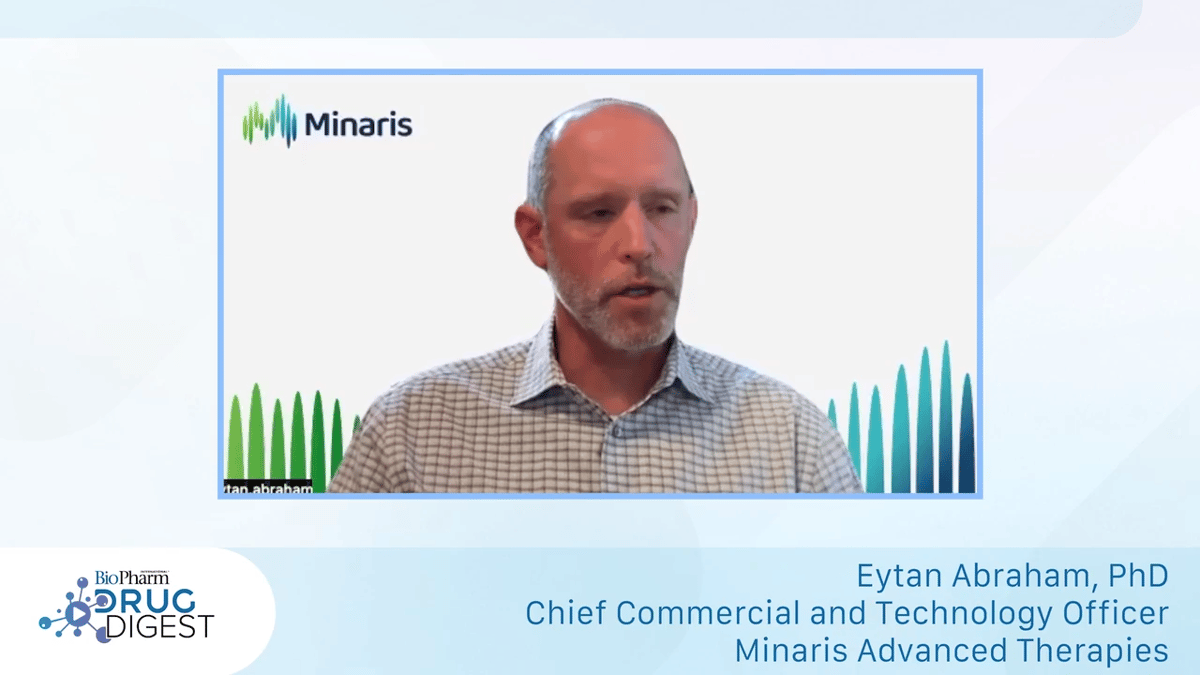
Drug Digest: Examining the Architecture of Next-Gen Biotherapeutic Modalities
Minaris Advanced Therapies’ chief commercial and technology officer, Dr. Eytan Abraham, discussed how multifunctional biotherapeutics are merging antibodies, ADCs and engineered cells to create more precise, personalized treatments. He highlighted multi‑targeting cell designs that improve specificity and reduce disease escape,...

The Road Ahead—What’s Next for Host Cell Protein Analytics?
Advanced LC‑MS strategies are reshaping host cell protein (HCP) analytics, moving beyond the semi‑quantitative limits of traditional ELISA. Data‑independent acquisition (DIA) offers broad relative profiling, while stable‑isotope‑labeled (SIL) peptides provide absolute quantification for high‑risk HCPs. Integrating DIA, SIL, and ELISA...
The Ron Lanton Report: Where Innovations Happen
Ron Lanton’s latest report argues that geography has become a primary strategic lever in healthcare, shaping where products are developed, manufactured, priced, and sustained. Policy signals, trade dynamics, and infrastructure constraints now sit at the front of the decision tree,...

The BioPharm Brief: CAR-T Advances, Pediatric Biologic Approval, and Oral GLP-1 Progress
A2 Biotherapeutics will unveil early data on its A2B694 CAR‑T therapy, which targets HLA‑A*02 loss of heterozygosity in solid tumors, at ASCO 2026. The FDA approved dupilumab for children ages 2‑11 with chronic spontaneous urticaria, marking the first biologic for this pediatric...
The BioPharm Brief: Early Design Risks, Oncology Signals, and a Biosimilars Power Move
The BioPharm Brief highlights three pivotal biopharma trends: early‑stage process design flaws can cripple cell and gene therapy scale‑up, leronlimab demonstrates early clinical and biomarker activity in metastatic colorectal cancer, and Amneal Pharmaceuticals’ acquisition of Kashiv BioSciences creates a vertically...

Why Early Process Design Is Key to Cell and Gene Therapy Success
At INTERPHEX 2026, Charles River’s Dr. Alan Smith warned that cell and gene therapy developers often prioritize rapid first‑in‑human studies at the expense of scalable manufacturing. He highlighted recurring gaps where insufficient early‑stage process design forces costly redesigns during later trials or...

Leronlimab Shows Early Clinical and Biomarker Activity in Metastatic Colorectal Cancer at AACR 2026
CytoDyn presented early Phase 2 results showing that leronlimab combined with TAS‑102 and bevacizumab markedly reduced circulating tumor DNA in metastatic colorectal cancer patients. CCR5 expression was confirmed in all prescreened tumors, and median ctDNA fell about 70% by week two...

Nipocalimab Demonstrates Sustained Disease Control Over Two Years in Generalized Myasthenia Gravis
Johnson & Johnson announced that nipocalimab (Imaavy) sustained disease control in generalized myasthenia gravis for over two years, extending efficacy beyond the initial 24‑week trial to 120 weeks. Patients showed mean reductions of 6.47 points on the MG‑ADL and 5.97...

The BioPharm Brief: AI, Immunology, and Regulatory Momentum
AstraZeneca announced consistent Phase III data showing its IL‑33 biologic cuts COPD exacerbations, reinforcing the cytokine as a therapeutic target. Boehringer Ingelheim disclosed a broadened AI program that will be embedded across early discovery and development stages to speed target identification. The...

Why Managing Potency and Degradation Are Crucial in ADC Cleaning Validation
At INTERPHEX 2026, Paul Lopolito of STERIS highlighted the unique cleaning‑validation challenges posed by antibody‑drug conjugates (ADCs). He explained that ADCs merge highly potent small‑molecule payloads with large‑molecule biologics, creating divergent degradation profiles that demand product‑specific, risk‑based cleaning strategies. Lopolito...

FDA Accepts BLA for Gazyva/Gazyvaro for Systemic Lupus Erythematosus
Roche has received FDA acceptance of its supplemental Biologics License Application for obinutuzumab (Gazyva/Gazyvaro) as a treatment for systemic lupus erythematosus, with a regulatory decision expected by December 2026. The approval request is backed by the Phase III ALLEGORY trial, which...

Boehringer Targets AI-Driven Advances in Disease Research
Boehringer Ingelheim announced a £150 million (US$203 million) AI and machine‑learning accelerator in King’s Cross, London, expanding its global computational R&D network. The new hub, part of the UK Knowledge Quarter, will focus on disease biology, target identification and predictive modeling to...

The BioPharm Brief: Oncology Innovations Continue with Durable Survival, In Vivo CAR-T, and Combination Therapies
Immunocore reported five‑year overall survival data confirming tebentafusp’s durable benefit in metastatic uveal melanoma, the first T‑cell receptor‑based therapy to show a clear survival advantage in this rare cancer. Eli Lilly announced the acquisition of Kelonia Therapeutics to accelerate in‑vivo CAR‑T...

FDA Grants Priority Review for Padcev Plus Keytruda in Bladder Cancer Treatment
The U.S. Food and Drug Administration has granted Priority Review to the peri‑operative combination of Padcev (enfortumab vedotin) and Keytruda (pembrolizumab) for muscle‑invasive bladder cancer (MIBC). The Phase 3 EV‑304 trial demonstrated a 47% reduction in recurrence, progression or death and a...

Tebentafusp Shows Durable Survival in Metastatic Uveal Melanoma, Immunocore Reports
Immunocore reported five‑year overall survival data from its phase 3 trial of tebentafusp‑tebn (Kimmtrak) in HLA‑A*02:01‑positive metastatic uveal melanoma. The study showed 16% of patients on tebentafusp were alive at five years versus 8% on standard therapy, with a hazard ratio...

Exploring Untapped Natural Chemistry for Future Medicines
Generare, a Paris‑based tech‑bio startup, is tackling AI drug‑discovery limitations by feeding models with diverse, biologically validated natural compounds from microbes. CEO Guillaume Vandenesch argues that current AI systems rely on narrow synthetic datasets, which restrict therapeutic relevance. The company...

Merck’s Enflonsia Approved in EU for RSV Prevention in Infants Without Weight-Based Dosing
Merck’s long‑acting monoclonal antibody Enflonsia (clesrovimab) received European Commission approval for preventing respiratory syncytial virus (RSV) lower‑respiratory‑tract disease in neonates and infants during their first RSV season. The product is administered as a single fixed 105 mg intramuscular dose, removing the...

Precision Biologics Highlights New AML Target for CAR-NK Therapies
Precision Biologics announced preclinical identification of truncated Core 1 O‑glycans as a novel antigen for acute myeloid leukemia (AML). The glycan‑based target is recognized by the company’s investigational antibody NEO‑201 and was presented as a poster at the AACR 2026 meeting....

Marengo Reports Early Phase 2 Activity for Invikafusp Alfa Combination; Advances STAR Program at AACR 2026
Marengo Therapeutics announced early Phase 2 activity for its invikafusp alfa plus sacituzumab govitecan (Trodelvy) combo in metastatic breast cancer, reporting confirmed complete responses in heavily pretreated patients across both triple‑negative and hormone‑receptor‑positive/HER2‑negative cohorts. The interim safety data matched the known profiles...

Future-Ready Pharma Summit
The Future‑Ready Pharma Summit gathered analytical scientists, lab managers and decision‑makers to showcase how automation, AI and digital services are reshaping small‑molecule pharmaceutical chromatography. Sessions covered AI‑driven LC method optimization, collaborative dissolution workflows, and sustainability‑focused regulatory guidance such as USP...

Strategic Operations, Manufacturing and Supply Chain Resilience
Avantor’s Executive Vice President and COO Mary Blenn outlined a strategic push to modernize manufacturing and supply‑chain capabilities. Targeted investments focus on automation, regional hub development, and global standardization to boost reliability, speed, and quality. The company aims to deliver...

Roche to Start Phase III Trial to Broaden Access to Elevidys in Duchenne Muscular Dystrophy
Roche announced a global, pivotal Phase III trial of Elevidys, its gene‑therapy for Duchenne muscular dystrophy, targeting roughly 100 early‑ambulatory boys. The 72‑week, placebo‑controlled study will assess change in time‑to‑rise‑from‑floor velocity as the primary efficacy endpoint. Results are intended to bolster...

FDA Extends Review of Savara’s Molgramostim BLA for PAP
Savara’s inhaled GM‑CSF therapy, molgramostim, received a three‑month FDA review extension, moving the PDUFA target action date to November 22, 2026. The extension follows the agency’s classification of the company’s recent data submissions as a major amendment, but it did not signal...

PrecisionLife and Ovation Target GLP-1 Response Variability with New Biomarker-Driven Collaboration
PrecisionLife and Ovation.io have teamed up to convert multi‑omic analyses of GLP‑1 receptor agonist use into predictive biomarker tools, including laboratory‑developed tests and a consumer DNA test. Early findings reveal separate biological drivers for glycemic control (HbA1c reduction) and weight...

InSPECt™ MS – Global HCP Profiling and Quantification by Native Digestion and LC-MS Analysis
The inSPECt™ MS platform combines native digestion with high‑resolution LC‑MS to quantify host‑cell proteins (HCPs) relative to spiked‑in protein standards. Calibration using the Cygnus Protein Standard demonstrated a linear response from 10 to 500 ppm with coefficients of variation under 18 %...

Elahere Combination Achieves 62.7% ORR in Phase 2 Trial for Platinum-Sensitive Ovarian Cancer at SGO 2026
AbbVie’s Elahere (mirvetuximab soravtansine) combined with carboplatin produced a confirmed objective response rate of 62.7% in patients with FRα‑positive, platinum‑sensitive ovarian cancer, meeting the primary endpoint of the Phase 2 IMGN853‑0420 trial presented at SGO 2026. The study enrolled 125 participants,...
TANGENT Phase 3 Study Meets Primary and Secondary Endpoints, SynOx Reports
SynOx Therapeutics reported that its Phase 3 TANGENT study of emactuzumab met both primary and secondary endpoints in tenosynovial giant cell tumor (TGCT). The five‑dose, eight‑week regimen achieved statistically significant RECIST responses and tumor volume reductions at six months. Patients also...

ROIS Expands US Injectable Manufacturing Capacity
ROIS has completed the acquisition of a 370,000‑square‑foot injectable manufacturing facility in Phoenix, Arizona, adding high‑potent fill/finish and lyophilization capabilities for biologics and antibody‑drug conjugates (ADCs). The site already holds FDA, EMA and Japanese regulatory approvals, enabling immediate support for...

GSK Reports Strong Results for B7-H4 ADC in Gynecological Cancers
GSK’s investigational antibody‑drug conjugate mocertatug rezetecan (Mo‑Rez) demonstrated robust activity in its Phase 1 BEHOLD‑1 trial, achieving a 62% objective response rate in platinum‑resistant ovarian cancer and 67% in recurrent or advanced endometrial cancer. The drug targets the B7‑H4 immune checkpoint,...

Oricell Therapeutics Secures $110 Million to Take on One of Oncology's Most Vexing Problems
Oricell Therapeutics closed a pre‑IPO financing round exceeding $110 million, led by Vivo Capital and a slate of international investors. The capital will fund global clinical expansion and further development of its proprietary CAR‑T platform targeting solid tumors. Oricell’s lead candidate,...

Alpheus Medical Advances to Phase 2b Testing of Experimental Brain Cancer Therapy
Alpheus Medical has enrolled 10 patients in a Phase 2b randomized trial of its Porphyrin Metabolite Activation (PoMA) therapy for newly diagnosed glioblastoma. PoMA uses a tumor‑selective drug activated by low‑intensity diffuse ultrasound to treat the entire affected brain hemisphere,...

PDA Week 2026 Showcased AI, Knowledge Management, and Proactive Quality Culture
PDA Week 2026 in Denver highlighted the rapid transition of artificial intelligence from concept to operational use across bio‑pharma quality and manufacturing. Attendees showcased AI‑driven tools for predictive risk, smart supply chains, and real‑time decision support. Sessions also borrowed NASA’s...