
Learning, Predicting, and Interpreting Omics Data with Biologically Informed Models
Pablo Rodriguez‑Mier presented CORNETO, a unified optimization framework that fuses prior biological knowledge with high‑throughput omics data to infer context‑specific networks. The method was applied in the EU‑funded DECIDER project to pinpoint molecular mechanisms driving chemotherapy resistance in high‑grade serous ovarian cancer. By restricting CORNETO to convex formulations, the approach can be embedded as hard inductive biases in neural networks, enabling biologically informed machine‑learning models. Results from the 1st Virtual Cell Challenge illustrate both the promise and current limitations of such perturbation‑biology benchmarks.

GVasc Saliva Kit Tutorial
The gVasc study released a tutorial showing how participants can collect saliva samples at home using a simple kit. Project Manager Christine Russo demonstrates the step‑by‑step process in a short video, emphasizing ease of use. gVasc, launched by cardiologists at...
Clinical Trial of a Prion Disease Drug Candidate Begins Enrolling Participants
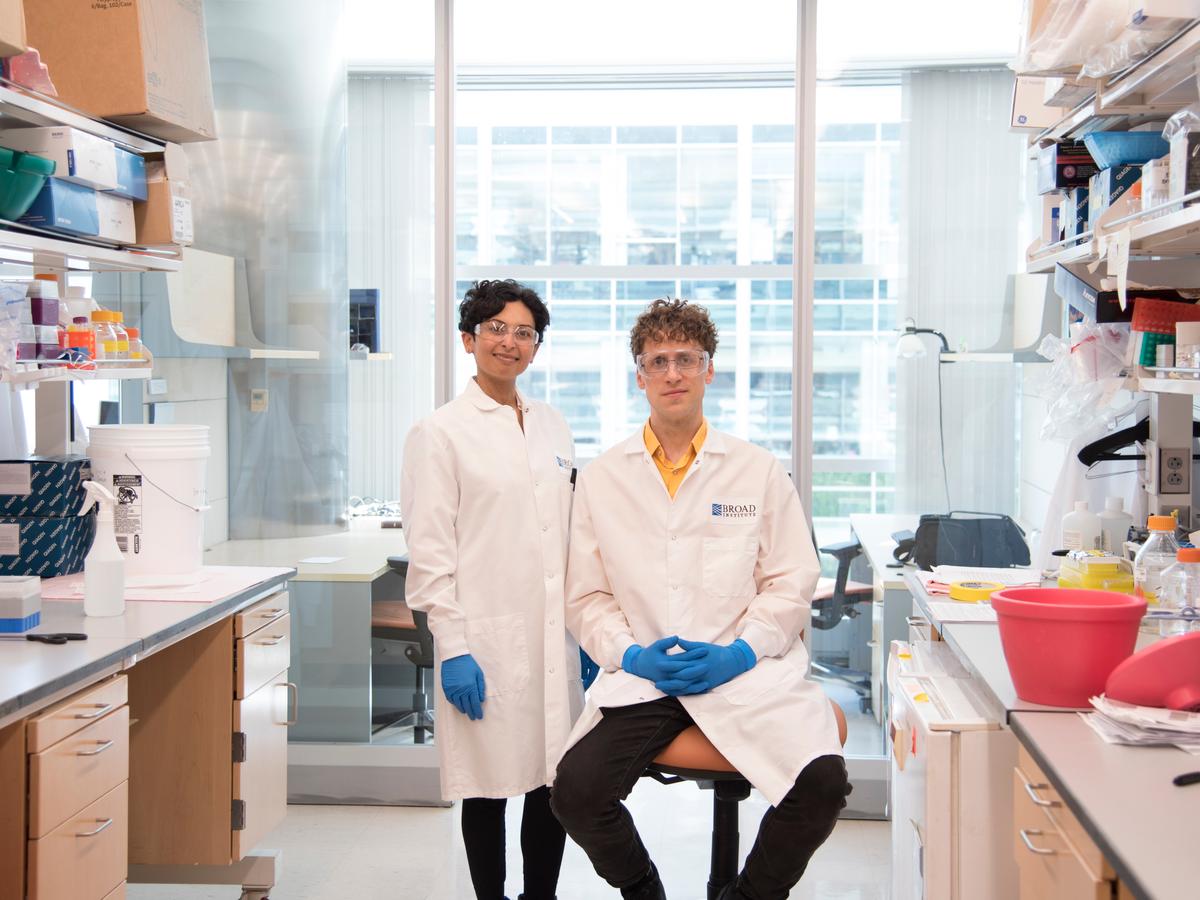
Broad Institute and UMass Chan have launched the first human trial of a prion disease therapy, a divalent small interfering RNA designed to silence the prion protein gene. The phase 1 PRiSM study will enroll 15 symptomatic patients to assess...

Massive Ancient-DNA Study Reveals Natural Selection Has Accelerated in Recent Human Evolution
A new study of nearly 16,000 ancient genomes from West Eurasia spanning the last 10,000 years shows that natural selection has acted on hundreds of genes, not just a few as previously thought. Researchers identified 479 alleles under strong directional...

Cancer Dependency Map Consortium Launches Phase 3 to Accelerate Next-Generation Therapeutics
The Broad Institute’s Cancer Dependency Map Consortium (DMC) has entered Phase 3, expanding its mission beyond cataloguing tumor vulnerabilities to tackling drug resistance, surface‑protein targets, and high‑dimensional readouts. Backed by 23 pharma partners, the consortium builds on DMC 2.0’s expansion to over...

Base Editing Repairs Mutation and Liver Function in Mouse Model of Zellweger Spectrum Disorder
Scientists at the Broad Institute and collaborators used a refined base‑editing system to correct a disease‑causing mutation in the PEX1 gene of mice that model Zellweger spectrum disorder. The edit restored peroxisome function and normalized liver biomarkers, demonstrating functional rescue...

Leukemia Cells Use a Sugar-Coated Protein to Hide From the Immune System
A study by the Broad Institute and partners discovered that the protein CD43, heavily sialylated, creates a sugar‑coated barrier that shields acute myeloid leukemia (AML) cells from macrophages, T cells and NK cells. Genome‑wide CRISPR screens showed that loss or...

Christine Stevens
Christine Stevens serves as Director of Operations and Development for the Daly Lab at the Broad Institute’s Stanley Center for Psychiatric Research. She manages a team of six project managers and partners with administrative and technical groups to ensure compliance,...

Exploring Structural Variation in Genomic Studies
Broad Institute’s Primer on Medical and Population Genetics released a new session exploring structural variation in genomic studies. The free weekly video series provides in‑depth introductions to complex trait genetics, covering topics from DNA sequencing to statistical analysis. Targeted at...

ML4H: Advancing From Medical Imaging to Digital Twins
The Broad Institute’s Machine Learning for Health (ML4H) program launched a new Clinical AI Seminar Series featuring leaders such as NVIDIA’s Stephen Aylward. The series explores generative and foundation models, ethical AI, self‑supervised learning, and real‑world clinical uses. ML4H unites...

Malaria-Transmitting Mosquitoes in South America Are Evolving to Evade Insecticides
A new study led by Harvard Chan and the Broad Institute sequenced over 1,000 complete genomes of Anopheles darlingi mosquitoes from six South American countries, revealing that the primary malaria vector is evolving resistance to insecticides. The research, published in...

A New View Into Viruses in the Body
Researchers at the Broad Institute and partner institutions examined the human DNA virome in over 900,000 individuals, tracking viral loads of common DNA viruses in blood and saliva. The analysis revealed that viral load fluctuates with age, sex, season and...

How Inflammation May Prime the Gut for Cancer
Researchers at the Broad Institute and Harvard uncovered that chronic intestinal inflammation imprints lasting epigenetic scars on gut cells, even after tissue appears healed. In mouse models, these epigenetic memories persist through many cell divisions and, when paired with a...

Stanley Family Foundation Renews Commitment to Accelerate Psychiatric Research at Broad Institute
The Stanley Family Foundation has renewed its support for the Stanley Center for Psychiatric Research at the Broad Institute, bringing its cumulative investment to over $1 billion, including a fresh $280 million pledge. The funding fuels large‑scale genetic studies aimed at uncovering...

Giovanni Traverso
Giovanni Traverso, M.D., Ph.D., is a physician‑scientist who bridges gastroenterology and engineering as an associate member of the Broad Institute, director of the Laboratory for Translational Engineering, MIT associate professor, and Harvard gastroenterologist. His lab creates ingestible electronics, robotic capsules,...