
Not All Foreign Exchange Reserves Are Created Alike
A new dataset covering 109 countries shows that central banks have dramatically altered the composition of foreign‑exchange reserves since the late 1990s. Securities now account for roughly two‑thirds of total reserves, up from about one‑third a quarter‑century earlier, a shift evident in both mean and median measures. The rise coincides with the post‑Asian‑crisis accumulation of excess reserves, suggesting a move toward investment‑oriented holdings rather than pure liquidity. Researchers link this trend to mercantilist motives, challenging traditional views of reserve management.

Cheaper Machines, Costlier Buildings: The Drag on Long-Run Growth
The post‑war United States has seen equipment prices plunge, boosting per‑capita output growth by about 1.3 percentage points. In contrast, the relative price of structures has risen roughly 80 % since 1970, a trend shared by most high‑income economies. A two‑capital growth...

New Coins on the Block: Digital Currencies and the Financial System
The CEPR/IESE report argues that stablecoins, tokenised deposits and retail CBDC will reshape the monetary system, with dollar‑denominated stablecoins emerging as the most consequential development. It stresses that general acceptance of any digital money hinges on central‑bank backing, institutional safeguards...

Europe Suffers Not so Much From a ‘Flight’ of Savings as From Insufficient Allocation to Equities
The euro area posted a current‑account surplus of €276 bn ($304 bn) in 2025, down from €416 bn ($458 bn) in 2024, highlighting excess domestic savings over investment. Portfolio‑investment data show a net equity outflow of €280 bn ($308 bn) and a net debt inflow of...

From European Public Goods to a European Safe Asset: A Pragmatic Roadmap
Europe’s fragmented geopolitical landscape has revived the debate over a common safe asset for the euro area, but political mistrust stalls progress. The authors propose a sequenced roadmap: first, a permanent financing mechanism for European public goods via a special‑purpose...

Literature Support and the Capabilities of Autonomous Research Agents
M. Zampa’s 2026 study examines autonomous large‑language‑model (LLM) research agents within the Autonomous Policy Evaluation (APE) platform. By measuring each AI‑generated paper’s proximity to dense regions of the economics literature, the paper finds a positive link between literature support and...

Global Trade Linkages and the Cross-Country Distribution of the Gains From AI
A new OECD‑backed study models how artificial‑intelligence (AI) adoption reshapes global welfare through trade. It finds AI use in core business functions averages 4 % across OECD economies, with a ten‑year horizon ranging from 0.2 % in Mexico to 7 % in Ireland....

Industrial Policy, Tariffs, and the Return of Global Imbalances
Global imbalances have resurfaced as current‑account surpluses and deficits widen post‑pandemic, driven largely by the United States and China. Recent research distinguishes between micro‑industrial policies, which target specific sectors, and macro‑industrial policies that influence economy‑wide saving. The authors argue that...

A More Resilient Europe Faces a Renewed Energy Shock – but Difficult Trade-Offs May Resurface
A disruption of oil and LNG shipments through the Strait of Hormuz has triggered a fresh energy shock for Europe, raising oil and gas prices and prompting a revision of macro forecasts. The European Commission now projects EU GDP growth...

From Openness to Vulnerability: Mapping the EU’s Foreign Dependencies and Geopolitical Exposure
A new EU study maps foreign‑dependent products, finding 835 items that represent 16% of imports and roughly $440 billion in value. China supplies 47% of these products and now accounts for 80% of renewable‑energy inputs, while the United States provides 11% of...

Beyond Borders, Within Societies: Inequality and the Global Transmission of US Monetary Policy
A new cross‑country study finds that domestic income inequality shapes how US monetary‑policy shocks transmit abroad. In advanced economies, higher inequality magnifies the contractionary impact of a Fed rate hike, while in emerging markets it dampens the effect. The relationship...

Redefining the Monetary Standard
Livio Stracca, an ECB senior official, released *Redefining the Monetary Standard in the Digital Age* outlining how fintech, stable‑coins, and central‑bank digital currencies (CBDCs) are reshaping the payment landscape. He argues that while the fiat system remains resilient, the payment side...
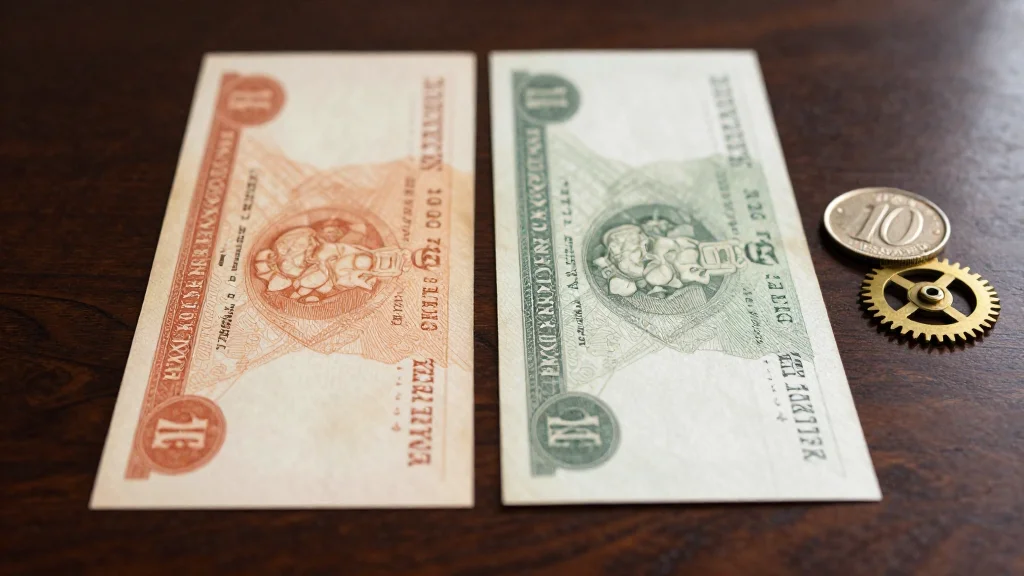
State-Contingent Debt Premia May Be Lower than You Think
A new CEPR paper exploits two nearly identical French bonds issued in 1956—one fixed‑rate and one indexed to industrial production—to measure the state‑contingent debt premium in normal market conditions. The study finds an average realised premium of 108 basis points,...

A Smarter Approach to Electricity Rationing
Energy shortages are outpacing policy, prompting a shift from Ukraine’s rotational blackouts to smart‑meter load limiting. Rolling blackouts cut power to entire neighborhoods for hours, delivering high welfare costs and regressive impacts on low‑income households. Load‑limiting caps household draw at...

Measuring Capital Account Openness: Why Intensity Matters
The IMF‑backed FinOpen index introduces a granular, intensity‑based measure of capital‑account openness, moving beyond the binary Chinn‑Ito and FKRSU scores. By merging narrative assessments with detailed policy actions, FinOpen assigns a 0‑1 score that reflects both the level and the...
When Energy Shocks Bite Harder: Non-Linear Inflation Dynamics
A new ECB‑backed study shows that euro‑area inflation reacts disproportionately to large energy price shocks, a non‑linear pattern that linear models miss. Using a hybrid Bayesian Additive Regression Trees (BART) and VAR framework, the authors identify medium‑sized shocks in April 2026...

The Devil Is in the Tail: How Firms' Beliefs About Rare Macroeconomic Disasters Shape Investment
A new paper by Menkhoff (2026) uses the German ifo Business Survey, an RCT, and scenario experiments to show that firms’ beliefs about rare macroeconomic disasters directly shape their investment plans. CEOs assign a median 50% probability to a 5%...

Macroeconomics of Tariffs with Global Production and Finance Networks
A new framework integrates global production networks into the New Keynesian open‑economy model, showing that tariffs function as both demand and supply shocks. By incorporating price rigidities, financial frictions and network propagation, the model predicts that even short‑lived tariffs can...

Mapping the Household-Level Transmission of Monetary Policy
A new VoxEU column surveys over 25,000 U.S. households and runs randomized information experiments to examine how monetary tightening reaches the micro level. The authors find that higher policy rates are perceived to raise inflation, and that rising inflation expectations...

The Dollar’s Status Through the Lens of Foreign Exchange Reserves
The U.S. dollar’s share of official foreign‑exchange reserves has slipped from over 70% in the late 1990s to roughly 58% today. Goldberg and Hannaoui demonstrate that this headline decline conflates two separate forces: shifts in countries’ preferences for dollar assets...

The Different Effects of Oil and Gas Supply Shocks on Euro Area Inflation
A new study shows that gas supply shocks transmit to euro‑area consumer prices more broadly and persistently than oil shocks, a pattern first highlighted during the 2021‑22 energy crisis. The March 2026 price spike, while noticeable, is smaller than the 2021‑22...

When the Ruler Is Made of the Thing It Measures: Multi-Model Evidence on AI Occupational Exposure Scores
A new NBER paper reveals that AI‑generated occupational exposure scores are highly unstable across frontier language models. Using identical O*NET task data, the share of U.S. jobs deemed high‑exposure ranges from 2.7% with Google’s Gemini 2.5 to 51.5% with Anthropic’s Claude 4.5—a...

How UK Firms Are Responding to the War in Iran: Early Evidence From the Decision Maker Panel
The Bank of England’s Decision Maker Panel shows UK firms are already feeling the impact of the Iran‑triggered energy price surge. Energy costs rose from about 4% of total expenses in 2019 to roughly 6% in 2025, and two‑thirds of...

China’s Real Estate Reckoning: Lessons From Japan’s Lost Decade
China’s six‑year real‑estate slump mirrors Japan’s 1990s bubble burst, with city‑level overbuilding driving falling prices and weak consumer confidence. Housing now represents roughly 70% of Chinese household wealth, so price drops trigger sizable consumption cuts. Research comparing 300 Chinese cities...

How to Get the Green and the Deal: Recalibrating EU Industrial Policy
European policymakers are overhauling the EU’s industrial strategy to confront aggressive state‑driven competition from China, protectionist U.S. tariffs, and a stalled multilateral trading system. The recalibrated approach seeks to fuse climate goals, economic competitiveness, and security into a single, mutually...

Identifying Monetary Policy Shocks in Newspapers Using GPT
The CEPR paper introduces a newspaper‑based measure of Euro‑area monetary‑policy surprises that leverages GPT‑4‑style large language models. Researchers scraped articles from 11 major European newspapers after each ECB Governing Council meeting, filtered them, and used the LLM to label relevance...

Why ‘De-Risking’ May Not Deliver a Large Peace Dividend
Since 2018, policymakers have championed ‘de‑risking’ to shield economies from coercion, but new research shows that trade itself can act as a powerful stabiliser. By exploiting the uneven impact of the late‑20th‑century aviation revolution, the authors identify a causal link:...

When AI Meets Local Debt
Two recent studies examine how AI investment reshapes local borrowing costs, finding opposite effects in the United States and five OECD countries. In U.S. counties, higher AI‑related job postings are linked to lower municipal bond yields, especially for longer‑maturity and...

A Way Out via the Strait of Hormuz
The United States and Iran are locked in a post‑Feb. 28, 2026 confrontation that includes a US naval blockade and Iran’s closure of the Strait of Hormuz. Scholars argue that the long‑standing time‑inconsistency of sanctions‑relief deals and accumulated political debt make a...

How Countercyclical Capital Buffers Travel: Internal Capital Markets and Domestic Borrowing
The paper shows that when a foreign jurisdiction raises its countercyclical capital buffer (CCyB), German banks cut credit to the affected subsidiaries by about 10%. Multinational parents offset this loss by increasing internal debt to the subsidiaries, leaving overall subsidiary...

Quantifying the Impact of the Iran War on US Inflation
The authors combine a calibrated DSGE model of the global oil market with a monthly structural VAR to estimate how the 2026 Iran war’s oil‑supply shock could affect U.S. inflation. A 15 % shortfall lasting one quarter pushes WTI crude to...

Connecting Job Seekers with Buddies Online
Researchers tested an online “buddy” platform that pairs unemployed job seekers with volunteers who recently switched occupations. In a Dutch randomized trial of 713 participants, 53 % created accounts and 19 % secured a buddy. Over an 18‑month follow‑up, access to the...

The Macroeconomic Consequences of Undermining Central Bank Independence: Evidence From Governor Transitions
Recent research covering 132 central‑bank governor transitions across 28 economies finds that 38% of changes are politically motivated, especially in emerging markets. Politically driven appointments, particularly those with unorthodox monetary views, lead to lower short‑term interest rates, a short‑run GDP...

The Right to Choose to Die
Alvin Roth, Nobel‑winning economist, discusses assisted dying on VoxTalks Economics, framing it as a “repugnant transaction” that markets can regulate. He outlines the legal landscape—12 U.S. states and D.C., Canada, and Switzerland—where medical aid‑in‑dying (MAID) is permitted under varying criteria....

Reconfiguring Europe in a Fractured Global Economy: The Florence Report
The Florence Report, the flagship study of the EMU Lab at the European University Institute, warns that Europe’s long‑standing “reduced responsibility model” – reliance on U.S. security, markets and global institutions – has become dysfunctional in a fractured, multipolar world....

When Public Money Multiplies, and when It Does Not: A Guide to the Catalytic Effect of Blended Finance
Meeting the Sustainable Development Goals demands trillions of dollars annually, far beyond official aid budgets, prompting a shift toward blended finance where concessional public funds crowd in private capital. Development finance institutions now channel over $250 billion a year—about four times...

Using Global Shocks as a Laboratory to Study Executive Pay
A new NBER study merges principal‑agent and assignment models to examine how global trade shocks reshape executive compensation. Using two decades of Danish firm‑level data, the authors find that exogenous increases in exporting and offshoring boost firm value and raise...

When Privacy Protects but Excludes: The Hidden Costs of Data Restrictions in Digital Lending
A 2019 Google privacy rule barred Android apps from accessing call detail records, cutting off a key enforcement tool for one of India’s largest digital lenders. The restriction sparked a 26% surge in loan applications from Android users but forced...

Who Really Drives Innovation
In a new macro‑economic study, Paolo Surico and co‑authors use detailed patent records to trace the impact of publicly funded research in the United States since World War II. Their analysis shows that the National Institutes of Health and the National...

Who Really Drives Innovation
A new CEPR study finds that publicly funded patents make up just 2% of U.S. filings yet account for roughly 20% of productivity growth, underscoring the outsized impact of government‑backed research. The analysis, based on patent‑level data, shows that agencies...

How a Nation Was Born: Lessons From Four Centuries of Brazilian Growth
A new CEPR paper reconstructs Brazil’s GDP per capita from 1574 to 1920 using 30,000 archival price and wage observations. The study finds Brazil enjoyed relatively high incomes in the late‑1500s, followed by two centuries of near‑zero growth despite commodity...

Central Bank Independence: An Update
Recent research reviewed by Eijffinger and de Haan (2026) confirms that while legal independence reduces inflation, it does not shield central banks from political interference. Studies show that roughly 10% of central banks experience annual political pressure, and 39% have...

Air Service Liberalisation and Carbon Dioxide Emissions
A new CEPII working paper finds that air service agreements (ASAs) significantly increase international passenger traffic—by 12.7% between 2012 and 2019—while reshaping routes toward more direct flights. These changes cut average flight distance by 1.4% and reduce the number of...

Revisiting Labour Supply Trends Across Countries
Recent research shows that the once‑wide gap in hours worked between the United States and other advanced economies has roughly halved by the late 2010s. While U.S. labor‑supply fell after 2000, driven largely by the expansion of non‑employment benefits such...

Rebalancing the Chinese Economy
China is shifting its growth model from an investment‑ and export‑driven engine to a more consumption‑focused, high‑tech economy. Over the past decade the investment share of GDP fell from 47% to 41%, while consumption rose to about 57% of output....

Improving Competitiveness or Meeting Climate Targets: The Draghi Dilemma
EU policymakers, urged by Draghi, are weighing a €5 billion‑per‑year ($5.5 billion) subsidy package for energy‑intensive industries across the Netherlands, Germany and France. A recent CPB‑PBL study using the GREENR model shows that cost‑reducing subsidies improve industrial competitiveness but increase EU emissions,...

Defence Spending – No Free Lunch
OECD countries are rapidly increasing defence budgets, with spending returning to Cold‑War‑era levels and outpacing GDP growth in most members in 2024. New research by Conigrave and Shin estimates that higher military outlays provide a modest near‑term boost to output...

Fiscal Institutions Matter Big Time for Foreign Direct Investment in Developing Economies
IMF research finds low‑income countries capture less than 1 % of global FDI, with inflows skewed toward low‑R&D sectors. Empirical analysis shows that robust fiscal institutions and disciplined public finances are the strongest predictors of both the quantity and the R&D...
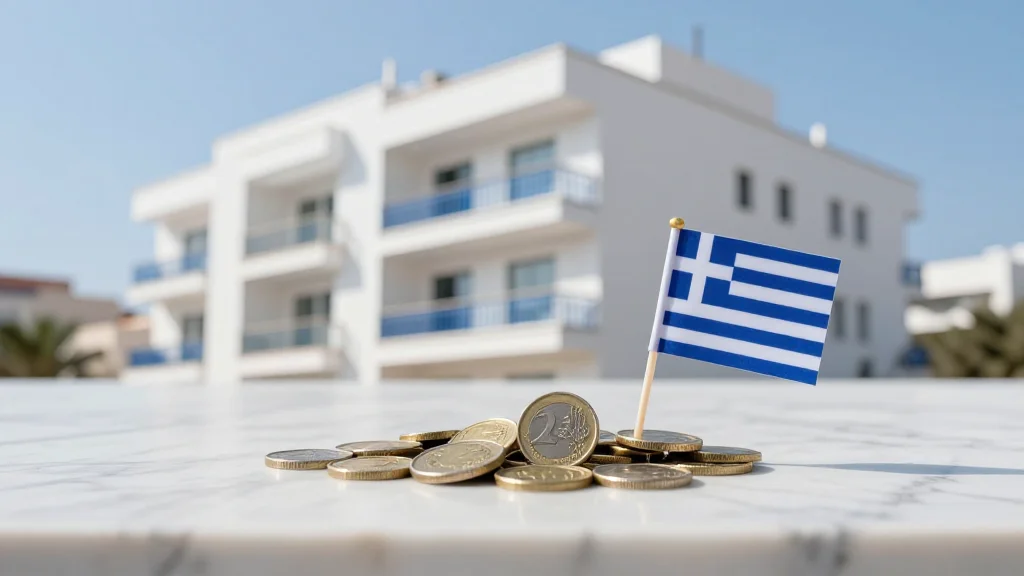
An Olympic Opportunity for Social Housing Policy: Lessons From the Athens 2004 Olympic Village
The 2004 Athens Olympic Village was built from the start as a post‑Games social‑housing estate, costing roughly €300 million (about $330 million) and delivering 2,300 units for 10,000 residents. A lottery assigned 2,000 working families to the new neighbourhood, allowing a randomized...

Cross-Border Payment Technologies, Innovations, and Challenges: Lessons From Domestic and Cross-Border Payments
Cross‑border payments, vital for global trade and remittances, lag behind domestic systems in speed, cost, and accessibility. While wholesale transfers have become relatively efficient, retail and remittance flows still rely on costly correspondent‑banking networks, despite fintech front‑end innovations like Wise...